NO BRAIN THE SAME is the third book in a terrific series that I would have loved to have had when I was teaching. You can find posts on the previous two on this blog here: NO WORLD TOO BIG and NO VOICE TOO SMALL. In this article, author Keila Dawson shares a
GIVEAWAY! To be entered to win a copy of NO BRAIN THE SAME from Keila, just leave a comment below!
Congratulations to Evelyn Hendrix, the winner of WHEN GEORGE WASHINGTON BOWED TO THE NEW NATION from Barbara Carroll Roberts!
Celebrate All Kinds of Minds in Your Classroom
by Keila Dawson
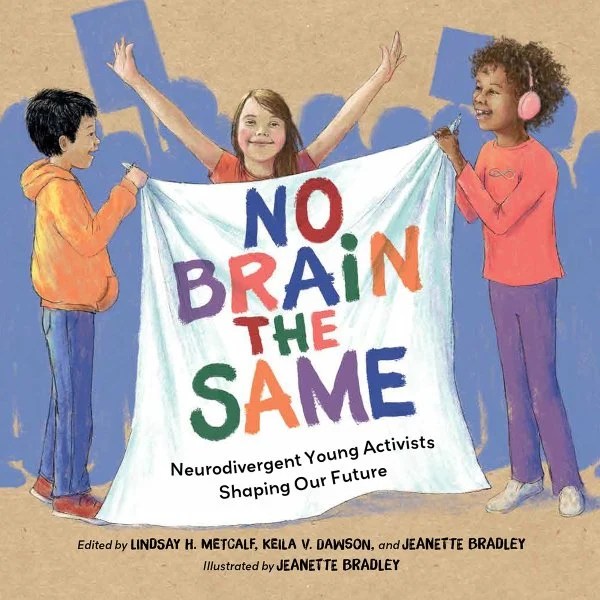
Educators know there are all kinds of minds in one classroom. In this activity, kids explore Gardner’s Theory of Multiple Intelligences by identifying how the youth in No Brain the Same: Neurodivergent Young Activists Shaping Our Future use their natural abilities. The theory identifies eight different ways we express our natural intelligences in real life.
Gardner encourages identifying natural abilities as strengths to support learning. Often confused with learning styles, this framework shows there are many ways to engage our different intelligences as pathways to learning. The youth featured in the book show what neurodivergent young people can accomplish when discovering and nurturing their natural abilities. They identify as neurodivergent because of how their brains work.
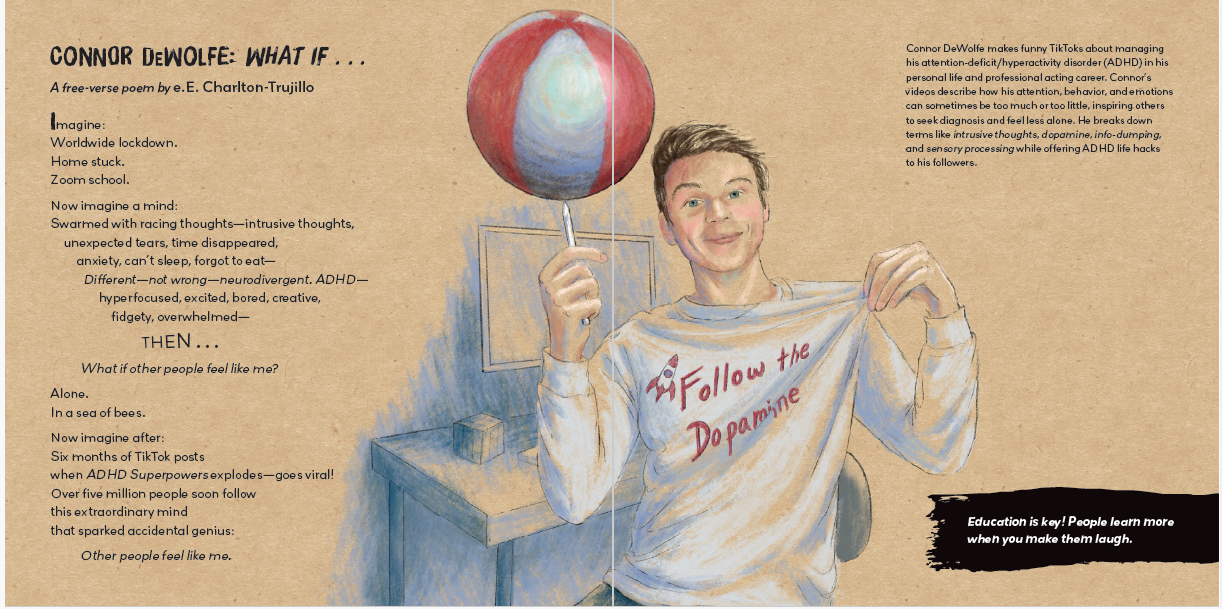
No Brain the Same, like its companion titles, No Voice Too Small and No World Too Big, is a poetry anthology that uses a unique list structure. Each spread includes an illustrated portrait, a bio poem, a brief biography, and a call to action. The format allows readers to pause and reflect on a young activist while learning about them from multiple perspectives.
Readers learn about the talents of autistic magician Cillian O’Connor, singer Billie Eilish, who has spoken about her Tourette syndrome, actress Mia Armstrong, who speaks up about living with Down syndrome, and others who speak out about ADHD, learning disabilities, and more. Refer to the glossary when students encounter unfamiliar terms or content.
The people who wrote the poems all have things in common with the subject of the poem. The book honors neurodivergence as a natural part of human diversity. Listen to a child read the poem We Are the Future from No Brain the Same to hear one of the book’s many messages.
Minds in Action: Mapping Multiple Intelligences in “No Brain the Same”
I. Introduce the students to Gardner’s Theory of Multiple Intelligences by explaining the eight intelligences to them or showing the video Every Type of Intelligence Explained in 5 Minutes, a YouTube video.
II. Create an eight-column chart on a whiteboard or chart paper, labeling each column with one of Gardner’s Multiple Intelligences. Leave room under each heading for student responses.
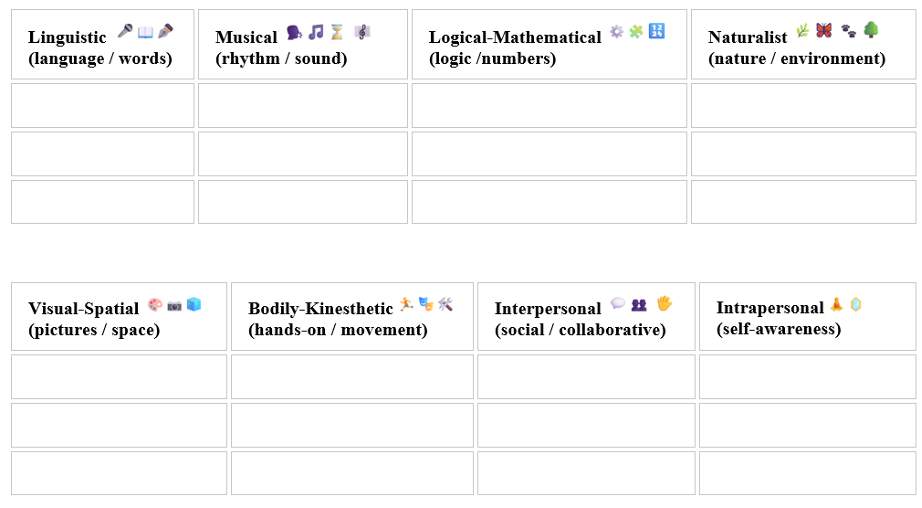
III. Break the class into small groups. Have each group pick an activist from No Brain the Same. Using evidence from the youth’s illustrated portrait, bio poem, and biography, ask the students to identify which of Gardner’s Multiple Intelligences best describe them and record their reasoning in the chart. Explain that some actions or activities engage more than one category, but have them choose the primary intelligence.
Examples:
Connor DeWolfe looks like someone who likes to have fun. He’s an actor and TikTok influencer who shares funny videos about living with ADHD with millions of followers. When making the videos, Connor uses 🎤his language when speaking, 🎭 his movement, and 👥connects socially with others with his humor.
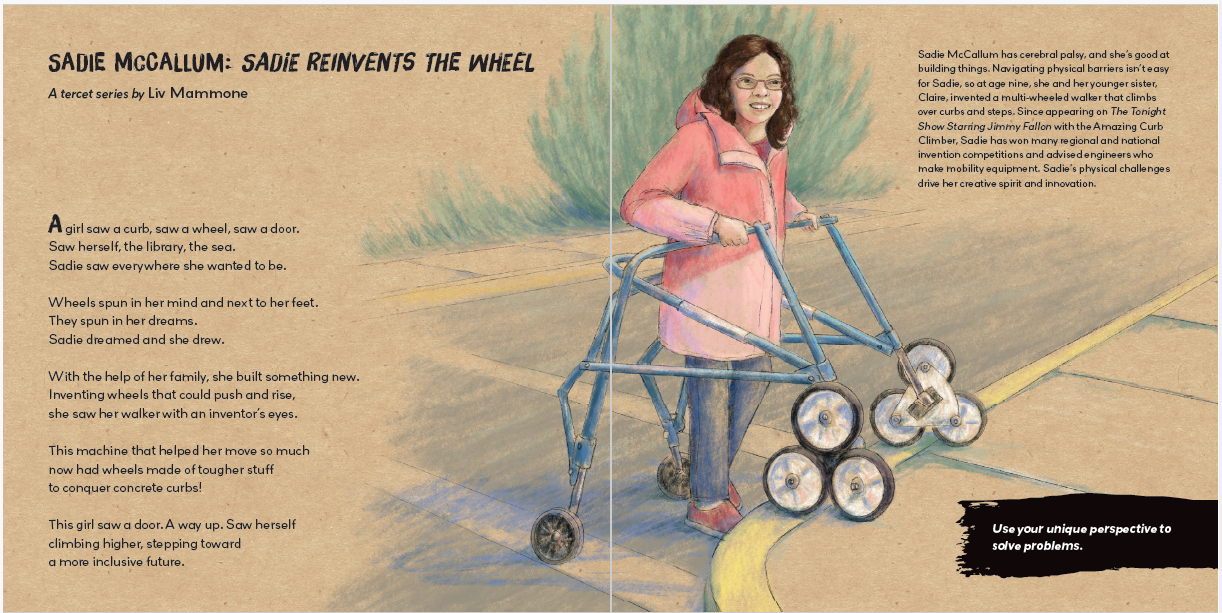
Sadie McCallum uses a walker because she was born with cerebral palsy. She invented the “Amazing Curb-Climber” to solve the problem of getting up and down curbs. Sadie used ⚙️ logic/numbers, 🧊pictures/space, 🛠️ hands-on/movement, and 🪞self-awareness to invent something to solve a problem that affected her personally.
Do you want your students to explore more? Head over to my website to get step-by-step instructions for students to design their own ‘Brain Blueprint’ profile silhouettes and discover all the smart ways they use their brains to learn!
I’d love to see some profile silhouettes if your students design them. Please reach out to me via my website, or tag me on Facebook, Instagram, or Bluesky if you share their work!
Recommended reading:
Multiple Intelligences Theory: Widely Used, Yet Misunderstood by Youki Terada (Edutopia)
Multiple Intelligence Theory and Growth Mindset by Laura Candler
Don’t forget to leave a comment below for a chance to win a copy of NO BRAIN TOO SMALL from Keila! (US addresses only, please. Winner announced 8/21/26.)
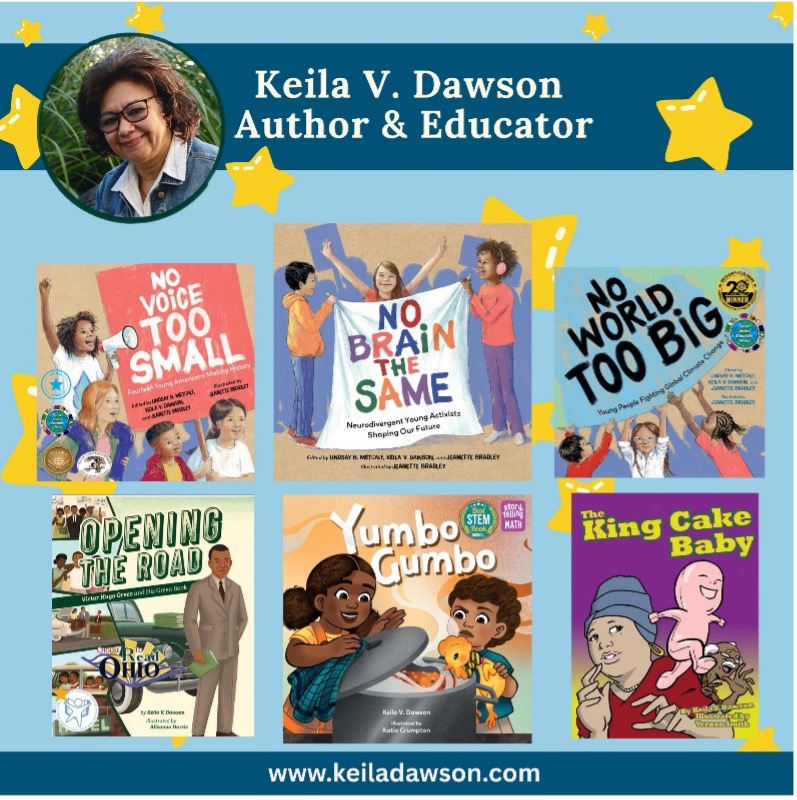
Keila V. Dawson is an award-winning author who writes fiction and nonfiction children’s books. She is coeditor and contributor to No Brain the Same and its award-winning companion titles, No World Too Big and No Voice Too Small. Dawson is the author of Yumbo Gumbo, a 2025 NSTA-CBC title; Opening the Road: Victor Hugo Green and His Green Book, a 2025 Choose to Read Ohio booklist selection; The King Cake Baby and the forthcoming Annabelle’s Beignet Café. Before becoming a children’s author, Dawson worked as a community organizer, educator, and advocate for children with learning difficulties and disabilities in different states and abroad in the Philippines, Japan, and Egypt. Today, she lives in Cincinnati, Ohio.
Find out more about Keila and her books at www.keiladawson.com. Follow her on Facebook, Instagram, Bluesky, and LinkedIn.
When you enjoy a book, please support authors and illustrators by leaving online reviews! 😍


Thank you for including these lesson plans! This looks like the perfect book for my advocacy unit I teach where students each read a fictional book about a disability and then do a research project to accompany it.
LikeLiked by 2 people
YAY! So happy you found something useful. Have a great school year!
LikeLike
What an amazing book! I can’t wait to share it with kids and spread its inspiring message. Congratulations!!
LikeLiked by 1 person
Thanks, Claire!
LikeLike
Keila, Congrats to you, Lindsay, and Jeanette on your new book NO BRAIN THE SAME! I can’t wait to share the poems/stories with my third graders and introduce them to Gardner’s Theory of Multiple Intelligences.
LikeLiked by 1 person
Thanks, Lillie. I hope you have a wonderful school year!
LikeLike
Thank you for spreading the word about how there are so many ways people learn. Your book provides many ways for kids to find connections with the content and hopefully within their world.
LikeLiked by 1 person
Thank you, Christine! We sure strive to make our books matter.
LikeLike