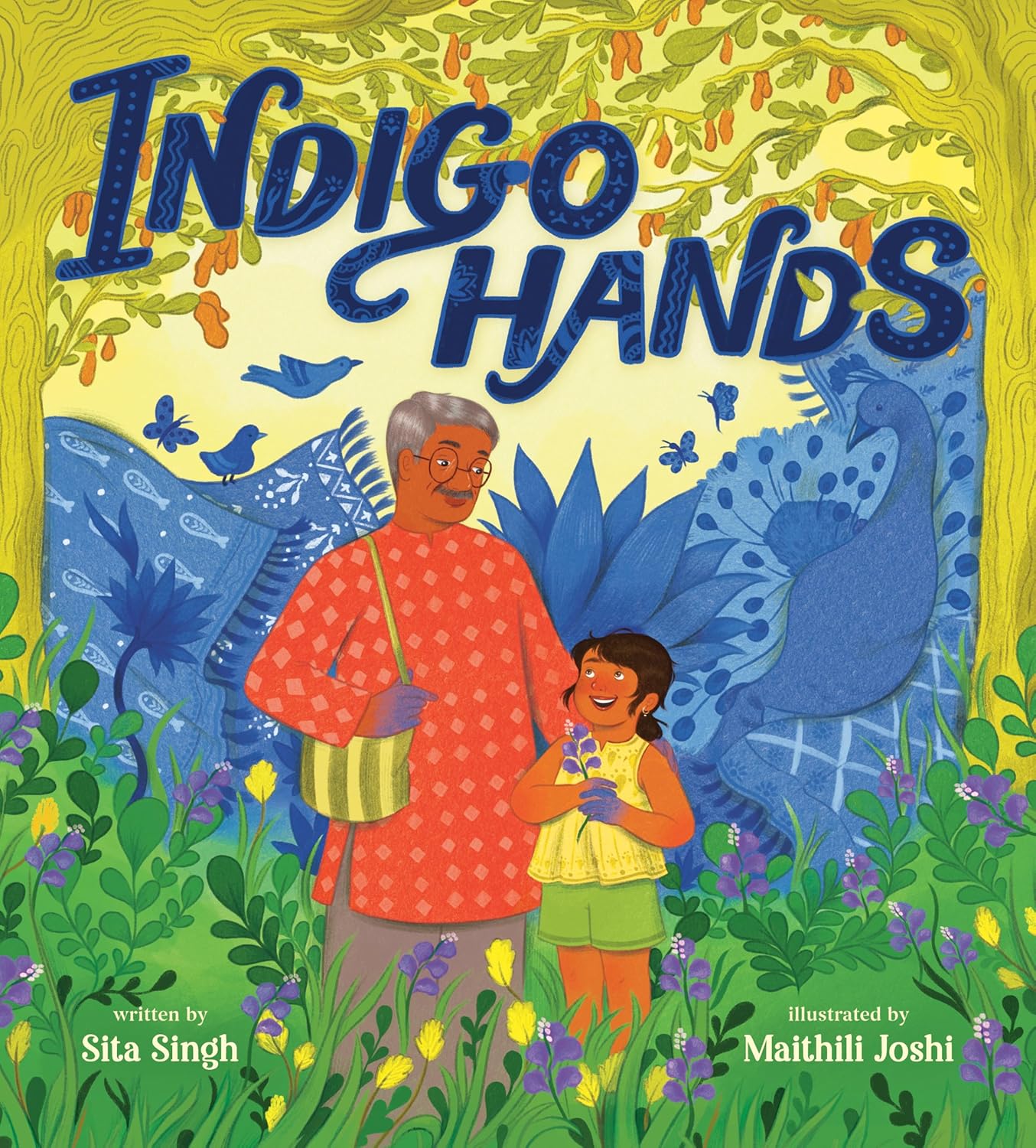
Today’s post is about a book with layers of family, culture, and traditions, and how author Sita Singh embedded the indigo dying process in the relationship between grandfather and granddaughter to propel the story forward.
GIVEAWAY! Leave a comment below for a chance to win a copy of INDIGO HANDS from Sita!
Congratulations to Robin Wechsler, winner of one of Teresa Robeson’s featured new releases, a choice of FLASH FLOODS or ANIMALS OF THE CHINESE ZODIAC!
Finding the Story in a Process
by Sita Singh
One of my favorite keepsakes from the journey to publication of Indigo Hands is my manuscript covered in my editor’s handwritten notes. There’s something special about seeing those pages now and remembering all the questions, conversations, and revisions that went into turning the manuscript into a book.
One of the challenges with Indigo Hands was figuring out how to tell a story around a process.
Indigo dyeing is fascinating. Leaves are harvested and transformed into dye, fabric is dipped into the vat and lifted into the air, and a cloth that first appears green slowly changes into shades of blue as it meets oxygen. There is science, art, and tradition woven into every step. And while indigo dyeing has been practiced by cultures around the world for centuries, each with its own traditions and techniques, the beautiful blue also carries a complex history.
I had gathered so much wonderful information, and the challenge was figuring out how much of the process readers needed to understand—and how to do that without slowing down the story. My editor actually helped me see just how important that balance was. In one of her editorial notes, she wrote:
“Because this story is very much about the process of how indigo dye is made and used, I feel it needs to be crystal clear what is happening. The challenge of course is how to do this without bogging things down! At present, I’m afraid I’m not following the process. (Only once I read the backmatter did I fully understand it.) Can you make clear what exactly happens? How long each step takes? Even if our little narrator doesn’t witness it all, we need to hear how much time has passed and what went on during that time.”
That last part really stayed with me.
So I went back to the manuscript and started looking at the process through the narrator’s eyes. What does Neela notice? What might surprise her? What would make her curious about what comes next? And perhaps most importantly: What does the reader need to understand at this point in the story?
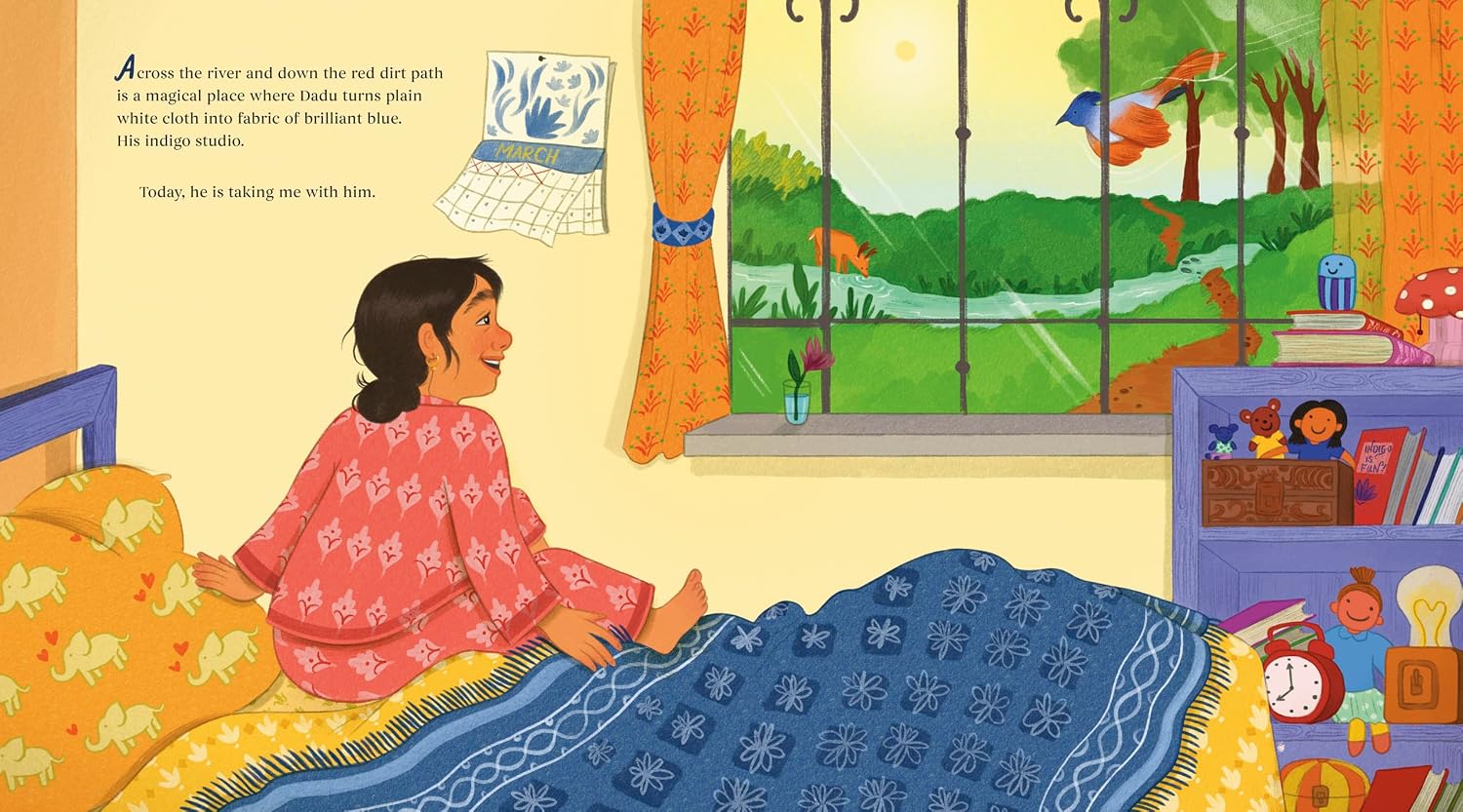
A process naturally follows a sequence: this happens, then this happens, then this happens. But a picture book can’t simply be a list of steps. Each spread had to give the reader a reason to keep going. So instead of only asking, What happens next in the dyeing process?, I began asking, What does the reader discover along the way?
That small shift helped me think about the process less as a set of instructions and more as an experience. It led to revisions in the text, the pacing, and the balance between what belonged in the story and what could move to the backmatter. It also meant thinking about what the illustrations could show rather than explain.
As I worked through all of this, I kept thinking about the experience I was trying to create for the reader. And after the manuscript was finished, I finally had the chance to experience the process myself.
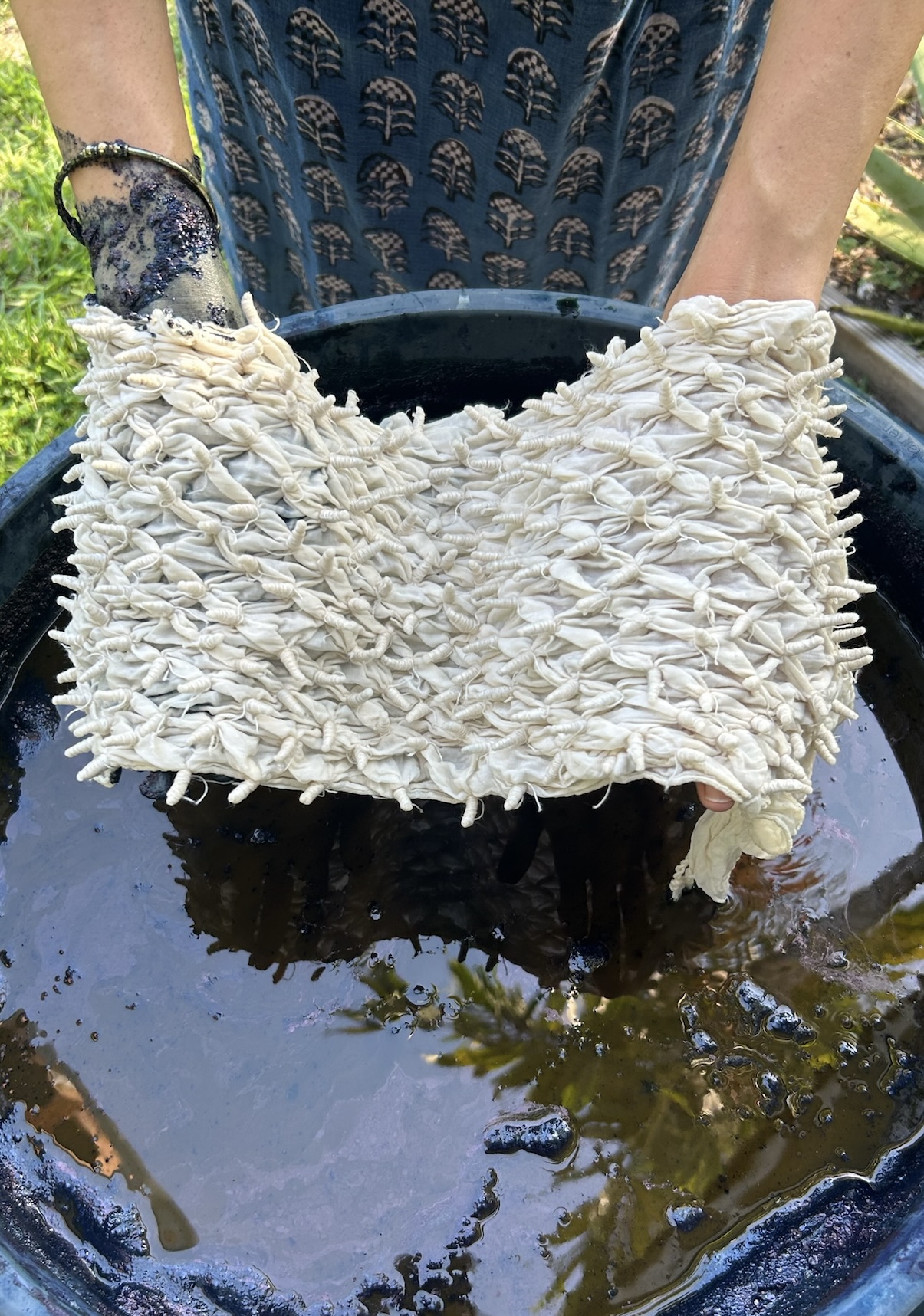
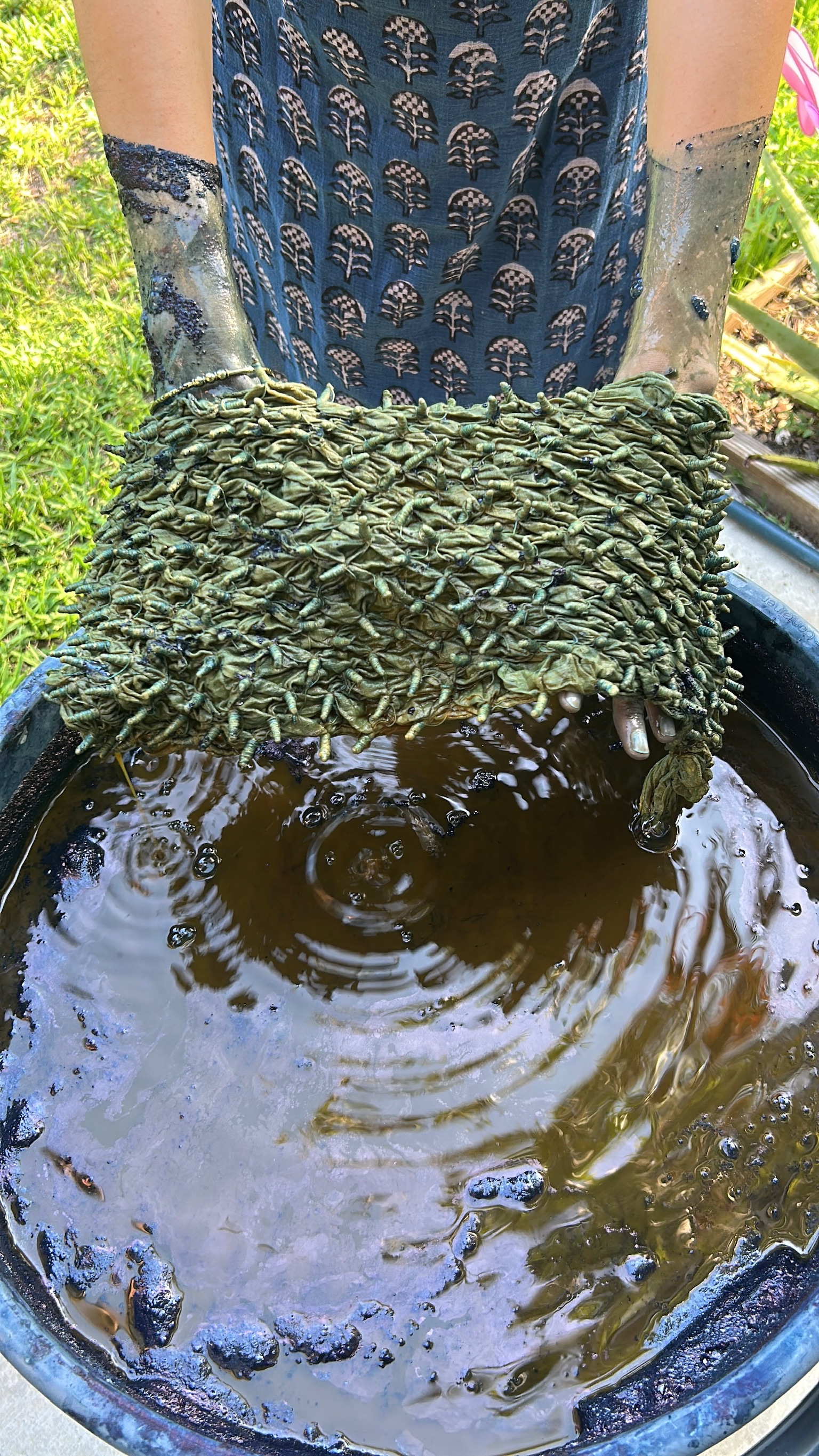
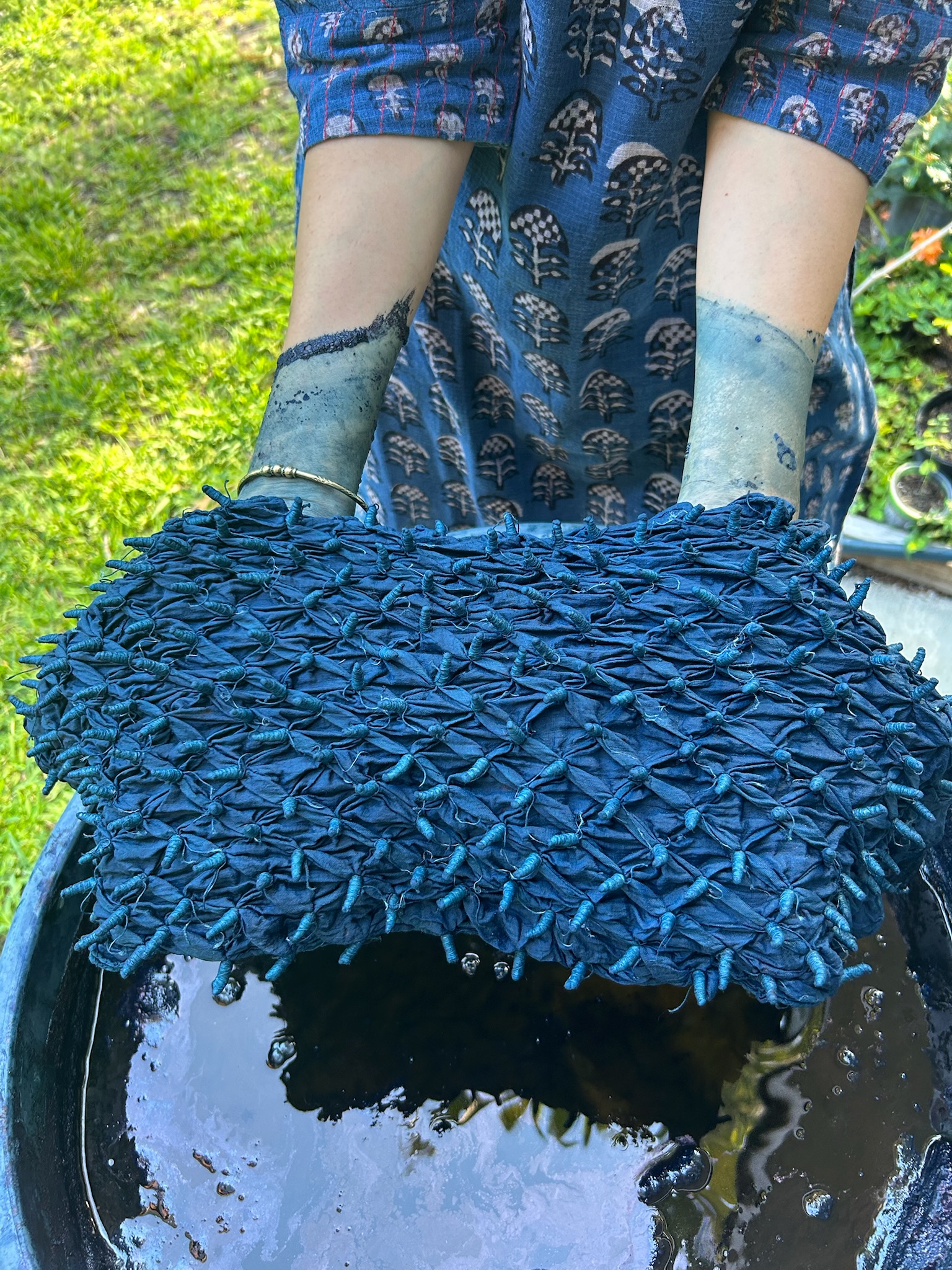
Standing beside the dye vat, I watched fabric emerge not blue, but green. Slowly, almost magically, it transformed as it met the air. My hands carried traces of blue long after the workshop ended. There were smells, textures, waiting, repetition, and little surprises that I couldn’t fully appreciate from books, photographs, and conversations alone.
The experience didn’t change the manuscript—the story had already found its footing—but it gave me a deeper appreciation for the process I had spent so much time researching and writing about. And it reminded me why I wanted to write about indigo in the first place. The magic isn’t just in knowing how it works. It’s in watching the transformation happen.
Looking back, the challenge with Indigo Hands wasn’t the research or the process itself. It was finding the story within it, figuring out how to take something I found fascinating and make young readers feel that same sense of curiosity and wonder.
Because a process can show us what happens. A story invites us to experience it.
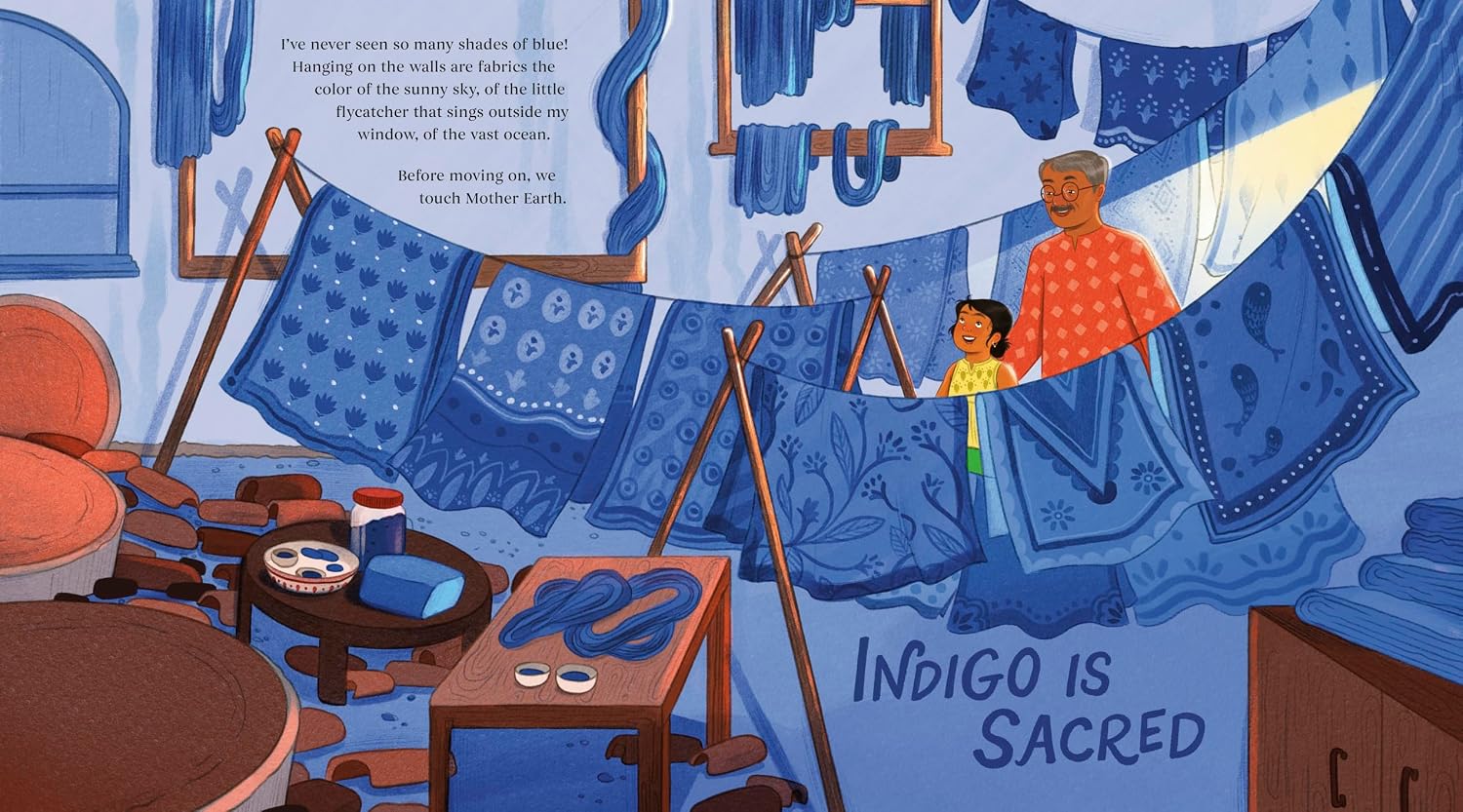
Don’t forget to leave a comment below for a chance to win INDIGO HANDS from Sita! (US addresses only please. Winner announced 10/30/26)
If you enjoy a book, please support authors and illustrators by leaving online reviews. 😍

