Author Ann McCallum Staats and I both celebrated a book birthday on 9/29/26 with the release of A QUILT OF STARS and THE PATRIOTS AND THE POX! As two former teachers, we know the best way to celebrate is with educators. These two books might appear to have nothing more in common than science and history. But with this activity for the classroom, we challenge young critical thinkers to make connections across time and place, and ultimately to themselves.
Congratulations to Teresa Robeson, the winner of THE PATRIOTS AND THE POX from illustrator Ashley Yazdani!
Connect Texts Across Time, Place, and the Human Experience
By Ann McCallum Staats and Beth Anderson
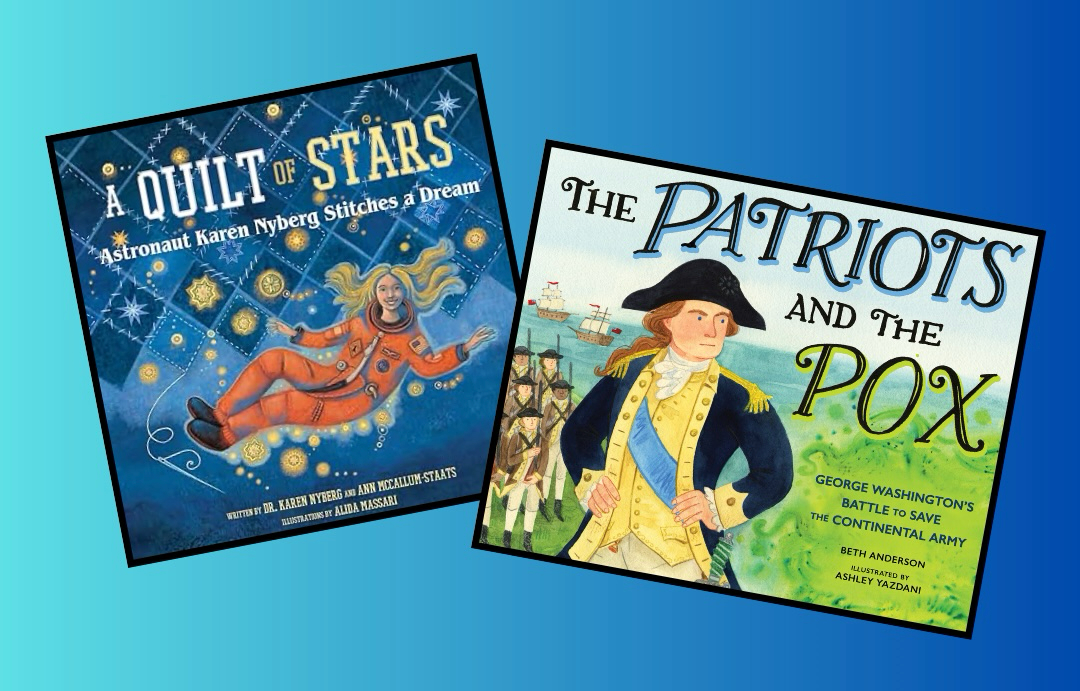
What does a wartime disease have to do with a mission to space? At first glance, maybe not much. But when I first read Beth Anderson’s THE PATRIOTS AND THE POX, I found myself zeroing in on unlikely connections between that story and the one in A QUILT OF STARS, my latest book co-written with astronaut Karen Nyberg.
Beth’s book is about George Washington’s battle against smallpox, a significant threat that could have changed the history of the United States. In A QUILT OF STARS, a different kind of history was made. Like the science of inoculating troops, Karen’s efforts as the fiftieth woman in space advanced our knowledge and helped shape the future. Then there’s the human piece. Like George Washington’s effort to inoculate his troops, when Karen sewed a quilt block in space and invited others to contribute to the Astronomical Quilt Challenge, she helped spread an idea: our union is our strength.
As educators, we are constantly asking our students to make connections. We ask them to look at history and discover ways to relate what happened in the past to what’s happening in the present and especially to our own lives. By taking a deep dive into similarities and differences, we encourage students to engage in critical thinking, to foster decision-making skills, and to sharpen observation.
What if we take these two seemingly different books and compare and contrast them using a Venn diagram? What connections can be made? What skills can we engage in our students?
Here’s a quick overview of both books. In THE PATRIOTS AND THE POX, George Washington is a leader who has a crucial decision to make. He must decide how to protect his undisciplined troops from deadly smallpox while battling the British. Quarantine alone is failing. Inoculation could provide immunity after mild illness, but if quarantine is broken in the month-long process of recovery, natural smallpox could spread and decimate the entire fighting force.
In A QUILT OF STARS, Karen spends years of sacrifice and training to follow her dream of becoming an astronaut. Once accepted into the program, she sets aside the potential danger of the job to selflessly advance science. Further, while living on the International Space Station, she finds a way to bring people together. In a quote from the book, “She imagined the people living below. From here, she didn’t see problems like hunger, war, or disagreements between neighbors. There were no country boundaries. Earth from outside was a beautiful patchwork, home to everyone.”
A Venn diagram is a powerful tool to compare the experiences of George Washington and Karen Nyberg. To get the ball rolling, here are some of the questions an educator might ask:
*What are some obvious differences between the two experiences?
*What character traits do the two have in common?
*How is what they did for science similar? How is it different?
*How did each person affect the future?
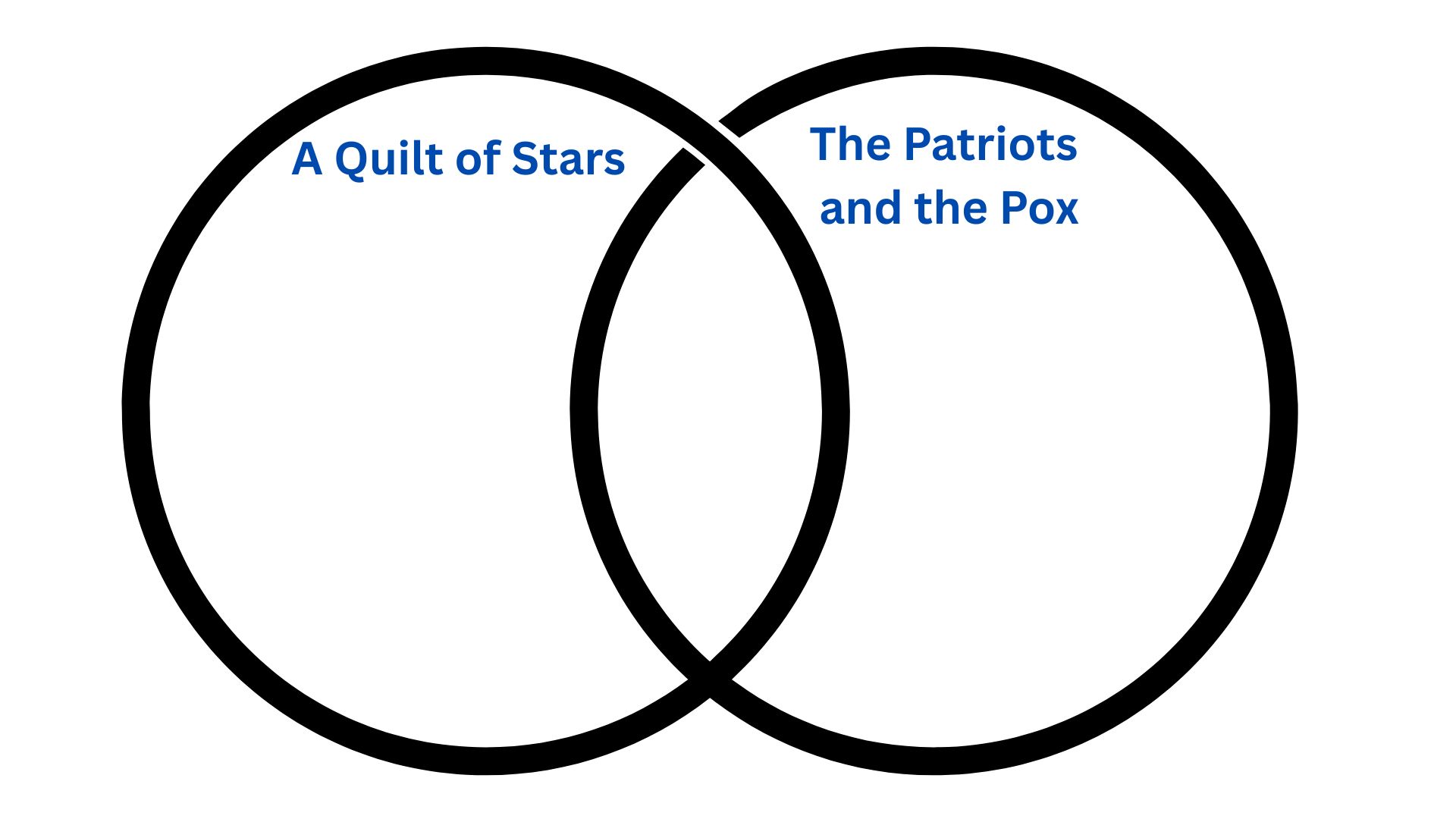
Comparing two seemingly different missions and people who face the challenges of their time and place, including the world of science, can broaden understanding and sharpen reasoning skills.
Then stretch thinking further to include oneself, because, after all, we’re also part of history.
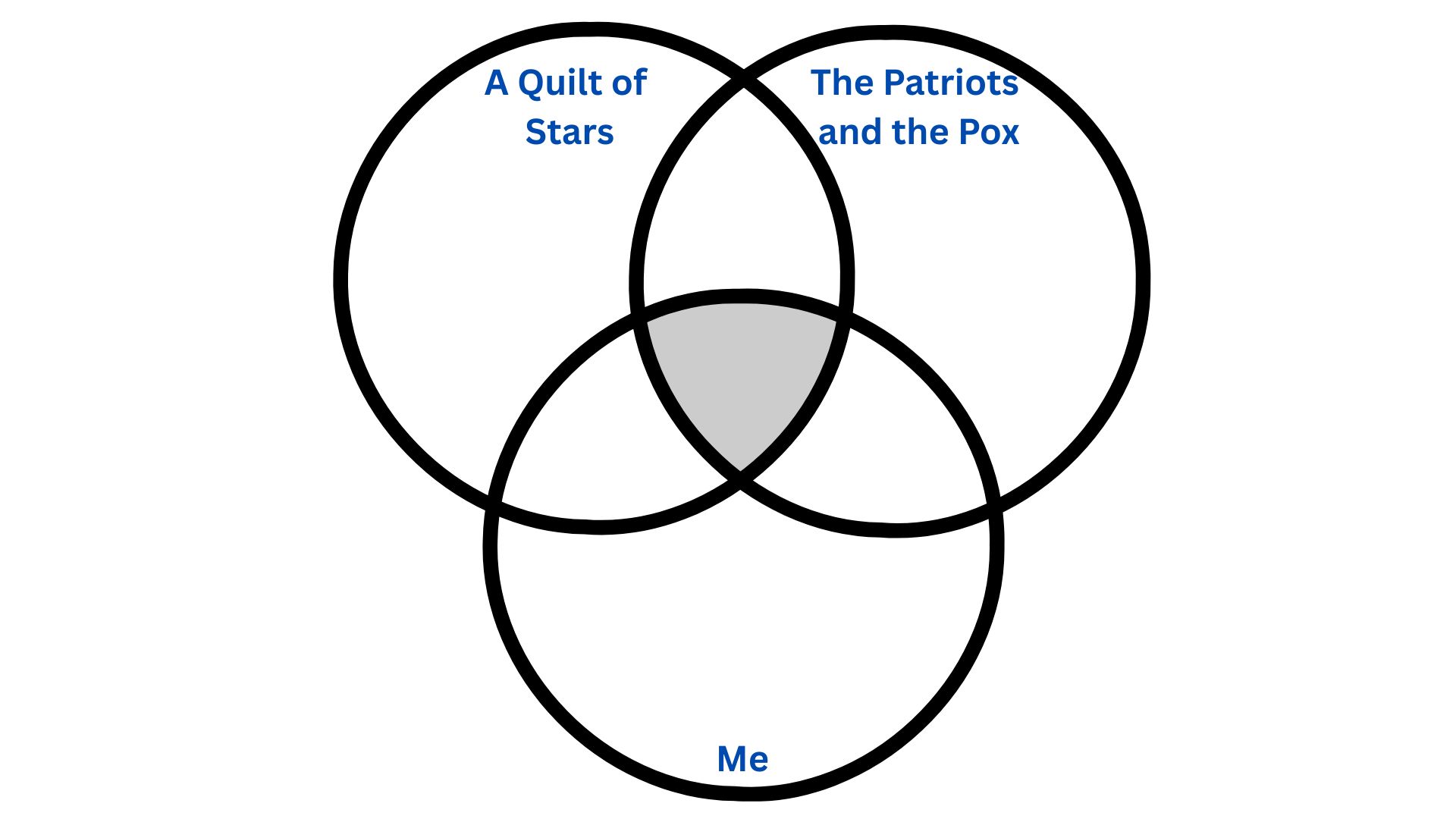
Conclude with a WRITING PROMPT.
Journal entry or quick write: What connects us through time?
For more activities for educators, download our free educator guides.

