In this post, author Barbara Carroll Roberts shares a very special moment in our history. To ensure the significance of this moment wasn’t overlooked, the congress used a powerful metaphor. And today you can not only ready about it in WHEN GEORGE WASHINGTON BOWED TO THE NEW NATION, you can also see it preserved in Maryland’s statehouse.
GIVEAWAY! Leave a comment below for a chance to win a copy of WHEN GEORGE WASHINGTON BOWED TO THE NEW NATION from Barbara.
Congratulations to Teresa Robeson, winner of DEBUG THIS BOOK from illustrator Julie Rowan-Zoch!
A Revolutionary Metaphor!
by Barbara Carroll Roberts
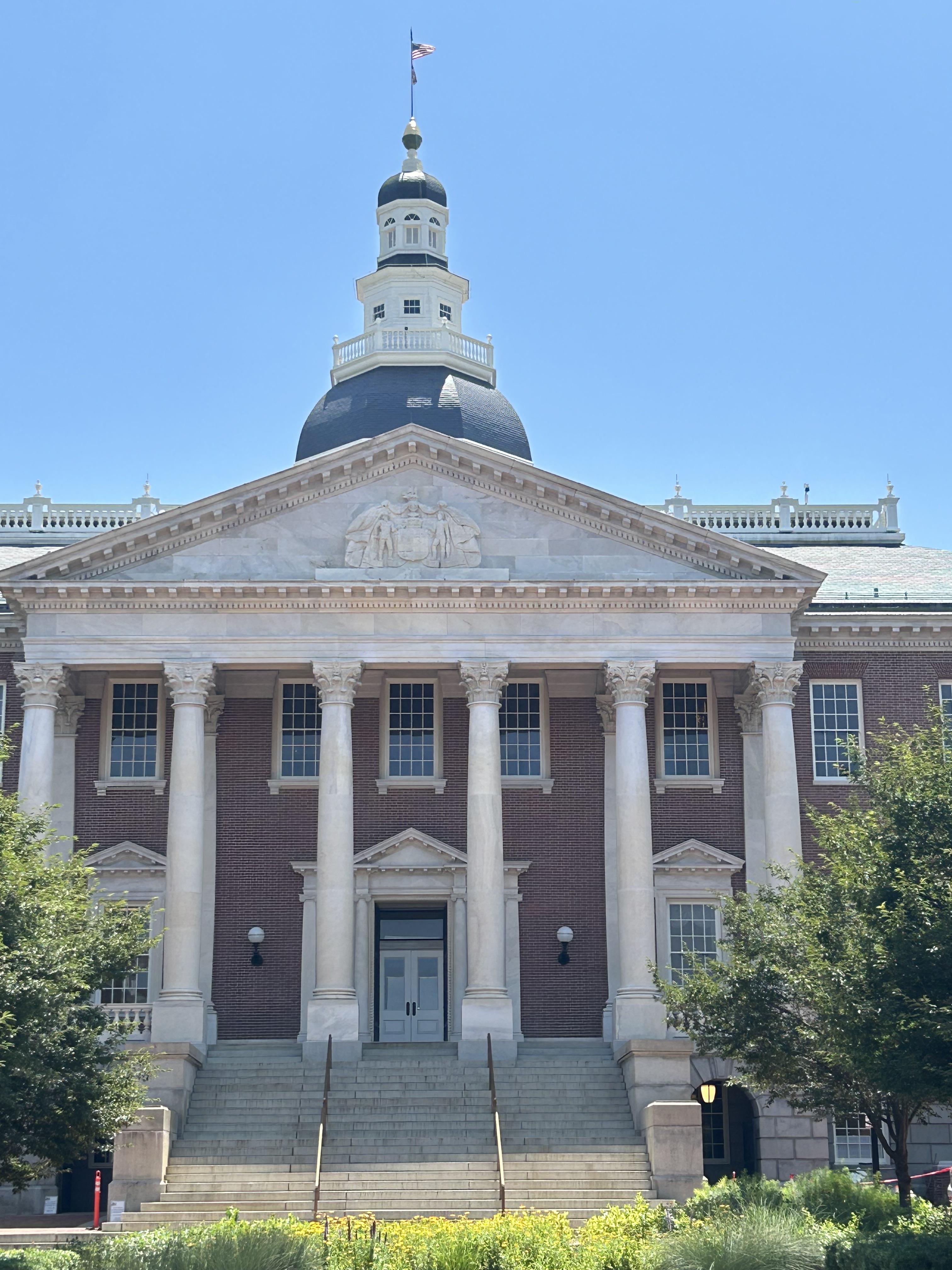
A few years ago, I was having lunch with friends at a restaurant near the Maryland Statehouse in Annapolis, when one of my friends pointed at the Statehouse and said, “That’s where George Washington turned in his commission at the end of the Revolution.” We went on talking about other things, but my friend’s statement stayed in the back of my mind. And one day it bumped up against something I learned from my boss in my first writing job.
While teaching me how to write a press release, my boss said that who, what, when, where, why, and how are all important. But the most important question is, “So what?”.
What’s the big deal about this announcement? What’s so important about this new product? Why should anyone care about this event?
Which led me to ask myself: What’s so important about Washington resigning from the Continental Army. Why should I care? And like most of us who write nonfiction, I suspect, a question like that set me off on a research adventure.
It didn’t take long to find the answer. What Washington did that day was important because it hadn’t been done before, at least not in modern times. Throughout history, when a general led an army to overthrow a king, the general declared himself the new king. And that’s what many people, certainly almost everyone in Great Britain and Europe, expected Washington to do. But by voluntarily giving up power after defeating a king, Washington performed a supremely radical act, setting the new country on a course toward democracy, rather than perpetuating monarchy.
Many historians, I learned, consider this to be one of the single most important events in U.S. history, which made me think young people should know about it. But in my search of children’s books about George Washington, I didn’t find any that focused on this event. So I set out to write one.
Now my problem was how to convey this in narrative form for young readers. How to make it feel like a story, rather than a history lesson. And like many of us who write nonfiction, I suspect, I tried a number of approaches that didn’t work before finding something that did.
I realized that the factual information at the center of this event contained a strong metaphor that I could use to focus the narrative: Bowing to one’s “betters.”
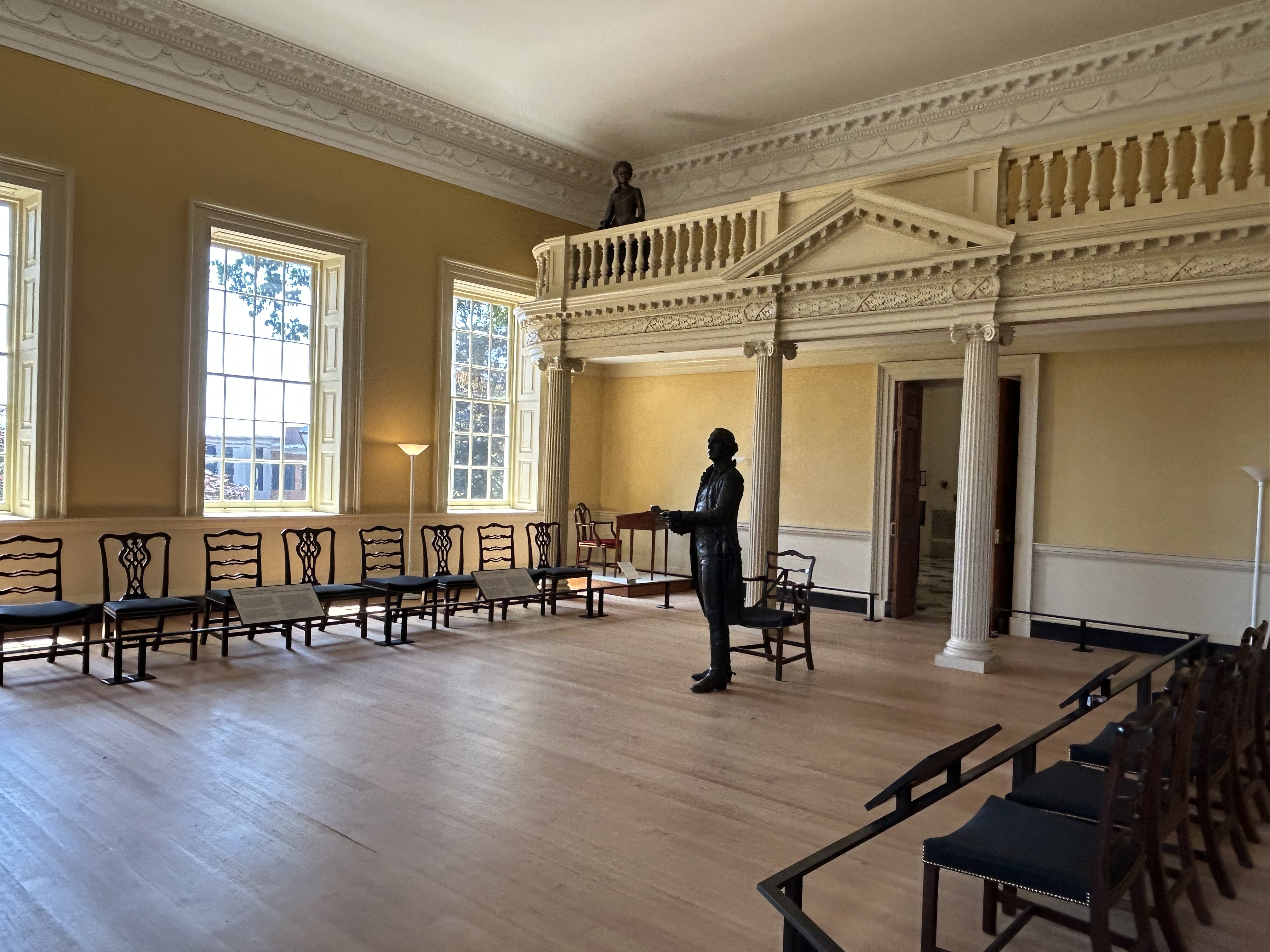
Bowing, a symbolic gesture of respect for power, was something that everyone living in Washington’s time understood. Indeed the symbolism of this gesture was so well understood that Washington and the members of the Continental Congress carefully choreographed the moment Washington gave up his power. It had to be a public event that witnesses could see and record in letters and diaries. And it had to be so obvious that no one could mistake the meaning. Washington would stand and remove his hat, while the members of Congress remained seated with their hats on, and then Washington would bow to them, to the representatives of “the people.” He would physically act out the power structure of this new country, demonstrating that leaders would serve the citizens, not the other way around.
Clearly, this event had to be the climax of the narrative, and in order for it to resonate with young readers, I had to show the reverence and hero-worship that greeted Washington everywhere he went.
So I structured the book around Washington’s journey home from New York after the Treaty of Paris was signed and the last British troops left Manhattan. And at the beginning of this journey, I directly asked the questions, “What will General Washington do? Will he declare himself the new king as other great generals have done all through history?”
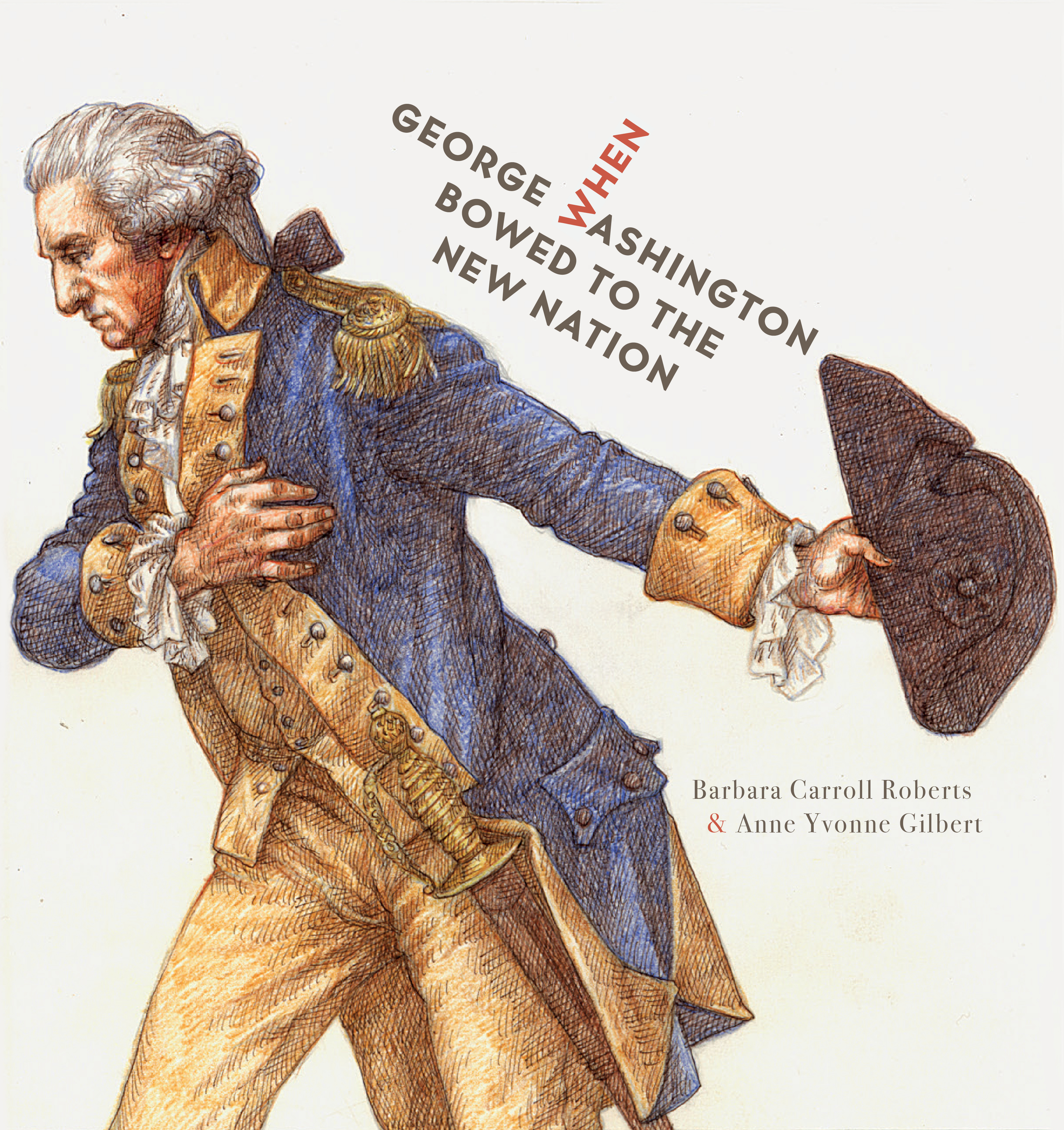
These questions then echo throughout Washington’s journey as citizens demonstrate their adulation of him. Delegations rushing out to meet him in every city and town. Speeches, balls, and fireworks. And all along the way, people bowing to him, addressing him as “Your Excellency.” So when Washington reaches the Maryland Statehouse and makes his symbolic gesture of giving up his power—brilliantly reinforced by Anne Yvonne Gilbert’s stunning illustration—readers can feel its full meaning.
Writing When George Washington Bowed to the New Nation gave me a deeper understanding of what Washington and the members of the Continental Congress did at the end of the Revolution, breaking with the tradition and history of leadership change and embarking on a new experiment in governance. It also reminded me of the power of a strong metaphor to convey an idea, both in the actions of individuals and in the shaping of narrative.
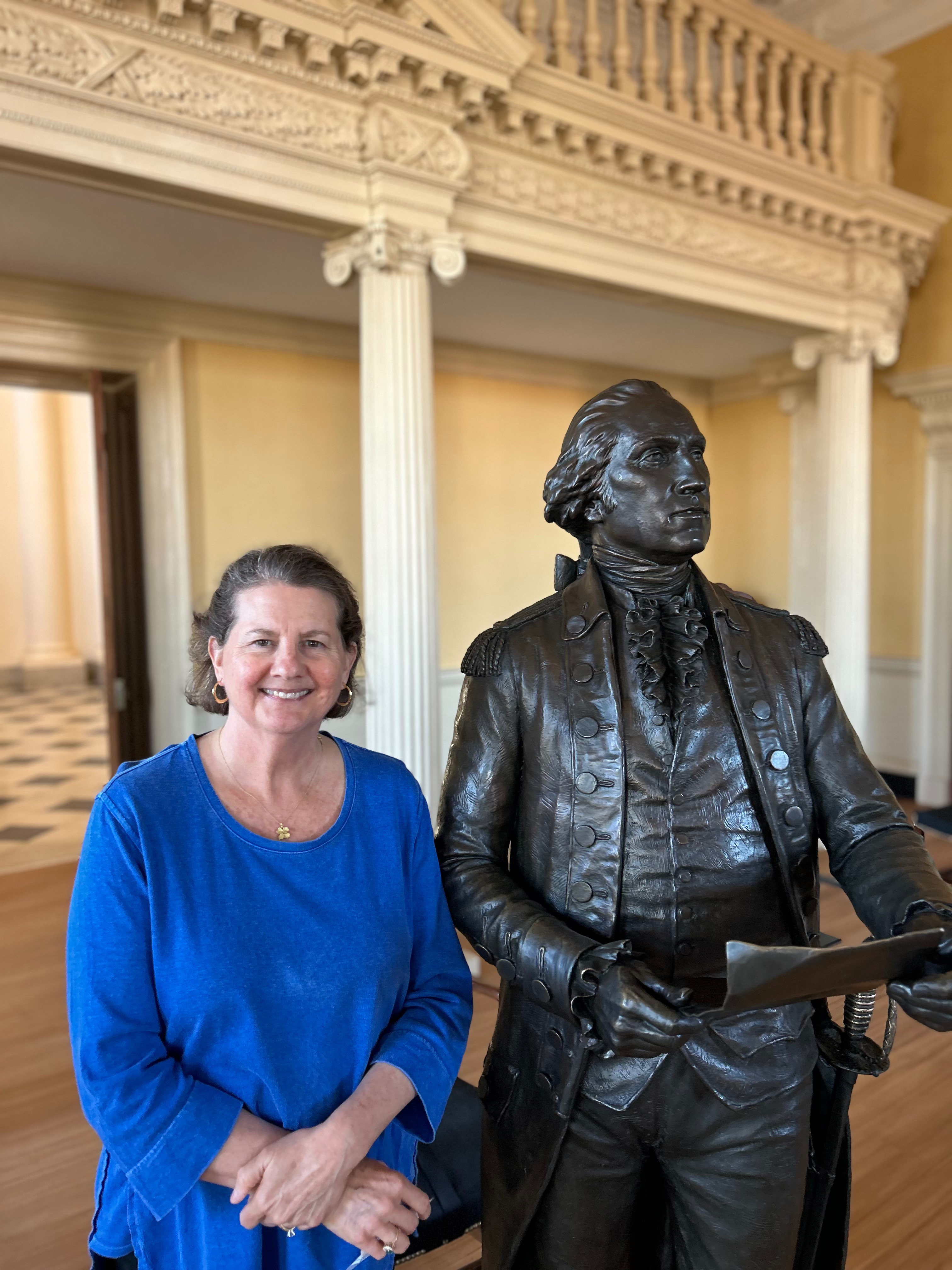
Don’t forget to leave a comment below for a chance to win a copy of WHEN GEORGE WASHINGTON BOWED TO THE NEW NATION! (US addresses only, please. Winner announced 8/14/26)
When you enjoy a book, please support authors and illustrators by leaving online reviews! 😍


Barbara,
First off, I absolutely must read more on the notion of “bowing to one’s “betters.” Kids will benefit. We, citizens of the world, will be better for thinking more about this through line.
Secondly, your name makes me wonder if you might be a descendant of the marvelous signer of the Declaration of Independence, Charles Carroll of Carrollton.
Last but not least, I’m off to get my hands on your brilliant book.Congratulations!
LikeLiked by 1 person
This book is so important so that children understand what it means to serve the people. It goes right to the heart of democracy. I hope a librarian or teacher wins it so it can be shared with lots of children. If I win it, I’ll donate it to a local school.
LikeLiked by 1 person
Such fascinating history with so much relevance for today. This is one of those books meant for all ages, adults as well as children. Congratulations!
LikeLiked by 1 person
Such fascinating history with so much relevance for today. This is one of those books meant for all ages, including adults. Congratulations!
LikeLiked by 1 person
Fascinating! It’s amazing what one learns in picture books. I’ve studied American history and visit Mount Vernon often. This is the first time I have read about this important “detail” of our nation’s history. Thank you!
LikeLiked by 1 person
What a great post, with so many take-aways! That comment on finding the “So What?” really resonated, as did the asking the readers directly. That switch—from others bowing to Washington to him bowing to them—is so powerful. Thank you.
LikeLiked by 1 person
what a great piece of history. Thanks
LikeLiked by 1 person
LOVE!!! Metaphor is so powerful especially in short pieces! I really appreciate this comment, too: “I had to show the reverence and hero-worship that greeted Washington everywhere he went.” Sounds obvious when you write it, but I don’t think it is. I absolutely love what this book is about, and can’t wait to read it. Congratulations, Barbara!
LikeLiked by 1 person
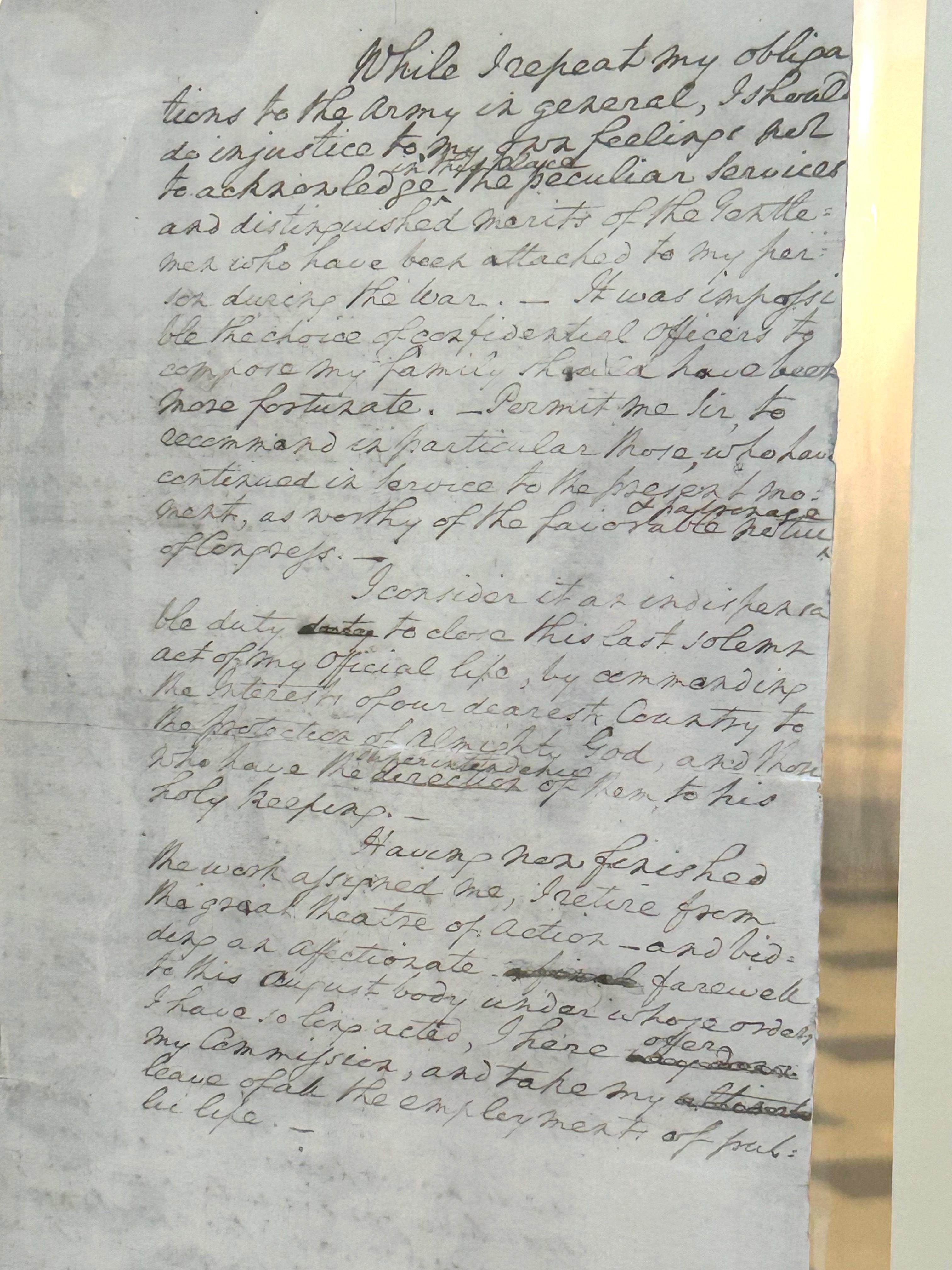
Context is everything! I wish I had known this part of history when lived in Washington DC and visited Annapolis often. And I find myself trying to read Washington’s letter…and failing. Can’t help but admire his handwriting. Congrats on providing the marvelous answer to “So what?”
LikeLiked by 1 person
What a great tribute to a founding father. I’m so glad that this story shows Washington’s humility and dedication to our country.
LikeLiked by 1 person
What a great story to teach us, young or older this perspective of George Washington! I’m excited to read it and see the beautiful illustration’s. Lots of luck and a rousing success!!
LikeLiked by 1 person
This is such a fascinating part of US history. Your book sounds amazing. I have many Japanese associates and bowing is now an automatic part of my greetings. I love the symbolism of respect in Washington’s actions.
LikeLiked by 1 person