A great way to celebrate the 250th anniversary of the United States is to encourage children to ask big questions about the founding—especially the WHYs! Every time I dive into researching a topic in this fascinating era, the WHYs open the way to deeper understanding and connection. In this post, author Roxanne Troup shares a process to get kids thinking critically about HAPPY BIRTHDAY, AMERICA! as well as other books.
GIVEAWAY! Leave a comment below for a chance to win a signed, limited edition paperback of HAPPY BIRTHDAY, AMERICA! from Roxanne Troup!
Congratulations to Joan Swanson, the winner of BUILDING HOMES FOR ALL by Elaine Kachala.
“The Big Why” by Roxanne Troup
This year America is celebrating its 250th anniversary, so I’m thrilled to be able to share HAPPY BIRTHDAY, AMERICA! with young readers. Illustrated by Jennifer Doehring and published with Albert Whitman, this holiday title invites readers to pause their festivities to remember (or learn) the reasons behind our celebration.
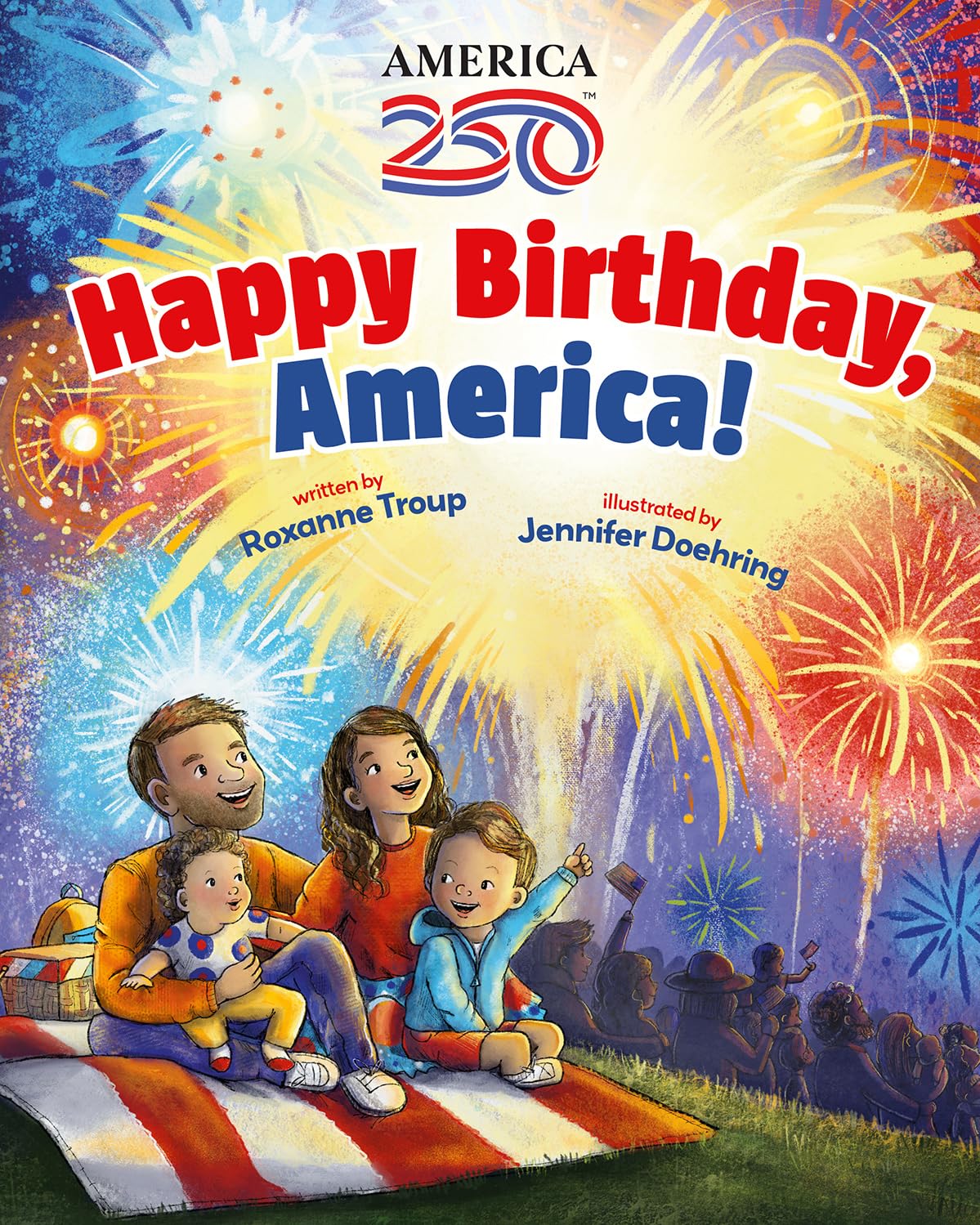
Discovering this “big why” is a great way to engage kids in the classroom. Digging into the why of a topic promotes curiosity and critical thinking. It also helps students connect what they’re learning to what they already know.
Kids are great at asking questions! But too often, our classrooms reward knowing answers, not asking questions. Reenergize student learning by making your classroom a safe space for questions. (And don’t forget to have some fun!)
Encourage Good Questions
The first step in encouraging students to ask good questions is to model good questions. You can do so by:
- Creating a “Wonder Wall”
At the beginning of each unit, ask students to write questions on index cards of something they wonder about that topic. Make it anonymous, but post each question on the “Wonder Wall.” When a question is answered throughout the unit of study, record its answer on a different colored card and post it under the original.
- Setting Aside Q/A Time
Curb off-topic questions by having students write them down and add them to a “questions” box. Set aside time at the end of the day (or week) to address questions in the box. Keep it fun and answer every appropriate question submitted, even the silly ones.
- Playing Picture Detectives
Create small groups of students. Show students an image (or set of images) and have them create “who,” “what,” “when,” “where,” “why,” and “how” questions about it. Take turns having groups ask their questions of the class and discussing the answers.
- Explaining Open and Closed Questions
Teach students the difference between open and closed questions using your classroom door. (Before this exercise, create a list of questions reviewing material from the day/week.) Line students up by the door. Explain the concept of open-ended and closed questions. As each student approaches the door, ask a question. If the question is open-ended have the student open the door, answer, and walk “through” to return to their seat. If the question is closed, have the student “slam” the door shut, answer the question, and return to their seat. Correct/praise as needed both in their response to the “open or closed” scenario and the review question.
Find the “Why”
Picture books are a great way to introduce or expand your students’ knowledge base of a topic. They’re also one of the most accessible forms of literature available, and they make perfect launching pads for developing critical thinking skills. I’ll show you what I mean.
Read HAPPY BIRTHDAY, AMERICA! (or any other picture book) to your class. Then play “5 Whys.”
Step 1) Ask students a “why” question related to the book. (The answer should come directly from the text.) For example: Why was the main character’s family at the park?
Step 2) Using that answer, ask another “why” question. Example: Why do people celebrate the 4th of July?
Step 3) Continuing asking “why” questions until you find the “Big Why” (root cause) or the questions stop providing useful information.
- Why don’t we give gifts for America’s birthday?
- Why is freedom a good “gift”?
- Why should we continue to celebrate freedom?
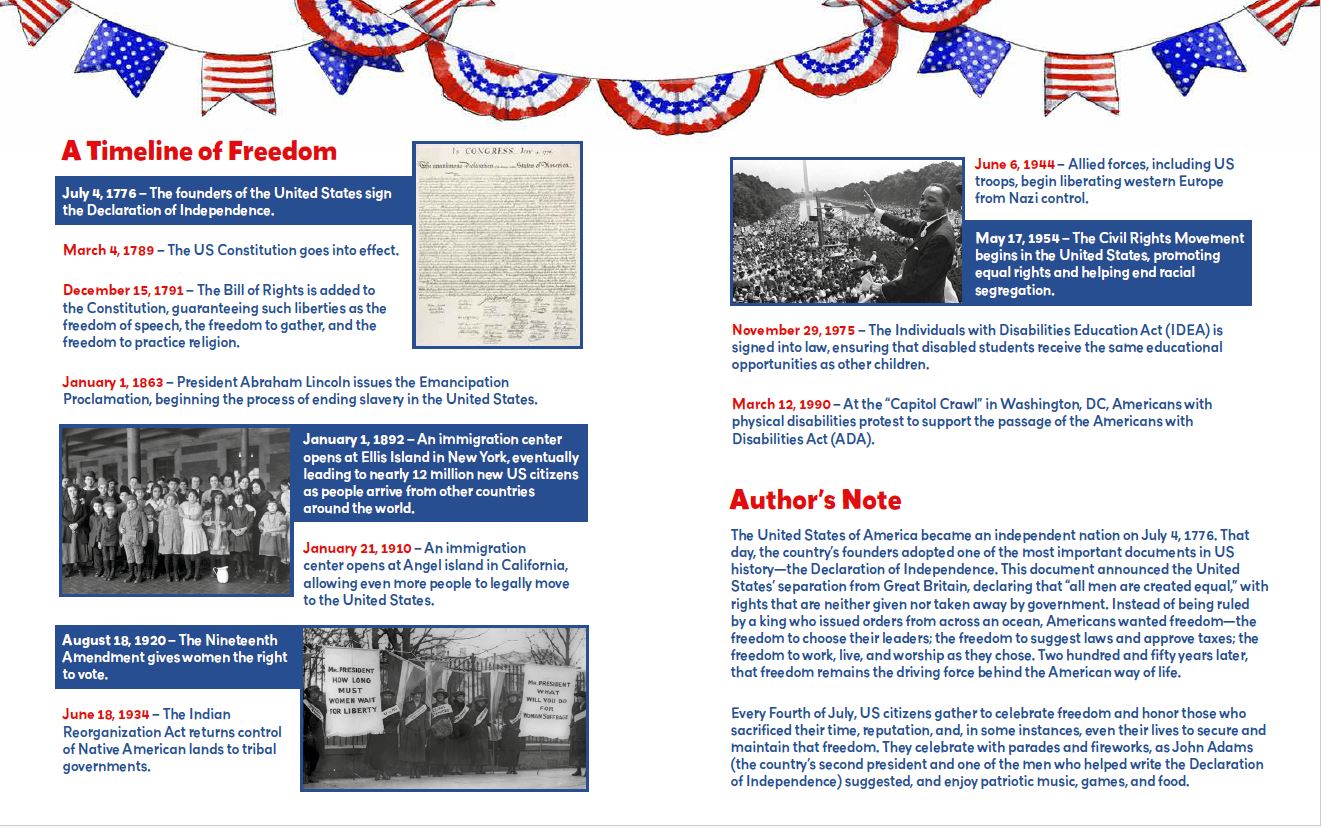
Step 4) As a class, discuss how this theme connects to (or reveals) the author’s purpose. Find textual evidence that supports your conclusions. Look for things like story structure and point of view, word choice and text features, or ancillary materials.

Bio:
Author of over 50 books for kids, Roxanne Troup writes to celebrate wonder and support literacy in the classroom. She loves visiting schools and exploring the wonders of the beautiful Rocky Mountains. Learn more about at http://www.roxannetroup.com.
Don’t forget to leave a comment below for a chance to win a copy of Happy Birthday, America! by Roxanne Troup. (US addresses only, please. Winner announced 5/8/26)
And if you enjoy a book, please support authors and illustrators by leaving online reviews! 😍


I think asking “why?” and questioning everything is a child’s favorite question. I know my daughters loved it and I decided to really consider the answers, unlike my parents who took the easy way out and said, “Because I said so.” This book is so timely. Congratulations!
LikeLiked by 1 person
I think teaching through modeling how to ask good questions is part of being of being a researcher. Some children have this ability naturally but others don’t. The natural curiosity of wondering how things work, why things happen, and the desire to know more aren’t always there. I had students who seemed to lack curiosity in general but the more they learned about something, the more they realized there was (even) more to know.
LikeLiked by 2 people
Congratulations on this new book, Roxanne!
LikeLiked by 1 person
Terrific activities here! And congrats, Roxanne and Jennifer, on the celebratory new book!
LikeLiked by 1 person