If you’re not familiar with Lindsay Moretti’s endeavor for educators called KIDLIT GROVE, please…read on! In this post, she shares her process of using picture books as a springboard for creating Project-Based Learning (PBL) units. I totally agree with her—books don’t end with the last page!
GIVEAWAY! Lindsay is offering winner’s choice: a free 1-month subscription to KidLit Grove’s curriculum library OR A custom STEAM unit (PBL or 45 minute workshop) designed for the winner’s own book or a book of their choice!
Congratulations to “daisymay,” the winner of WORTHY: THE BRAVE AND CAPABLE LIFE OF JOSEPH PIERCE from Andrea Wang.
From Story to STEAM: Building Project-Based Learning from Picture Books
By Lindsay Moretti
When I sit down with a picture book, I find myself asking: what doors does this story open? I’m a firm believer that stories don’t end with the last page, but rather open opportunities.
Books are more than a tool for literacy. They can be springboards into science, engineering, math, art, and beyond. For educators working with PreK and elementary students, pairing picture books with STEAM explorations and project-based learning (PBL) can help students toggle between imagination and innovation.
Through KidLit Grove, I create curriculum units that grow out of picture book themes. Each unit is designed to spark curiosity, deepen inquiry, expand retention, and connect learning to the real world. In this post, I’ll share a few guiding practices and examples that show how stories can be an anchor for meaningful PBL across grade levels.
1. Let the story set the stage.
The best PBL begins with a driving question. What does the story offer for discovery? Picture books are naturally brimming with wonder — what if, why, how, and what’s next?
Take Buffy Silverman’s Starlight Symphony, which I recently featured for PreK–Kindergarten unit. The lyrical nighttime setting invites young learners to wonder about the diversity of animals and the way they communicate. From there, a STEAM unit unfolds into sound science by building instruments, experimenting with materials and the sounds they make, and exploring animal families through play-based sensory activities.

The story frames the wonder. The STEAM work builds the exploration.
2. Ensure relevance.
When you combine stories that help us imagine and PBL that helps us engage, they allow students to make meaningful connections. When you discover the “real-world hook” within a picture book, those concepts come to life through experiences that students can see, touch, and connect with.
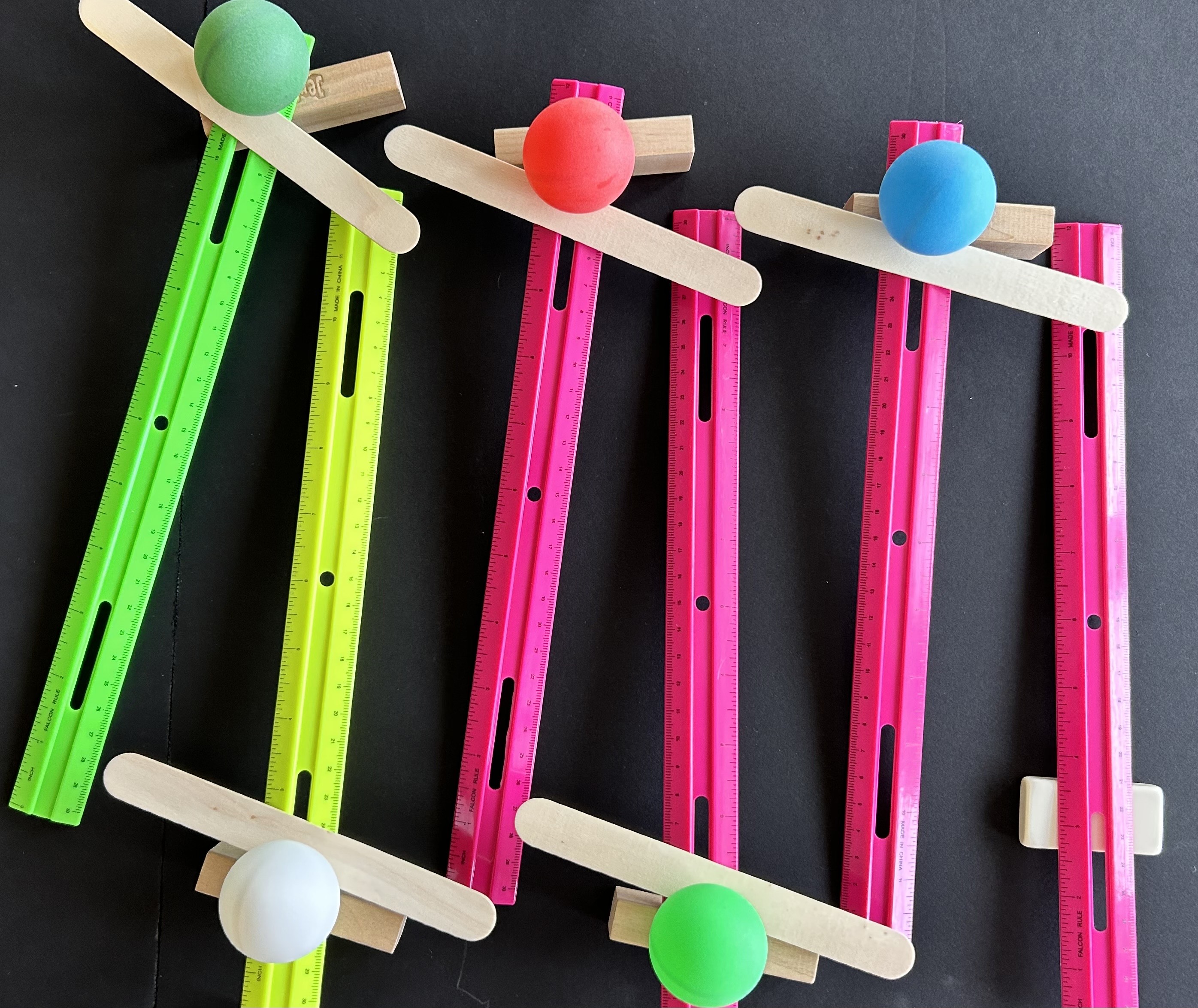
In a unit for grades 3–5 based on Jody Jensen Shaffer and Christopher Silas Neal’s Creep, Leap, Crunch! A Food Chain Story, students enacted living food webs to explore the interconnectedness of ecosystems in our world, and then explored the delicate balance of food chains through math pyramids and Rube Goldberg machines. A central challenge asked: what happens when a food chain is disrupted, and how can we help restore balance in an ecosystem? With the foundation of knowledge they’ve already acquired, students researched real-world ecosystem issues and engineered solutions, mirroring the work of scientists.
3. Lean into the “A” of STEAM.
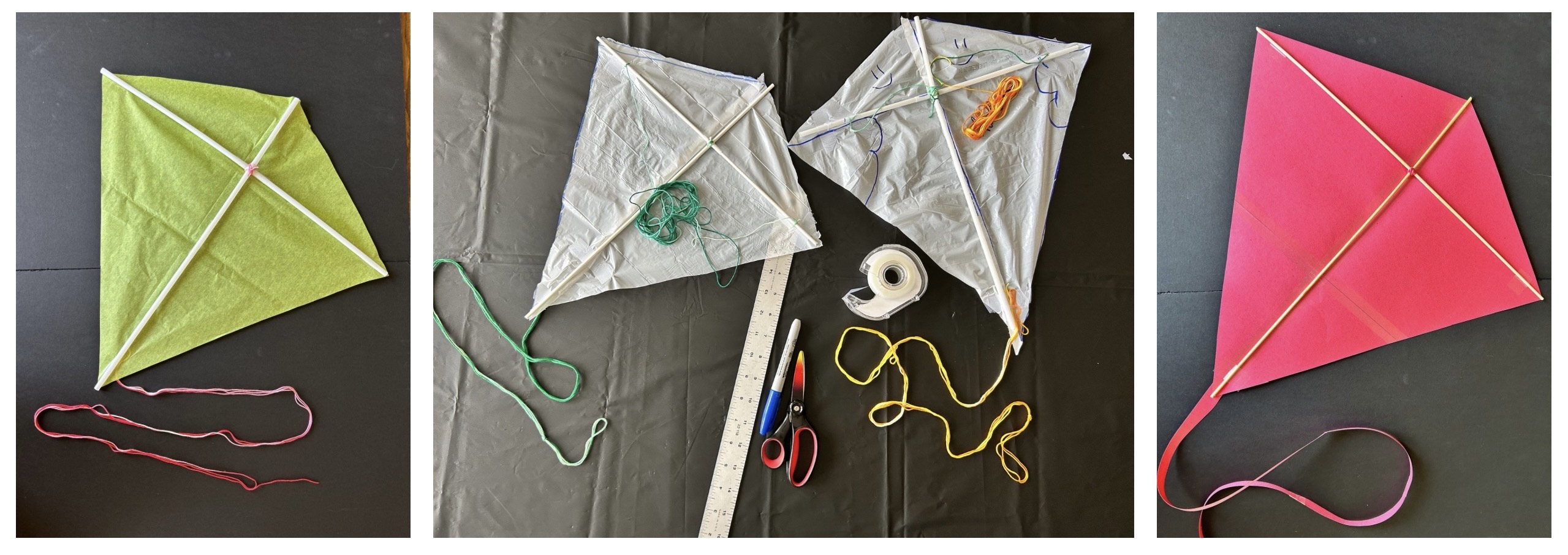
Opportunities to use creativity and art can act as powerful catalysts for exploring new concepts. In a 3rd-5th grade unit inspired by Suhasini Gupta and Devika Oza’s Kai Po Che: Mini’s Perfect Kite, students investigate wind, motion, and design through kite-building. But the projects don’t stop with engineering. Students also learn about kite festivals around the world, connecting science with culture, art, and storytelling. Cross-curricular connections deepen student engagement.
Similarly, in a forthcoming unit based on Joyce Uglow’s Stuck! The Story of the La Brea Tar Pits, students explore Ice Age animals through the lens of exhibit design. They research fossils, investigate the Ice Age ecosystem, and work together to create a museum-style exhibit, essentially stepping into the role of a museum curator.
4. Keep learning accessible, yet impactful.
Not every classroom has time for a four-week project, or the budget for specialized equipment. But that doesn’t mean you can’t harness the power of PBL. When you design your curriculum, build in layered entry points that can flex with your schedule and resources, whether it’s a single hands-on challenge for one day, a weeklong exploration, or a full multi-week deep dive.
For example, with Julia Richardson and Kristen and Kevin Howdeshell’s Little Dandelion Seeds the World, students might spend two weeks exploring geotropism (the way plants grow in response to gravity) through quick, manageable investigations, but you could also naturally extend the learning as seedlings grow, bridging into phototropism (growth in response to light) and other plant science experiments. In every case, the story remains the anchor, while the scope flexes to match your timeframe and resources.

5. Books build bridges.
Ultimately, using picture books for STEAM and PBL is about building bridges: between literacy and science, imagination and innovation, the classroom and the real world. When we let stories lead into STEAM, we offer students the tools to question, create, experience, and connect.
If you’d like more resources, sample units, and inspiration, I invite you to visit KidLit Grove… where books are just the beginning.
Don’t forget to leave a comment below for a chance to win Lindsay’s fabulous GIVEAWAY! A free 1-month subscription to KidLit Grove’s curriculum library OR A custom STEAM unit (PBL or 45 minute workshop) designed for the winner’s own book or a book of their choice! (Winner announced 10/10/25)
Lindsay is a curriculum designer and the creator of KidLit Grove, a space where picture books are brought to life through hands-on learning. She draws on 15 years of experience as an outdoor educator, science teacher, Montessori guide, Tinkergarten Leader, and Early Childhood Director to design resources that meet the needs of diverse learners. Specializing in project-based learning and play-based early education, Lindsay creates lessons and activities that invite children to explore, question, and connect stories to the real world.
At the heart of her work is a simple belief: books are just the beginning.
Substack 📕 Facebook 🚀 Instagram 🔍 Bluesky
When you enjoy a book, please support authors and illustrators by leaving online reviews! 😍
 Beth Anderson, Children's Writer
Thank you Beth for sharing this post, and Lindsay for sharing examples of how picture books can perfectly launch curriculum into meaningful and creative learning! You nailed it!
I hope many many teachers read this post! This is STEAM education done right.
LikeLiked by 1 person
I love the creative projects that Lindsay comes up for the various books! As one who loves to learn purely for the knowledge itself, I know what concepts I want to convey, but I don’t often think about what hands-on activities can go with my books.
LikeLiked by 1 person
Thes are so simple and brilliant! I hope teachers are embracing their lessons with this approach. Thanks so much for highlighting KidLit Grove!
LikeLiked by 1 person
Thanks for sharing this post, Beth. Your examples are wonderful, Lindsay! I will have to check out KidLit Grove.
LikeLiked by 1 person
Lindsay’s hands-on activities are wonderful for engaging kids and extending the learning of the books she’s featured (and I’m thrilled and honored that she included Starlight Symphony!)
LikeLiked by 1 person
Brava! It is my great hope that my debut NF PB will inspire classrooms full of children and teachers long after the last page. Thank you for the great examples.
LikeLiked by 1 person
Even though I’m not a teacher, I love seeing all the ways picture books can be used to extend learning beyond the pages of the book. Thank you for the examples!
LikeLiked by 1 person
This sounds fantastic, exactly the kind of teaching I aspired to when I was still in the classroom.
LikeLiked by 1 person
I love this! This is exactly the type of inspiring, thoughtful teaching I want to do more of!
LikeLike