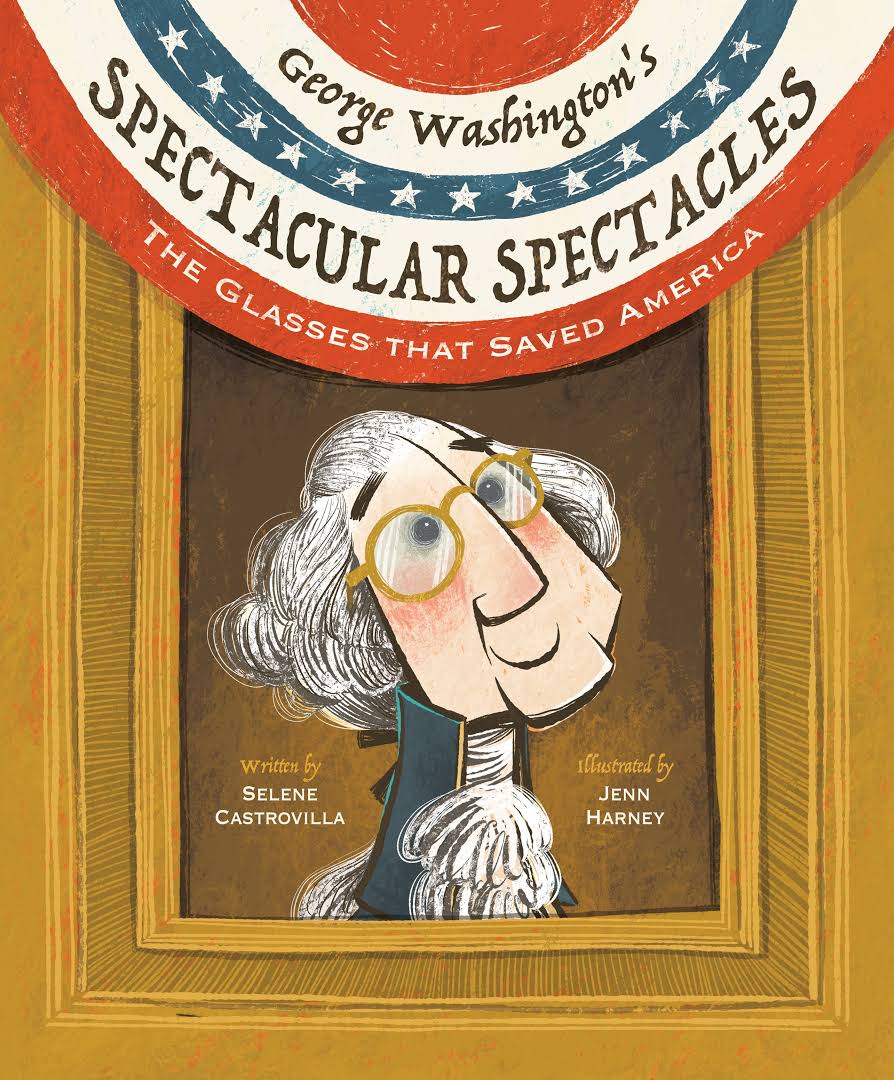
Like a liberty bell, the relevance of history rings loud and clear in this timely post from author Selene Castrovilla. I absolutely love GEORGE WASHINGTON’S SPECTACULAR SPECTACLES and the deeper understanding it brings to the Revolutionary War on a personal level.
GIVEAWAY! Q&A VIRTUAL VISIT with Selene! Leave a comment below for a chance to win! If you’re not an educator, we’d be thrilled if you gifted this opportunity to one.
Revolutionary Virtue: How George Washington’s Weakness Saved a Nation
By Selene Castrovilla
We don’t often associate virtue with war. We talk about courage, strategy, sacrifice, victory. Virtue feels quieter than cannon fire—almost out of place amid muskets and mutiny. Yet at one of the most dangerous moments of the American Revolution, virtue—not force—was the deciding factor that saved the nation.
That moment unfolded in March 1783, in Newburgh, New York.
The war had been won. Cornwallis had surrendered at Yorktown, and everyone knew British rule was finished. But the peace treaty had not yet been signed, and until it was, the Continental Army could not disband. Washington’s officers had not been paid in years. Congress had no money to give them. The men were exhausted, fearful, and facing the prospect of returning home with nothing to show for nearly a decade of sacrifice.
Under those conditions, resentment festered. An anonymous letter circulated among the officers, calling them to a meeting and urging action against Congress. The plan was nothing less than a military coup—a betrayal of the very ideals for which they had fought. These events would come to be known as the Newburgh Conspiracy.
What makes this moment so striking is that the officers were not villains. They were patriots who had reached the edge of endurance. And George Washington knew that ordering them into submission would only harden their resolve. Authority alone would not save the republic.
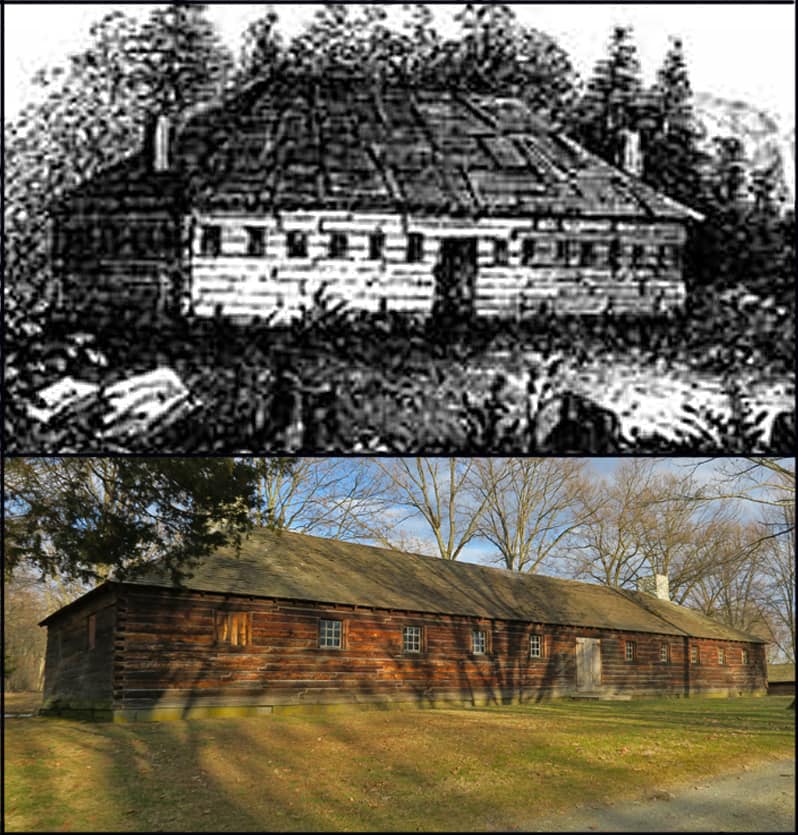
Washington had long believed that character mattered as much as courage. During the bleak winter months, he had ordered his soldiers to build a large communal structure at the New Windsor Cantonment, where the troops were stationed. He called it the Temple of Virtue. It was meant to be a place for meetings, reflection, worship, and community—a physical reminder of the ideals that bound the army together.
Washington hoped the Temple of Virtue would quell unrest. Ironically, it became the very place where betrayal took shape. Virtue, it turned out, could not be constructed with timber and nails. It had to be restored in another way.
When Washington learned of the conspiracy, he acted quickly. He asked the officers to postpone their meeting. He wrote to Congress, pleading for a letter that might explain the situation and calm the men. And when the officers finally gathered, Washington entered the room uninvited and delivered what he believed would be a rousing speech.
It failed.
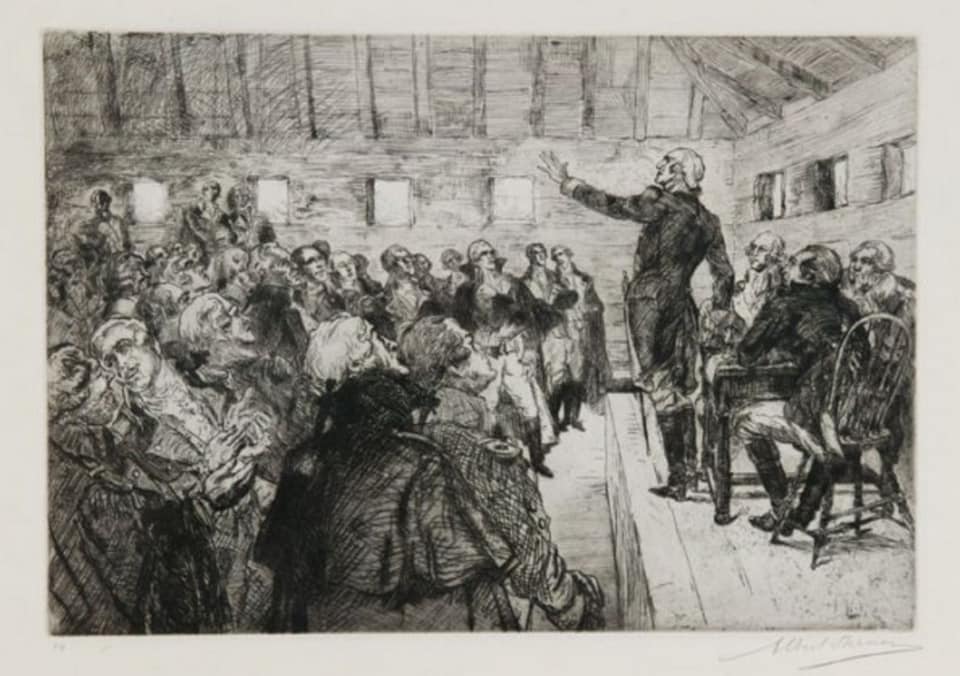
He reminded them of their shared hardships, their victory, their honor. He warned them that turning against Congress would tarnish their legacy. The men were unmoved. They wanted payment, not glory. Washington’s eloquence—so often his strength—fell flat.
Then came the moment that changed everything.
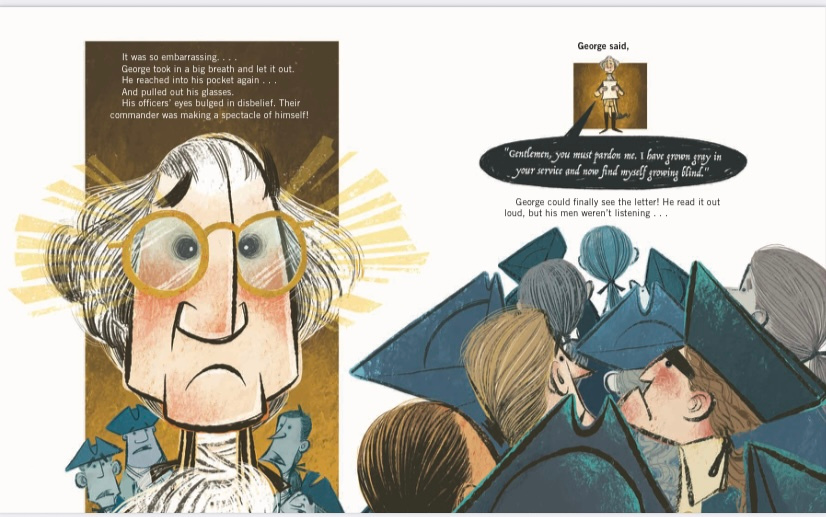
Washington reached into his pocket and pulled out a letter from Congress. He intended to read it aloud—but he couldn’t see it clearly. After struggling for a moment, he did something he had never done in front of his men before.
He put on his glasses.
At the time, spectacles carried deep stigma. They were associated with weakness, aging, and defectiveness. Washington had avoided wearing them publicly out of embarrassment and fear of appearing frail. But standing before his officers, with the fate of the nation hanging in the balance, he chose vulnerability over pride.
As he put on his glasses, Washington apologized, saying, “I have grown gray in your service and now find myself growing blind.”
That was when the room changed.
The officers began to cry. Seeing their commander’s weakness made visible the years he had endured alongside them—the same hunger, cold, uncertainty, and sacrifice. In that moment, Washington did not command loyalty. He reminded them of it. Virtue was restored not through argument, but through shared humanity.
They abandoned their plan. The coup dissolved. The republic survived.
When I began writing George Washington’s Spectacular Spectacles, I thought the story would center on the Newburgh Conspiracy itself—and especially on the Temple of Virtue. I wanted that building to be the heart of the book. I drafted and redrafted, layering in political intrigue, competing perspectives, and historical context. The story grew more accurate—and less clear.
Eventually, I realized what Washington had already shown me. To understand this moment, I had to strip away complexity. I had to focus on the small, human act that carried enormous moral weight: donning the glasses.
The American Revolution was not saved on a battlefield that day. It was saved in a quiet room, by a leader willing to admit limitation, to set aside vanity, and to be seen as human. That is revolutionary virtue—not perfection, but character under pressure.
And it is a reminder that democracy, then as now, depends not just on strength, but on restraint; not just on ideals, but on the courage to live up to them.
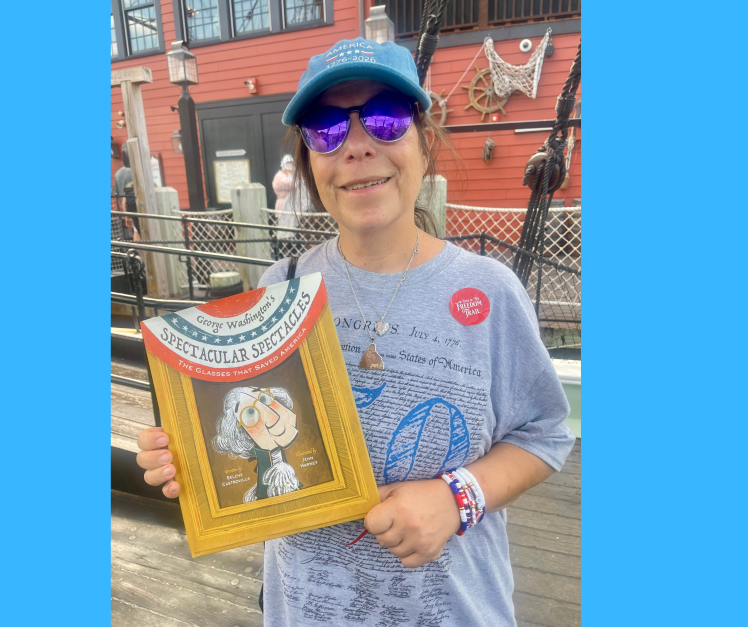
Don’t forget to leave a comment below for a chance to win a Q&A virtual visit! If you’re not an educator, gifting this visit is a perfect way to support a teacher and students. (Winner announced 2/20/26)
Share the #AmericanRevolution250 series with educators and librarians for additional entries! (just leave a note in your comment)
😃 As always…when you enjoy a book, please support authors and illustrators by leaving online reviews.
 Beth Anderson, Children's Writer
Holy cow! Wow. So powerful! I am humbled just reading this. I’ll look forward to buying my own copy.
LikeLiked by 1 person
This sounds like an amazing book! Congratulatons, Selene!
LikeLiked by 1 person
What a fabulous story! I had no idea of this one at all. You are amazing at finding those hidden nuggets.
LikeLiked by 1 person
I can’t pass this one up! Just popped it into my cart. Congratulations, Selene, and Jenn!
LikeLiked by 1 person
I think this is a brilliant and timely story! So smart of Selene to find and write the book.
LikeLiked by 1 person
Love this book — it’s a favorite one for the age group! Wishing you all the best in this and future endeavors! LM
LikeLiked by 1 person
This was a very interesting post. If I win, I’ll gift this to am educator. Well done!
LikeLiked by 1 person
What a great way to make our first president very relevant to young readers!
LikeLiked by 1 person
Very inviting books for kids who “hate history” – thanks for sharing.
LikeLiked by 1 person
PS shared on BlueSky
LikeLiked by 1 person
Wow! I am brought to tears, as well. But I love the line: “The story grew more accurate—and less clear.” A simple yet complex truth about writing nonfiction. I look forward to reading this book!
LikeLiked by 1 person
I am always amazed when authors find interesting topics from history that few people know about and are able to turn them into picture books. George Washington’s Spectacles is one of those books. What a gift! I am excited to share this book with my readers. Not only will they learn about an important time period in history, but it will be another opportunity for them to see that people with disabilities can do great things.
LikeLiked by 1 person
Wow, what a great way to explore not just history, but virtue and humility. Congrats on an amazing book.
LikeLiked by 2 people