Happy Halloween! There’s a lot of scary stuff out there. But there can also be a lot of scary stuff inside oneself! With THE MANY MISFORTUNES OF EUGENIA WANG, amazing author/illustrator Stan Yan faced his fears. Here he shares his process of digging into the personal.
GIVEAWAY! Stan is offering a copy of THE MANY MISFORTUNES OF EUGENIA WANG to one lucky winner who leaves a comment below!
Making it Scary Meant Facing my Haunted Past by Stan Yan

When I began writing what became my debut middle grade graphic novel, The Many Misfortunes of Eugenia Wang, my goal was create a comic that actually scared me. In spite of the storied history of horror in comics, they never frightened me the way that movies and novels did.
I didn’t know how I’d achieve my goal as I started drafting an early version of this story, then OLFACTORY MEMORY starring Morty Rose. While I liked the story, it wasn’t scaring me. Something was missing.
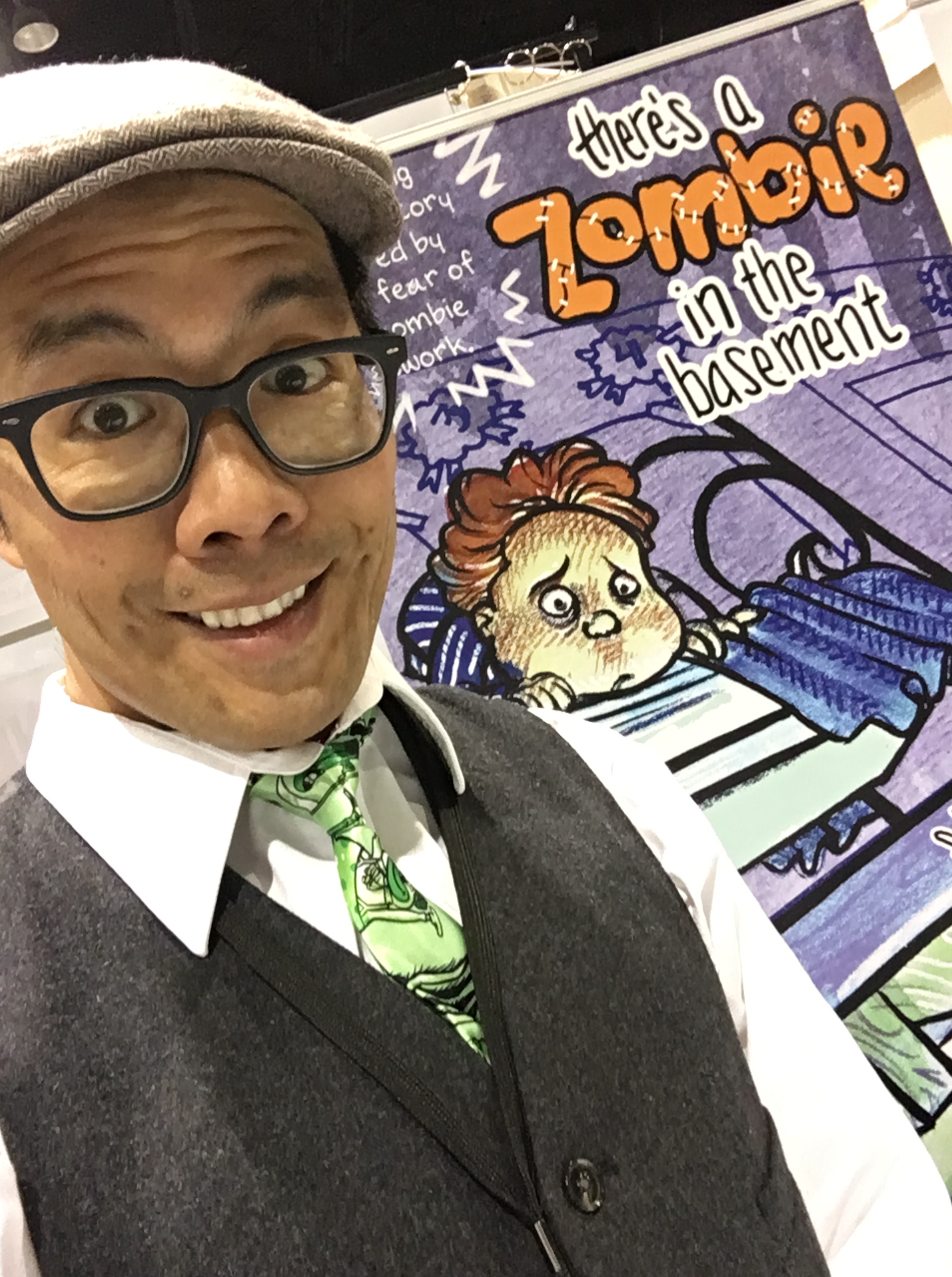
When I self-published my first picture book, There’s a Zombie in the Basement, inspired by my son’s fear of my zombie caricature artwork, I named the main character after my son, Milo. I didn’t design the character to look like Milo, however. Instead, I drew him as a red-headed Caucasian kid. Sometime later, I began reading children’s books by Andrea Wang, Grace Lin, Kelly Yang, and Lisa Yee, which made me wonder why I hadn’t designed Milo to look Chinese. The difficult answer was…I never even considered it.
This realization made me do some soul searching. Growing up in the suburbs of Denver, had I ever seen books with Chinese characters in them? I could only think of one from elementary school: The Five Chinese Brothers, and that book didn’t exactly make me feel proud of being Chinese. How had not seeing myself in books growing up impacted the way I saw the world? It took reading modern titles like Watercress and Front Desk for me to feel like I had permission to make my characters look like me.
This made me ask myself another difficult question: were the young future authors reading my book going to grow up to be adults like me who didn’t consider making books with characters that looked like them because they didn’t see themselves in my book?
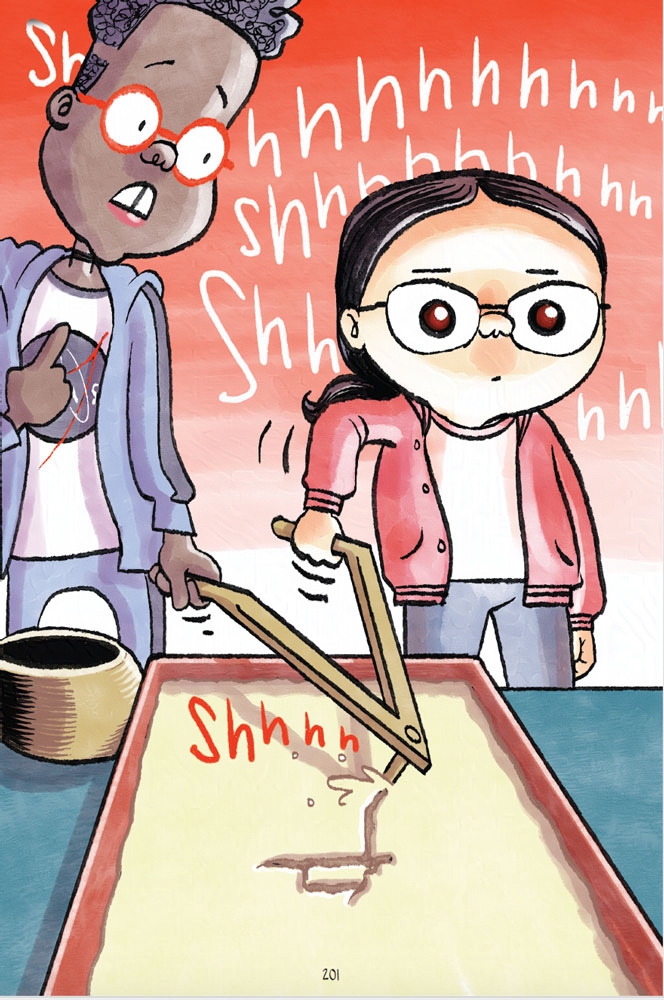
I decided to face my fears head on and make OLFACTORY MEMORY more accurately reflect my life. I renamed my protagonist Morty Chen (later, Eugenia Wang), and I even eventually made them a budding cartoonist. Oddly, making the character and their life more like my own, caused me to have a visceral reaction to everything that happened to them in the story. Mining my own life and getting vulnerable not only made me more empathetic, it made me feel real fear. My goal!
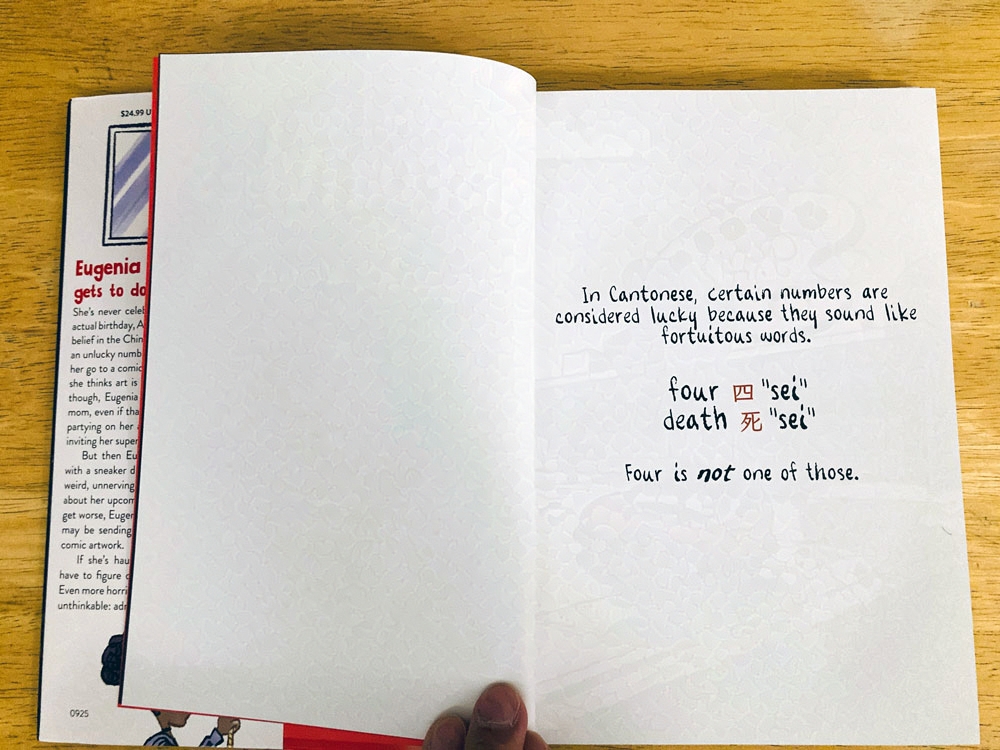
It also challenged me to learn things about my heritage that I hadn’t been shown growing up in the US. For example, Chinese superstitions and what tools the Chinese use to communicate with the spirit realm. And slowly, floating up from my memories came the few words of Cantonese I had spoken as a child. My heritage was there after all!
What I’ve learned from the experience of writing and illustrating The Many Misfortunes of Eugenia Wang is I can’t let my haunted past hold me back. I can and should aspire to make books I wish I had in my elementary library—books with characters that inspire readers to tell their stories too, no matter how scary they might be.
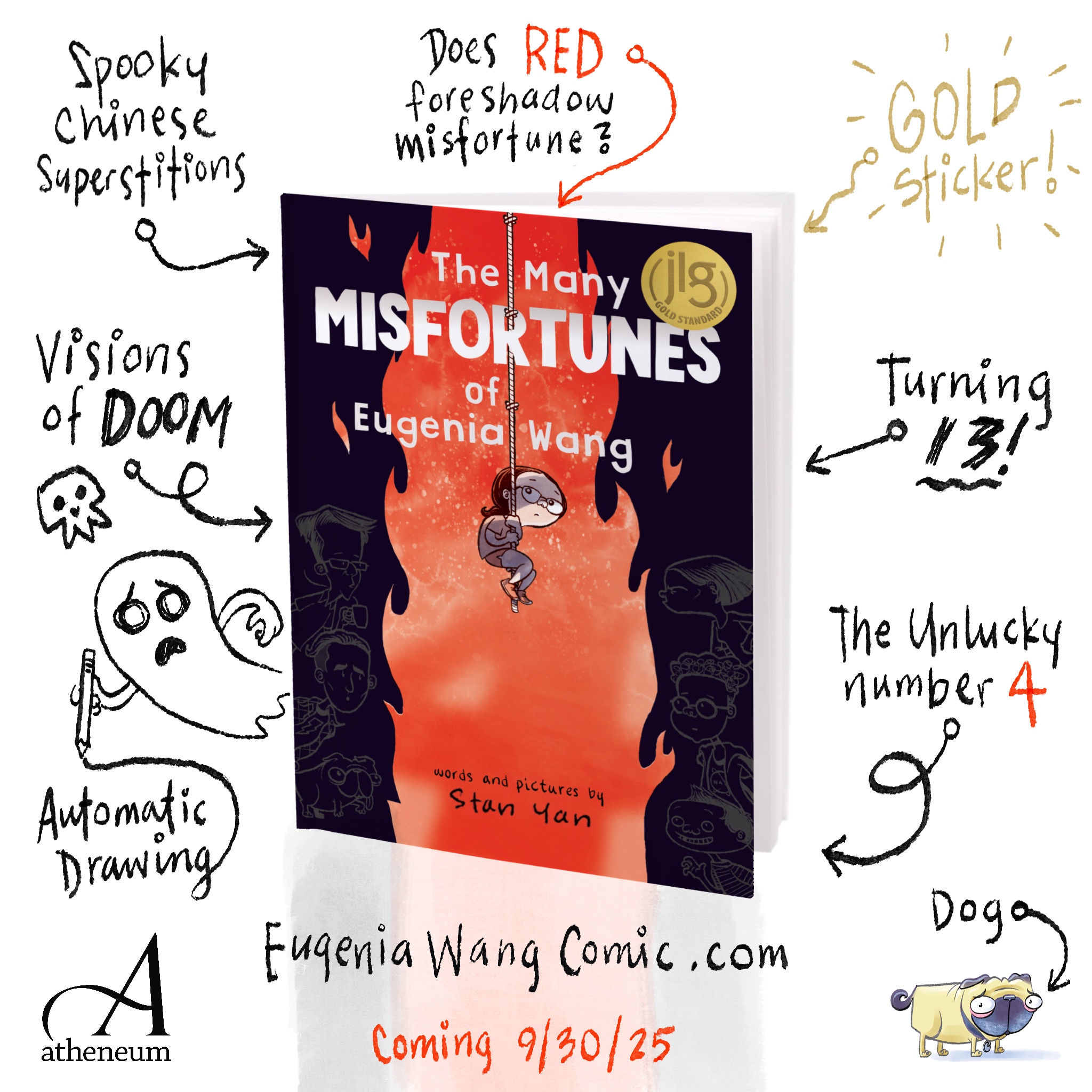
Don’t forget to leave a comment below to be entered in the drawing for your very own copy of THE MANY MISFORTUNES OF EUGENIA WANG by Stan Yan! (US addresses only, please. Winner announced 11/14/25.)
😍 When you enjoy a book, please support authors and illustrators by leaving online reviews!
 Beth Anderson, Children's Writer
WOW! What a hard hittin realization. You are brave and aithentic, which I am sure impacts your book. Good luck!
LikeLiked by 1 person
Thanks it was. I do feel like a lot of what I’m reading from so many of my fellow Chinese American authors is our parents wanting us to go along to get along and integrate subtly led us to inadvertently whitewash ourselves.
LikeLiked by 1 person
Sharing Stan cultural background, I am super excited to read this book! I think it helps that I’m an immigrant because even from the start, I had written Chinese characters. My first byline (in Ladybug magazine back in 1994) has a Chinese girl as the MC and it was set in Hong Kong. 🙂 I am SO excited for Stan, this book, and his success!
LikeLiked by 1 person
“…making the character and their life more like my own, caused me to have a visceral reaction to everything that happened to them in the story.” That’s deep, man, and the implications are incredible. When we internalize how we are represented and/or erased and then never heal from that, we experience all of life one step removed from ourselves and therefore the world — never truly embodied, and therefore not consciously aware of it, either. I’m waiting for your book at my library. OK, I’m going to go eat a carrot.
LikeLiked by 1 person
Terrific post–and congrats on the starred SLJ review!
LikeLiked by 1 person
I’m excited to read this book and learn more about Chinese culture while having fun.
LikeLiked by 1 person
I must say that this post gave me lots to think about. I appreciate Stan sharing the soul searching he did when writing this book. I am excited to read it.
LikeLiked by 1 person
Congratulations, Stan! It was wonderful reading of your path to The Many Misfortunes of Eugenia Wang. I especially enjoyed reading of your switch to the Asian character and how that came about. Hooray to Cantonese main characters 👏. You’ve inspired me on my writing journey. Can’t wait to read this! And huge congratulations on your success! Wonderful blog here too 👍.
LikeLiked by 1 person
I’m so glad you had this realization and are now making books that are close to your heart. Congrats!
LikeLiked by 1 person
Also, it’s exciting to see that there are 30 copies in circulation at the San Francisco Public Library. Yay!
LikeLiked by 1 person
Looking forward to reading it!
LikeLiked by 1 person
Thank you for sharing this great tip, Stan! I can’t wait to read The Many Misfortunes of Eugenia Wang. Congratulations!
LikeLiked by 1 person