It’s quite amazing when you find primary sources that provide the seed, or acorn, that allows you to tell a story that for a while seemed lifeless. Check out this great post from debut author Lynn Street about how THE BLUE JAYS THAT GREW A FOREST grew from deep research and personal immersion in the science.
GIVEAWAY! Leave a comment after the post to be entered in the drawing to win your very own copy of THE BLUE JAYS THAT GREW A FOREST!
How Primary Sources Can Grow Your Nonfiction Nature Picture Book
by Lynn Street

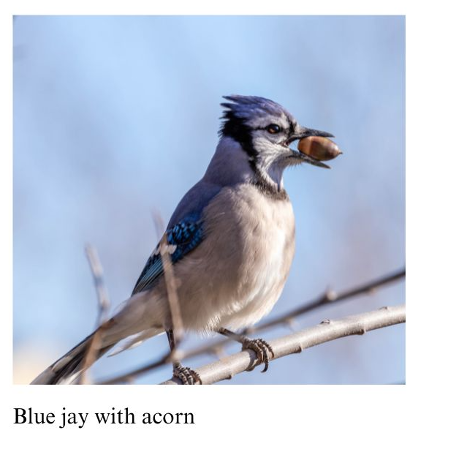
The inspiration for my nonfiction picture book, THE BLUE JAYS THAT GREW A FOREST (Peachtree, 2025), came from a photo of a blue jay carrying an acorn. I knew about squirrels and acorns, but I had never heard about blue jays and their connection to oak trees.
What was the blue jay doing with the acorn? What did this mean for the oak trees?
I sensed a mystery—and a story.
A library and internet search revealed that no books were written for the public about acorn caching and blue jays. I did find a lot about crows. Not all birds, I quickly realized, are researched equally. Sometimes, the sources you hope to find don’t exist.
So where do you go to find out more?
Academic Research Sources
Google Scholar (scholar.google.com) is worth looking into if your subject might have been studied by university professors. I found articles about blue jays and acorn caching, some published recently and others prior to the 2000s. You might begin by reading research papers that are cited numerous times (sometimes hundreds) by other scientists.
I read the journal articles and looked up the authors of relevant blue jay studies. I then conducted interviews to make sure I was understanding the facts of the blue jay acorn gathering and burying process.
Note that I used academic papers that presented original research, considered primary sources. A paper that only summarizes others’ research would be considered a secondary source.
Other Databases
You might also check out JSTOR (jstor.org), an online database of journals with academic content (journals, book chapters, research reports) and primary sources (serials, documents, books, images, audio, video). There is some overlap in the results from JSTOR and Google Scholar. I find Google Scholar easier to use when I want to sort through an overview of results.
Consider articles from newspapers by searching Newspapers.com and chroniclingamerica.loc.org. These aren’t academic studies, but they are great resources for biographical or historical research. Some science topics may be included.
Libraries subscribe to dozens or hundreds of searchable databases such as Gale. You can find academic journals, newspapers and archives.
Look for organizations related to your topic, such as scientific associations, organizations, or museums. For birds, try allaboutbirds.org or audubon.org for photos and basic facts.
Observing Firsthand
To augment my information search, I decided to do some in-person work.
- I went on bird walks with ornithologists and also took daily strolls around my community’s paved trails.
- I put up six bird feeders and two bird baths across my little lot. The blue jays love sunflower seeds and peanuts.
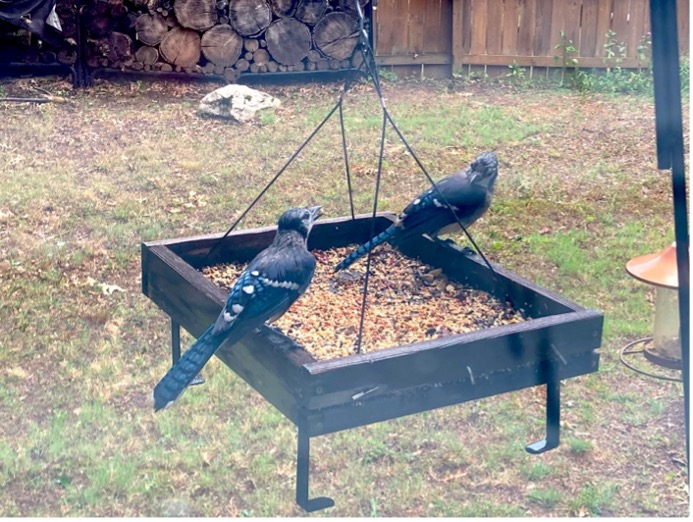
- I participated in Project FeederWatch, a six-month-long research project observing backyard bird feeder behavior.
I paid attention to where blue jays were hiding food from my feeders or from the oaks. One jay placed a peanut-in-shell under leaf litter at the base of a shrub. Another peanut was flown up to the gutter of my neighbor’s house. And an acorn was plucked from the gaps between the flagstones in my patio! I also noted a small oak sapling growing in a container I left full of dirt, but otherwise empty, in the yard. (Was that oak sapling sprouting from an acorn planted by a blue jay or a squirrel? I’m not sure.)
- My neighbor’s oak tree (the same species of oak as the tree in THE BLUE JAYS THAT GREW A FOREST) was also a source of mysteries to be unraveled. I watched with binoculars from my upstairs window as the birds flew into the canopy, pulled and pried acorns from the tree, and flew out of the canopy again.
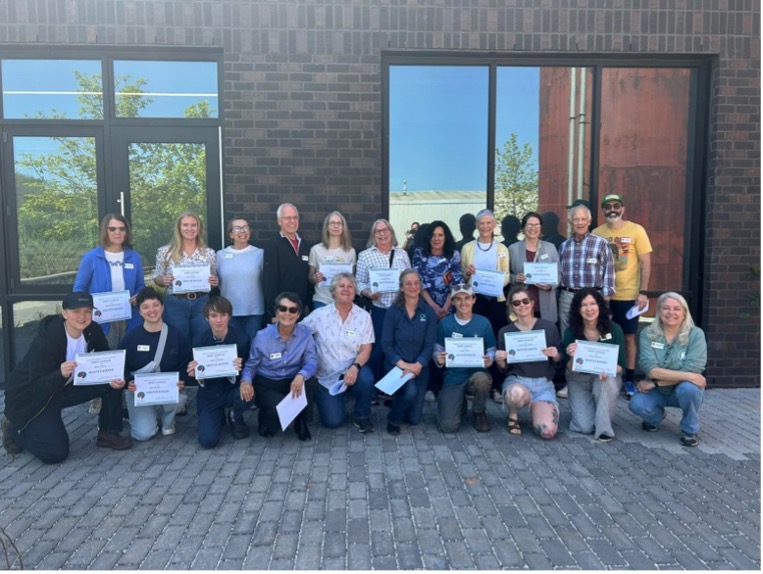
- I worked on a Master Birder certificate.
Tips:
My biggest tip is to give yourself more time if you are doing primary research, because the pieces come together more slowly than if you are distilling information compiled in one place.
Blog articles can be tricky. Many summarize interesting facts and research, but without providing documentation or context. Some mistakes will get picked up and repeated from blog to blog.
Do You Have Enough Information to Write Your Story?
In the end, I did find solid information on which to base my story. Had I not connected with academic experts, I would have set this story aside and looked for another topic.
If you are doing primary research of your own, always check back with experts to see how what you observe fits in with the larger context of research. For example, if you observe a flock of jays, you might assume that they are all related, which may not be the case.
Don’t forget to leave a comment below to get in on the GIVEAWAY for a copy of THE BLUE JAYS THAT GREW A FOREST! (US addresses only, please. Winner announced 9/12/25)
😍 And if you enjoy a book, please leave online reviews to support authors and illustrators!
Author Bio
Lynn Street is the author of THE BLUE JAYS THAT GREW A FOREST (Peachtree, 2025), a Junior Library Guild Gold Standard Selection. She is a science-inspired author sharing lively STEAM stories with young readers. Her writing celebrates nature and invites readers to slow down and explore, to become budding naturalists and citizen scientists. Lynn volunteers for nature organizations and is dedicated to environmental education and integrating art, science, writing, and nature for kids. www.lynnstreetbooks.com

Lynn Street is one of the new members of KID LIT FOR GROWING MINDS, a group of children’s book creators with books that cross curricular areas and which is dedicated to providing resources and support for educators. You’ll find our free newsletters HERE. (And September’s newsletter has a 3-book GIVEAWAY!)
 Beth Anderson, Children's Writer
Thanks for sharing the research details for your book, Lynn, and how dedicated and thorough you were, which is all helpful to know. THE BLUE JAYS THAT GREW A FOREST is amazing with its text and art. May many kids (and adults) read it!
LikeLiked by 1 person
My bird-loving daughter (who lives in an oak forest!) will love this book. Congrats, Lynn, and thanks for the tips.
LikeLiked by 1 person
I love that Lynn did original research in her backyard for her book! Such heart! Thanks to Beth for another great interview.
LikeLiked by 1 person
Great post and great book! I am going to apply some of Lynn’s tools to the book I am working on right now!
LikeLiked by 1 person
This is a beautiful book! I really enjoyed reading it. Congrats, Lynn!
LikeLiked by 1 person
Great research tips and reminders. Thank you! Can’t wait to read this book.
LikeLiked by 1 person
I watch the birds in our area and am always fascinated by their behavior. We have crows that periodically stomp on our roof. I must learn more about the Blue Jays!
LikeLiked by 1 person
Thank you for the research tips, Lynn! I can’t wait to read your book.
LikeLiked by 1 person
We planted two oak trees outside our kitchen window and this is how I learned through observation that blue jays, squirrels, and deer all feast on acorns. I cheer on the deer as they eat the fallen acorns that prevent me from walking barefoot on the grass (acorns=nature’s Legos here). Danielle Hammelef
LikeLiked by 1 person
Congratulations on your book Lynn. When I learned this fact about bluejays I knew it needed to be told. And you’ve done it! I look forward to reading it.
LikeLiked by 1 person
Congrats, Lynn! I admire the work you put in first-hand to understand jay behavior. As far as academic research is concerned, I love JSTOR, too. I don’t know what I’d do if my public library disappeared.
LikeLiked by 1 person
Great post! I loved the insight on blogs and their errors, and the need to take more time with original research.
LikeLiked by 1 person
Thanks for the great post. I appreciate the many layers involved in your research–from the scholarly to the eye-witness; also taking the time to become a master birder!
LikeLiked by 1 person
Really great post! I enjoyed reading about all the work you put in to ensure your research was sound from all angles. I’ve been looking forward to reading your book — Congratulations!
LikeLiked by 1 person
Lovely coincidence! Just saw a young Jay take an acorn from the Wavyleaf Oak outside my window, but not without making a big screeching fanfare!
LikeLiked by 1 person
I love this book SO MUCH! And thank you for this post! As someone working on a nature-based pb manuscript right now, this is so helpful!
LikeLiked by 1 person