Ah, so much fascinating research, and so limited story space! Prolific author Darcy Pattison shares how she organized and focused NOT EXTINCT: THE PRZEWALSKI’S HORSE RETURNS FROM EXTINCT IN THE WILD, an amazing story with a ride range of appeal.
GIVEAWAY! Leave a comment below to be entered in the drawing to win a copy of NOT EXTINCT!
Congrats to Donna Gwinnell Lambo-Weidner, winner of THE MYSTERIOUS VIRGINIA HALL, WORLD WAR II’S MOST DANGEROUS SPY from Claudia Friddell.
Using Timelines to Focus a Conservation Narrative by Darcy Pattison
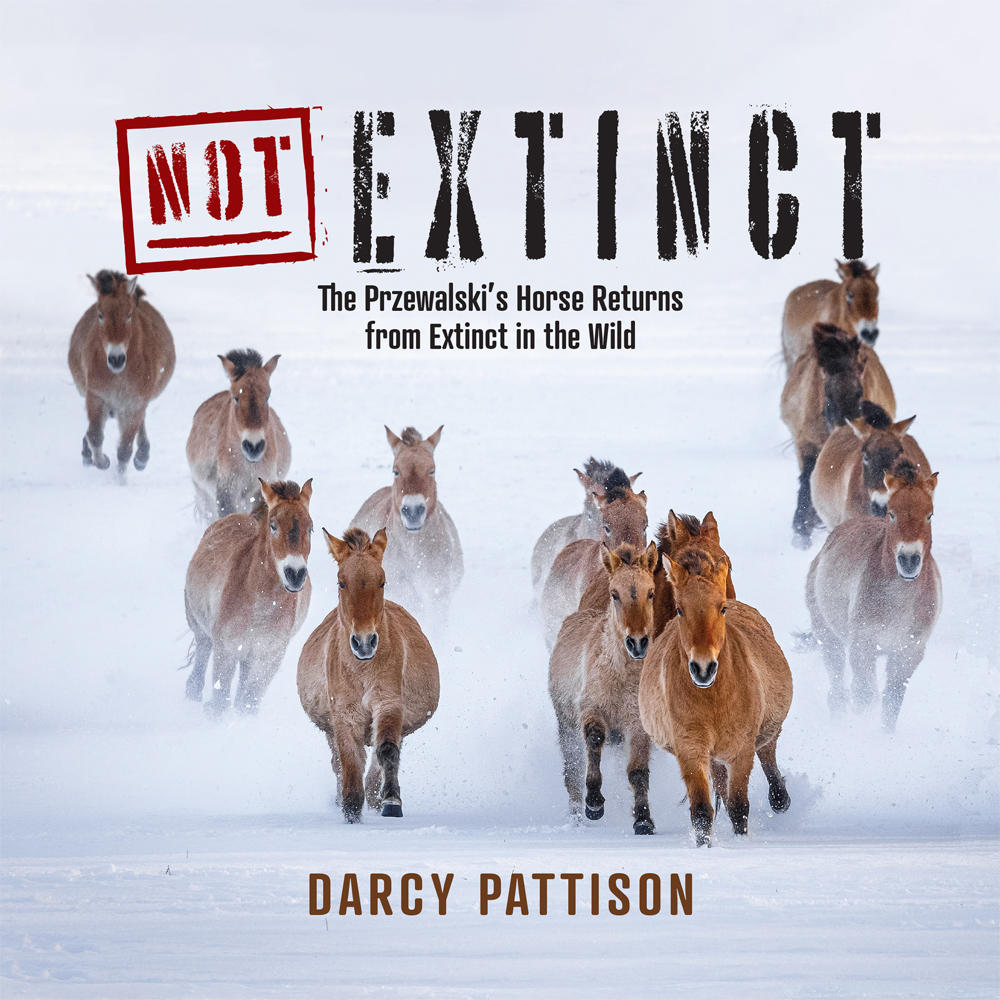
My interest in the Przewalski’s horse, nicknamed the P-horse, was piqued by a 2024 news article that the Prague Zoo had released a small herd of P-horses in Kazakhstan. That, of course, was the last item on the timeline that tells the story of saving this species from extinction. To write the story, I just had to uncover the rest of the timeline.
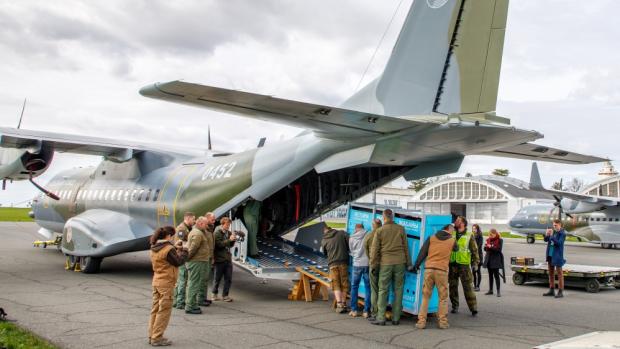
I began with a visit to the Prague Zoo. A Czech student had lived with us for a year as an exchange student and we wanted to visit him. Before we left, I contacted the Prague Zoo and asked for an interview. Graciously, they agreed. I was worried about the language barrier, but I found the Communications Director to be fluent in English. His stories of transporting the horses to Kazakhstan were funny and poignant. For him, the project culminated when they released the horses from their transport box and their hooves touched the soil of their new home. For the first time in centuries, the P-horse again roamed their native Asian steppes.
The poignancy of the moment came from the years of hard work trying to save this species that was once considered extinct in the wild. From almost nothing, the scientists had created a miracle.
For me, the interview began hours of poring over research reports on the horse from scientists in Mongolia, China, and international zoos. For example, ticks carried diseases from domestic horses that would infect the P-horses, too. Wolves were a danger to colts. Survival rates were calculated and risks assessed.
Amid overwhelming data, I started to record important moments on a timeline.
- When did the Western world learn of this species? In 1878, Colonel Przewalski visited Asia and returned with a skull and hide.
- When did the P-horse first appear in Western zoos? 1897-1902: German animal dealer Carl Hagenbeck funded expeditions capturing 52 P-horse foals. The collection efforts helped decimate the wild populations.
- When did conservation efforts begin? Czechoslovakia held the First International Symposium about the Przewalski’s horse in 1959 at Prague Zoo.
And so on.
Putting information into a timeline gave me an outline for a narrative. Of course, there was too much data. The next task was to focus the story and choose those moments that demonstrate a coherent, touching narrative. I found this very hard because in a story that spans a century, so much will be cut.
Just the story of how the Prague Zoo worked out transportation for the P-horse was fascinating. When they first flew horses to Mongolia, they lost many horses in-flight. Why? Scientists learned that if the horses laid down, their circulation was cut off resulting in death. They devised tight boxes designed to keep the horses standing upright for the two or three days of flights.
When they loaded up eight horses for the flights to Kazakhstan in 2024, they stopped enroute to the airport and realized that one horse had already managed to lie down. What a disappointment! But the decision was clear. They sent that horse back to the zoo and only took seven horses. Fascinating! But too much information for a children’s picture book focused on conservation efforts. It’s something I’ll talk about in blog posts like this or when giving a speech about the book. But it’s not in the book itself.
In the end, the timeline of the story had to be whittled down to a very few events that told the story of saving a species, suffering a major setback, and then finding a way to recover. It’s a story of scientists who persevere, solve problems, and win the battle against extinction.
Timelines are a major tool for me as I write such stories. I fill them out in detail and then cut and cut and cut until the story takes shape. Then, I can write, confident that the story will be memorable.
Learn more about NOT EXTINCT on Darcy’s website HERE.
Don’t forget to leave a comment below for a chance to win a copy of NOT EXTINCT! (US addresses only, please. Winner announced 7/18/25.)
Children’s book author and indie publisher DARCY PATTISON has written over seventy award-winning fiction and non-fiction books for children. Five books have received starred PW, Kirkus, or BCCB reviews. Awards include the Irma Black Honor award, five NSTA Outstanding Science Trade Books, five Eureka! Nonfiction Honor book (CA Reading Assn.), two Junior Library Guild selections, two CLA Notable Children’s Book in Language Arts, a Notable Social Studies Trade Book, a Best STEM Book, an Arkansiana Award, and the Susannah DeBlack Arkansas Children’s History Book award. She’s the 2007 recipient of the Arkansas Governor’s Arts Award for Individual Artist for her work in children’s literature. Her books have been translated into eleven languages.
 Beth Anderson, Children's Writer
Such a fascinating story, and writing advice thatI can carry into my next project. Congratulations Darcy, and thank you Beth for highlighting Darcy’s story.
LikeLiked by 1 person
What a wonderful story. Thanks for writing it!
LikeLiked by 1 person
I can’t wait to read this!!
LikeLiked by 1 person
What a wonderful story. Thanks for writing it!
LikeLiked by 1 person
Absolutely FASCINATING! What a wonderful addition to the non-fiction KidLit world!
LikeLiked by 1 person
This sounds like my kind of book! Can’t wait to read it, Darcy. Thanks, Beth, for sharing Darcy’s process.
LikeLiked by 1 person
This sounds fascinating!
LikeLiked by 1 person
Thanks for sharing Darcey’s insights. I just started a manuscript using the timeline as an outline but was overwhelmed. Now I see how to move forward. I can’t wait to read this book.
LikeLiked by 1 person
So fascinating!! Every step of the way! Hannah Roy LaGrone
LikeLiked by 1 person
This book sounds fascinating! one of my favorite animals at the zoo is the Przewalski’s horse because of their beauty and strength. My heart is full learning about this successful effort to save the species.
LikeLiked by 1 person
I really like the idea of creating a full timeline and then whittling it down. I can picture it making me feel grounded as I choose what to leave out. Looking forward to reading this book!
LikeLiked by 1 person
Fascinating and heartwarming story Darcy! Congratulations!!
LikeLiked by 1 person
Wow! But I have a question: Don’t these horses lie down in the wild? Do they lie down in a different way? Congrats, Darcy! That’s a fantastic cover for this amazing story.
LikeLiked by 1 person
Jilanne:
Yes, the horses will lie down in normal life. But when they are transported by airplane, if they lie down then their circulation is disrupted and they can die. They learned this the hard way! Now, they have travel boxes that are small and force the horses to stand while being transported. But small horses apparently still manage to lie down anyway. In that case, they return the horse to the zoo.
Darcy
LikeLiked by 1 person
Very interesting topic. Can’t wait to read it!
LikeLiked by 1 person
Great interview Darcy & Beth! I love the suggestion for organizing and formatting all the research and for insights into some of the interviews. I love this book!
LikeLiked by 1 person