One of the challenges in writing for children is finding a creative way to frame meaning, along with everything else you want to do. In this post, author Ginny Neil shares how she found a structure that would bring home the meaningful hook she wanted to convey.
GIVEAWAY! Ginny is giving away a copy of SALAMANDER SONG to one lucky person who leaves a comment below!
Congratulations to Jennifer Sniadecki, winner of CLEAR AND BRIGHT from Teresa Robeson!
Finding the Magic in Structure by Ginny Neil
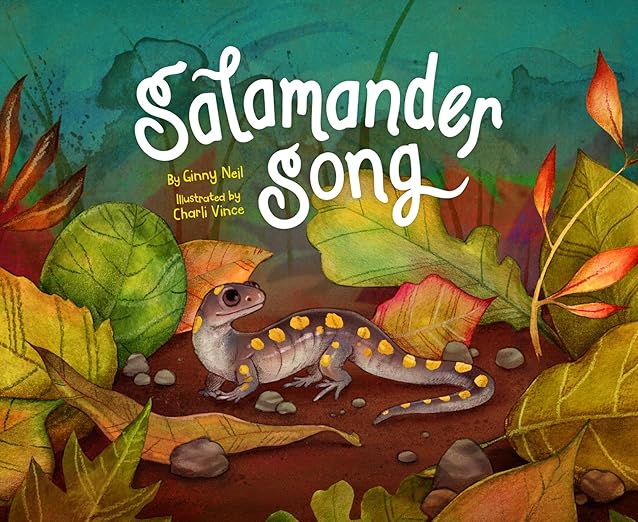
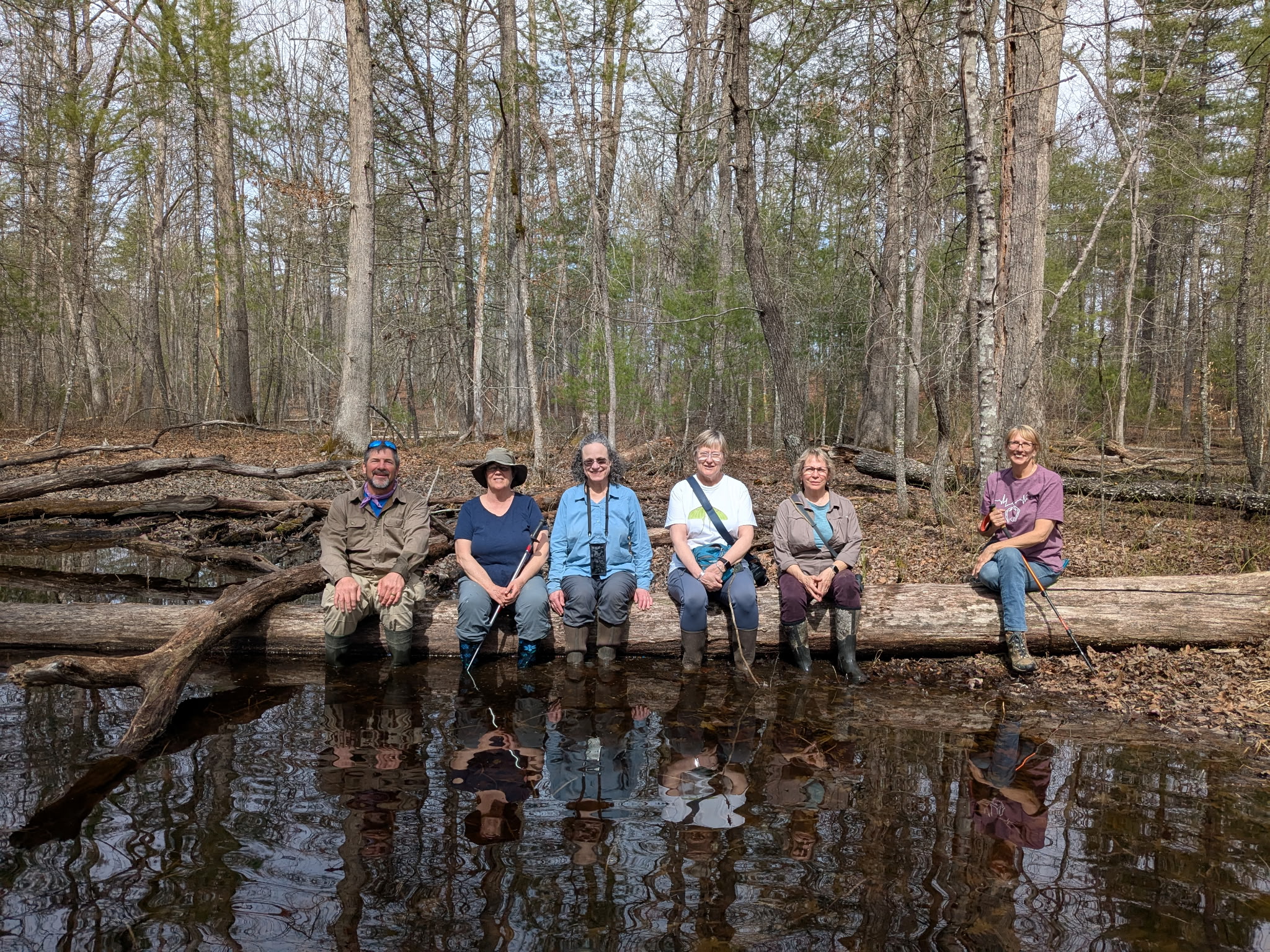
As a Virginia Master Naturalist, I had the opportunity to travel around to a variety of vernal pools with a salamander expert. Although I had heard about vernal pools, I didn’t know much about them except that they are only wet for part of the year.
I was intrigued to learn about the mass migration of spotted salamanders to these delicate ecosystems. It is triggered by the first warm spring rain. Salamanders have always fascinated me, and this seemed like a great topic for a picture book.
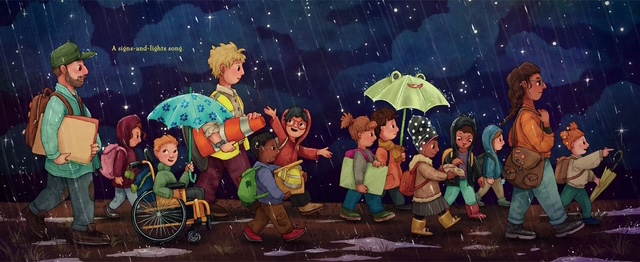
An event held in the northeastern United States, called Big Night, brings people and salamanders together as communities help the migrating salamanders cross busy highways on their way to these spring pools. What if I wrote about a kid preparing to go on their first Big Night adventure?
My first drafts were similar to one of my all time favorite books, OWL MOON by Jane Yolen. But, as I continued my search for mentor texts, I discovered there were already several books that looked at Big Night from either the salamander or the participant’s point of view.
Another favorite mentor text, RAIN by Linda Ashman, was the key that unlocked the magic. It’s a parallel narrative of a joyful child and a grumpy old man who meet on a rainy day. The encounter changes both of them. The perfect story structure for what I was trying to say!
Plus, there were no other parallel narratives about Big Night. I loved the idea that children and salamanders would each be going about their lives, unknown to each other, until they meet on a rainy night. That idea became the premise for my book.
I typically write in verse, but no matter how much I tried, I couldn’t get the salamander story to flow this way. I kept feeling like I was telling not showing. I wanted my language to be as spare and mysterious as the event I was describing.
So, I pared down my words, dropped my struggle with finding a regular rhyme scheme and meter and concentrated on saying just enough lyrically to imply what I hoped the illustrations would show. I wanted readers to hear music as they read. When I found my title, SALAMANDER SONG, the story began to write itself.
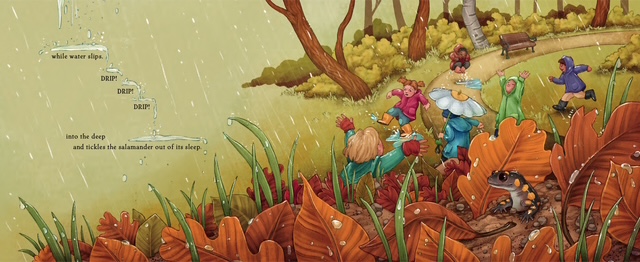
Here is how it begins: Fall sings here. “Ready! Set! SWISH! and dances there, FALL FLOAT FLUTTER. The illustrations on the first spread are of children playing on a playground. The illustrations on the second are of a salamander in the woods. This sets up both the feeling of a song and the parallel narrative of salamanders and children as they experience the seasons that eventually lead to their meeting.
These words meant nothing without pictures, so, in addition to art notes, I created a dummy to go along with my manuscript. The dummy helped me figure out how to let the words be the song and the illustrations be the story. I also listened to Vivaldi’s Four Seasons as I wrote.
The music continues: Ponds fill as rain rehearses. It sings, “soon, soon, soon.”
But there is danger and so the song changes: A gathering night song. A dangerous plight song.
I realized, when I finished the manuscript, that there was an important sub theme I should explore. The story was also the perfect vehicle for introducing families and schools to the importance of citizen science. So, the back matter includes some easy citizen science projects families and classrooms can do. I know they are easy because, ironically, the only one I haven’t done is a Big Night salamander crossing.
I am in the midst of contract negotiations for a third book. As in my first two, it ties directly back to things I am excited by in nature. I have discovered that I write best when I write what I know. And I tell the story best when I write it in my own unique lyrical way. But, I still have to search for that magical entry point. When I finally find it, the story begins to write itself.
That would be my advice for any writers. Don’t just find your passion. Find your unique voice as well. But, also look for that place in your own brain where your neurons begin firing when you consider how the words and the story structure might work together. For me, that happened at the intersection of song and parallel narrative. Don’t stop looking and experimenting until your own neurons light up. That’s when the magic will happen.
Don’t forget to leave a comment below to get in the drawing for a copy of SALAMANDER SONG! (US addresses only, please. Winner announced 4/11/25)
And if you enjoy a book, please support authors and illustrators by leaving reviews online. 😄 Thanks!
 Beth Anderson, Children's Writer
What a great post! I love structure, and parallel structure is one of my favorites. Learning about the process of leaving behind what was comfortable and had worked before (writing in verse) to what the lyrical language that was perfect for this story was really helpful for one of my WIPs. Thanks so much!
LikeLiked by 2 people
I have visited a friend’s stream to see the spotted salamander migration. It was a wonderful experience. Congratulations on your book Ginny!
LikeLiked by 1 person
Finding the right structure is so important though the search for it is often an exercise in patience! This is a good reminder, though, that once you do find the right structure, the rest flows.
LikeLiked by 1 person
I loved seeing your process and how you went from considering free verse to rhyme to lyrical. This is something I work through as well!
LikeLiked by 1 person
I tried twice to reblog this but WP kept giving me the error message that I’m offline (which is obviously not true if I’m able to comment here…also from my computer). Anyway, if I forget later, you’ll know that I made an attempt to share this lovely book from Ginny!
LikeLiked by 1 person
I love that the lyrical text speaks to both the children and the salamanders. I call that clever! And it’s clear that your well-chosen words sparked much creativity in your illustrator. This book is beautiful.
LikeLiked by 1 person
Congratulations, Ginny! Your book sounds wonderful!
LikeLike
Thank you for sharing how you decided the best way to present your story. This is the perfect time of year to read your beautiful book.
LikeLike
“The intersection of song and parallel narrative.” Enjoyed reading that. Creativity is so mysterious, isn’t it? Thank you for sharing your process, Ginny. Congratulations!
LikeLike
What a beautiful book! It looks like your search for the right structure landed in exactly where it should be. Finding the perfect marriage of voice and structure is something I always struggle with.
LikeLike
This behind-the-scenes look is helpful and interesting. I especially like the excerpts from the book itself. Thanks for sharing!
LikeLike
I printed this out, Ginny! Thanks so much for your inspirational post on structure. And congrats on your nature inspired new books! Thanks Beth for your blog. 🙂
LikeLike
I enjoyed hearing about how you came to find just the right structure. So important!
LikeLike