Sharing your books with the public takes authors and illustrators into a whole new world. So much to think about and so much to learn. In this post, author Laura Stegman share tips for writing an author bio for promotion, an excellent place to start.
GIVEAWAY! Laura is offering a copy of Summer of L.U.C.K. to one random person who comments below.
Top Ten Things to Know About Writing A Basic – but Effective – Author Bio for Promotion
by Laura Stegman 
We’re storytellers, right? So why is it that writing a book seems almost easy compared to the stuff we must write about our books? Log lines, for example. The dreaded synopsis. Even putting together a simple bio feels overwhelming. But it needn’t be.
Here are some tips to help craft a basic author bio for promotional use.
- Whether you’re published, about to debut, or writing a book, it’s never too soon to establish a web site, and it’s never too soon to fill it with content, starting with an author promotional bio.
The first thing to know is that an author’s promotional bio differs from a bio intended to tell an author’s entire story. Promo bios are simple – but essential – tools that contain just the facts. They range from 50 to 300 words (also see #8 below), and they position the most important, relevant information right at the top.
Yes: Mary Smith is the award-winning middle grade author of [book name/s]…
No: Mary Smith was born in New York and began writing when she was seven years old…
- Promotional bios are ALWAYS written in third person present tense.
Yes: Mary Smith is the award-winning….
No: Mary Smith wrote the award-winning…

- The bio’s opening sentence should include your name, book title/s*, genre, publisher name/s, and a reference to awards if you’ve won any.
Why is it structured like this? Because when you’re working with the media, bloggers, reviewers, podcasters, influencers, bookstores, and other book promotion collaborators, the first sentence is often all that they’ll have time to read – or use. Avoid making someone’s job harder by forcing them to wade through less important information — like how many kids (or dogs) you have, etc. Your author-related Who and What should be addressed immediately.
*If more than three of your books have been published, refer to the number (see Example A below), and name your key books a bit later.
Example A: [Name] is the award-winning author of more than thirty nonfiction books for children, including [name two or three with publisher name and awards reference if any].
Example B: [Name] is the author of [title, title, and title, publisher], three middle grade fantasies about [brief description and/or awards reference].
Example C: Debut author [name’s] picture book, released by [publisher] in [month/year], is [title]…
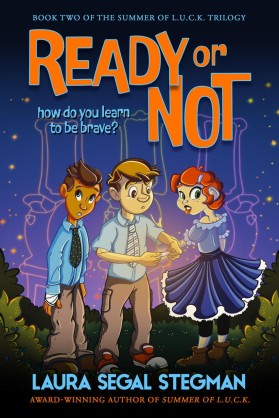
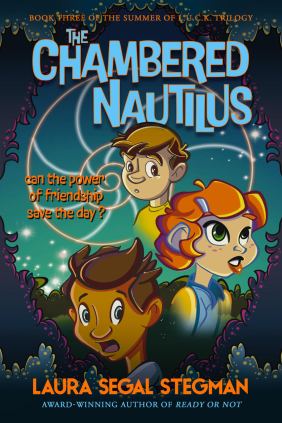
Real-Life Example #1: Laura Segal Stegman is the author of Summer of L.U.C.K. (her debut), sequel Ready or Not (both Five-Star Readers’ Favorite Award winners), and The Chambered Nautilus, third in Young Dragons Press’s middle grade fantasy trilogy.
Real-Life Example #2: Author/illustrator Debbie Ohi‘s four versions of her bio are HERE; take a look.
- If you have a second career along with being an author, include that too, especially if it’s particularly compelling.
Real-Life Example: Rajani LaRocca was born in India, raised in Kentucky, and now lives in the Boston area, where she practices medicine and writes award-winning books for young readers.
- If you write non-fiction, your credentials, including your education, can be part of the first paragraph. Otherwise leave them for the end, if you include them at all.
Real-Life Example:
Award-winning author Laurie Wallmark writes picture book biographies of women in STEM. Her titles include [list of titles and awards]. Laurie has an MFA in Writing from VCFA and is a former software engineer and computer science professor.
- To emphasize the difference between an author’s promotional bio and a bio used elsewhere (on a book jacket, for instance), click on the Real-Life Example links above. You’ll see that all are from each author’s press kit.
- The second and third paragraphs of your author bio should go into more detail about the most colorful, the most important, or the most interesting information related to your writing career, including a few review quotes or other praise.
- Create several versions of your bio, each with varying word counts to use in different situations. Basically, they’re just edited versions of the longest one. See Debbie Ohi examples in #2 above.
- What if you’re not published yet? No problem. Simply describe the work you do AND your connection to writing.
Example A: [Name] is an electrician and writer of middle grade books. Her current work in progress is about [log line]. Some of her recent favorites in that genre are [give a few].
Example B: [Name] is a father of three and writer of picture books.
You can then add something that illustrates your involvement in the writing world, like your SCBWI membership or a subject you’re researching for a work in progress.
- Speaking of research: Check out the press kit bios of other authors in your genre to see what their bios contain and how they’re structured.
So, there you have a set of tips for transforming a bio into a potent promotional asset. Hope you find it helpful.
Don’t forget to leave a comment to enter the GIVEAWAY for your very own copy of SUMMER OF L.U.C.K.! [U.S. addresses only, please. Winner announced 5/24/24]
AND if you enjoy a book, please support authors and illustrators by leaving online reviews. 😃
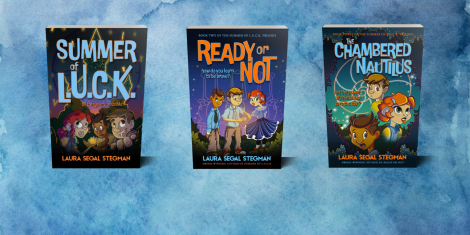
Laura Segal Stegman is the author of Summer of L.U.C.K., Ready or Not, and The Chambered Nautilus, a middle grade trilogy from Young Dragons Press. She is president of her own public relations firm and creator of PR TIPS FOR AUTHORS, a guide to building a digital author media kit, which has been presented by SCBWI, The Writing Barn, and elsewhere.
 Beth Anderson, Children's Writer
WOW! So much great information here! Thank you.
LikeLiked by 1 person
Thanks for all the great examples! So very helpful!
LikeLiked by 1 person
Hi Laura, these are great examples and suggestions. I will definitely be revising my various bios! Thank you! And thanks Beth!
Kaye
LikeLiked by 1 person
Thank you for these great tips. An editor at a conference mentioned she appreciates a short bio in third person. 🙂 I still need to update my website.
LikeLiked by 1 person
Great tips!
LikeLiked by 1 person