Especially for Educators: “Back Matter Bounty for the Classroom: Part 3” by Beth Anderson

I felt like this last part should be titled “From whence it came and where it goes,” but that just seemed a bit unwieldy. Every manuscript I tackle teaches me more about researching, so I often add a note on what was special in the back matter—sometimes a short note, sometimes longer. It’s valuable for … More Especially for Educators: “Back Matter Bounty for the Classroom: Part 3” by Beth Anderson

Especially for Educators: “Back Matter Bounty for the Classroom: Part 2” by Beth Anderson

Though much of the fascinating information I glean from research never makes it into the story, some of it earns a place in back matter if it has the potential to engage and benefit educators, librarians, parents, and, most of all, young readers. Images and graphics are always a favorite! GIVEAWAY! Leave a comment below … More Especially for Educators: “Back Matter Bounty for the Classroom: Part 2” by Beth Anderson

Especially for Educators: “Back Matter Bounty for the Classroom: Part 1” by Beth Anderson

As I worked on the back matter for what hopefully is book number twelve, I thought about all the fabulous kinds of information that awaits teachers in these often overlooked sections. I’ve explored back matter in posts and gatherings for writers, but I’ve never done it from an educator perspective. SO… I decided it was … More Especially for Educators: “Back Matter Bounty for the Classroom: Part 1” by Beth Anderson

“Not Just for Little Kids: Five Reasons to Use Picture Books with Older Students” by Carolee Dean

I firmly believe that picture books aren’t just for little kids. And also that they’re not just for Language Arts classrooms. As a teacher, I LOVED using picture books with a wide range of ages for a wide range of skills. Picture books are magical in so many ways and open the door to a … More “Not Just for Little Kids: Five Reasons to Use Picture Books with Older Students” by Carolee Dean

Special Feature: “Where Writing Begins” with Tina Barrett, Kindergarten Teacher!

What a special treat I have for you today! Where does writing begin? With a voice. With ideas. With lines or letters. AND usually, with an encourager.  How many of us trace our love of writing back to a teacher or multiple teachers? I know I do! In the beginning of February, Tina Barrett sent … More Special Feature: “Where Writing Begins” with Tina Barrett, Kindergarten Teacher!

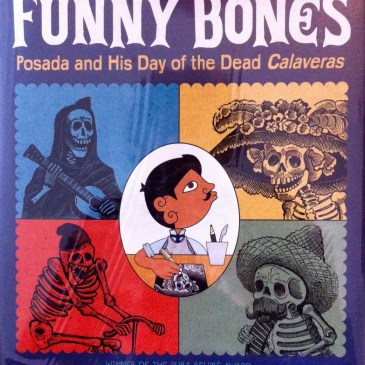
Funny Bones: Posada and His Day of the Dead Calaveras

An incredibly interesting and engaging book… Title: Funny Bones: Posada and His Day of the Dead Calaveras Written and illustrated by: Duncan Tonatiuh Abrams Books for Young Readers, 2015, biography, 40 pages Suitable for ages: 6-10 (and older) Themes/topics: art, Mexico, Day of the Dead Opening: Skeletons riding bicycles…skeletons wearing fancy hats…skeletons dancing and strumming … More Funny Bones: Posada and His Day of the Dead Calaveras

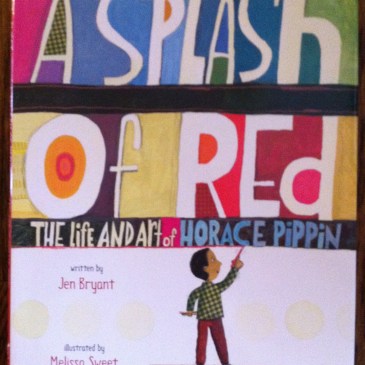
A Splash of Red

PPBF Special: For all the teachers who are in the midst of testing season, I’ve included a literature unit for this amazing book. Title: A Splash of Red, the Life and Art of Horace Pippin Written by: Jen Bryant Illustrated by: Melissa Sweet Random House/Knopf, 2015, biography Suitable for ages: 5-8 (easily Gr 1-5) Lexile: 610 … More A Splash of Red

Fancy Words – Building Children’s Vocabularies
One of the questions that often comes up among writers of children’s books concerns the use of higher level vocabulary.

Whether a child is a native English speaker or is learning English as a second language, he/she needs exposure to rich, varied and challenging language. Children acquire most words through their daily encounters, using context to understand meaning. But acquiring a new word is not automatic. They must be engaged and interested.

So for all the writers – YES! Use some fancy words. They’re fun!

Vocabulary learning is crucial to reading comprehension and success in school. The keys to expanding a child’s vocabulary are

multiple purposeful exposures,
explicit instruction,
interactive activities,
acquiring strategies and
opportunities to use new words.
I’ll leave you with some great VOCABULARY ACTIVITIES for the CLASSROOM on my Parent/Teacher Resource page, and two sources on vocabulary instruction – one focused on the research and the other modeling instruction during a read-aloud.

A Review of the Current Research on Vocabulary Instruction from the National Reading Technical Assistance Center, RMC Research Corporation, 2010

“Bridging the Vocabulary Gap: What the Research Tells Us about Vocabulary Instruction in Early Childhood” from Young Children, July (2010): 84-91. National Association for the Education of Young Children. … More Fancy Words – Building Children’s Vocabularies