When we widen the scope past the usual events and people featured in textbooks and traditional stories of the American Revolution, we see diverse contributions to liberty across society that allow us to understand a reality that makes history relatable and meaningful. In this post, true to the words of Abigail Adams, author Barb Rosenstock “Remembers the ladies!”
GIVEAWAY! Leave a comment after the post for a chance to win a copy of LEAVE IT TO ABIGAIL! from Barb Rosenstock.
Congratulations to Cathy Stefanec Ogren, the winner of REVOLUTIONARY PRUDENCE WRIGHT from Beth.
Remember the (REVOLUTIONARY) Ladies!
by Barb Rosenstock
Year after year, my teachers presented another part of the American Revolution. Which meant that I learned the stories of a group of men. The warriors, like George Washington and Benedict Arnold. The writers, like Thomas Jefferson and Thomas Paine. The political thinkers like Benjamin Franklin and John Adams. There was at least one black man, Crispus Attucks, mentioned (ignoring the thousands of black soldiers, patriots, and Loyalists); along with the male leaders of the Mohawk, Oneida, and Delaware peoples (though their individual names were mostly ignored.)
The only women mentioned were Martha Washington, Betsy Ross, and Abigail Adams. Martha because she married George, Betsy because she supposedly sewed the first flag, and Abigail because she hung laundry in the unfinished White House. The un-revolutionary message to girls like me was: men change the world, women marry and do housework.
As a nonfiction children’s writer, I too wanted to cover the American Revolution. So, who did I first write about? Those same men! After completing THOMAS JEFFERSON BUILDS A LIBRARY and BEN FRANKLIN’S BIG SPLASH, I was working on John Adams, when an editor suggested Abigail Adams instead. I’m now ashamed to say that my first thought was “Why would a book about hanging laundry be interesting to kids?”
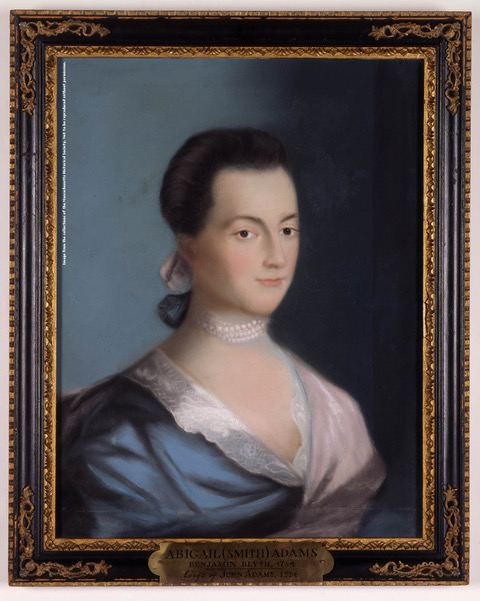
Still, I Googled “Abigail Adams”, surprised to get 30,000,000 initial results, most of which used the adjective “exceptional” and nouns such as “writer,” “political advisor,” and “women’s rights advocate.” It seemed there was maybe a little more to Abigail than her skills with a washboard.
Quickly, the problem became that there was too much more. Abigail was a warrior, an eyewitness to the Battle of the Bunker Hill, a woman who made bullets, fed, nursed, and housed wounded soldiers in her attic. She was a writer, composing and receiving letters from important folks of her day including Jefferson, George and Martha Washingtons, James and Dolly Madison, Benjamin Franklin and Mercy Otis Warren. Abigail was a thinker and a far better politician than her husband John could hope to be. She had her finger on the pulse of the new nation. An avowed abolitionist, she filled pages with astute advice on morals, family life and government.
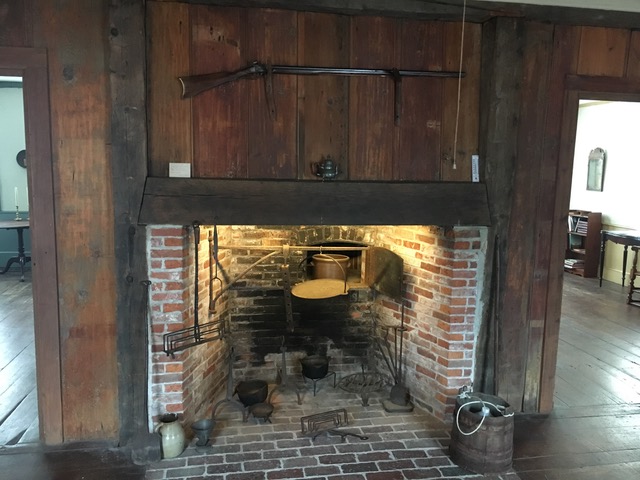
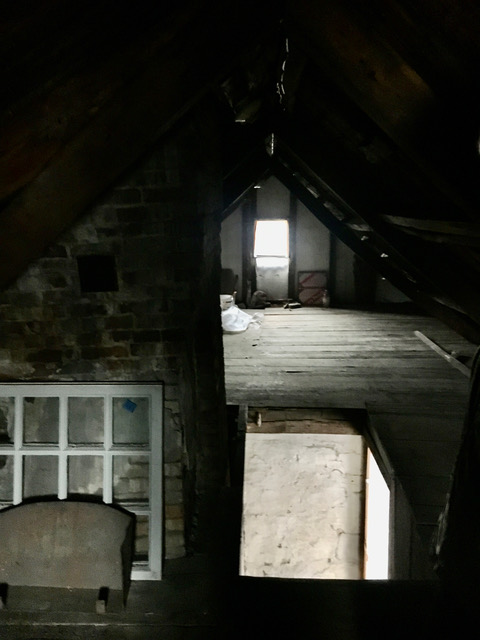
In a visit to the Adams National Park in Quincy, MA, I learned John Adams was not a wealthy man. When he was off at the Continental Congress, it was left to Abigail to run their farm, handle what was left of his legal practice, pay their bills. She started an import business to support the family. She taught all four of their children at home. Later she traveled to France, met royalty, and was indeed the first First Lady to live in the White House. It was astounding what a full life Abigail created at a time when women had no legal rights at all—often hemmed in by low expectations, untreatable illnesses, and early death.
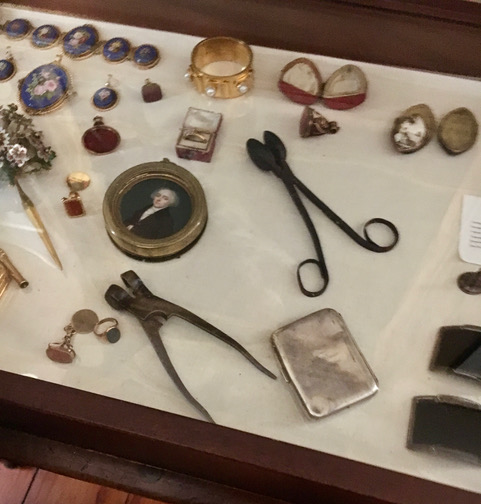
At her birthplace in Weymouth, MA, I learned that her skilled juggling act started in childhood. Abigail took her life changes in stride with grace, humility, and a wicked sense of humor. And though it’s obvious that misogyny is behind my lack of school instruction on womens’ contributions to our country’s founding, I wonder if it wasn’t also a bit because of the complexity of women’s lives (especially for male writers!) It is hard to tell a children’s story of a woman who was a politician, wife, mother, businessperson, advisor, friend, cook, nurse, teacher, entertainer, accountant, importer, farm supervisor, bullet maker, and writer of one of the most famous phrases in early women’s rights history, “Remember the Ladies!” An (ignored) plea to John to write the rights of women into the government he was creating.
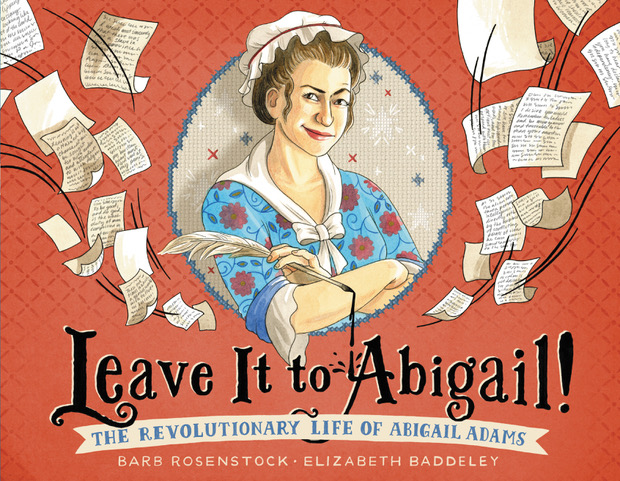
“LEAVE IT TO ABIGAIL” I wrote in my notes one day, deciding on a theme. She was a woman who was everything to everyone, as is true of many women today whose complex lives defy the neat categories our society prefers. That complexity makes their stories even MORE important to model for children. Lives like Abigail’s prove the revolutionary idea that real human beings are not any ONE thing, and we never have to flatten our real selves into society’s boxes. It is when we are at our most complex that we find our purpose and make choices that can improve the world.
Here are more individual true stories that will help the children in your life REMEMBER THE LADIES (all written and illustrated by women of course!) —
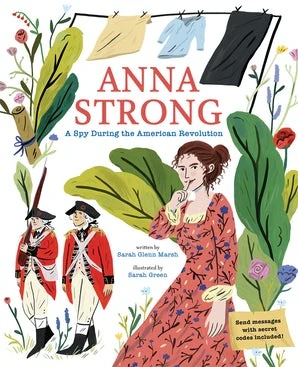
Anna Strong: A Spy During the American Revolution,
by Sarah Glenn Marsh, Illustrated by Sarah Green
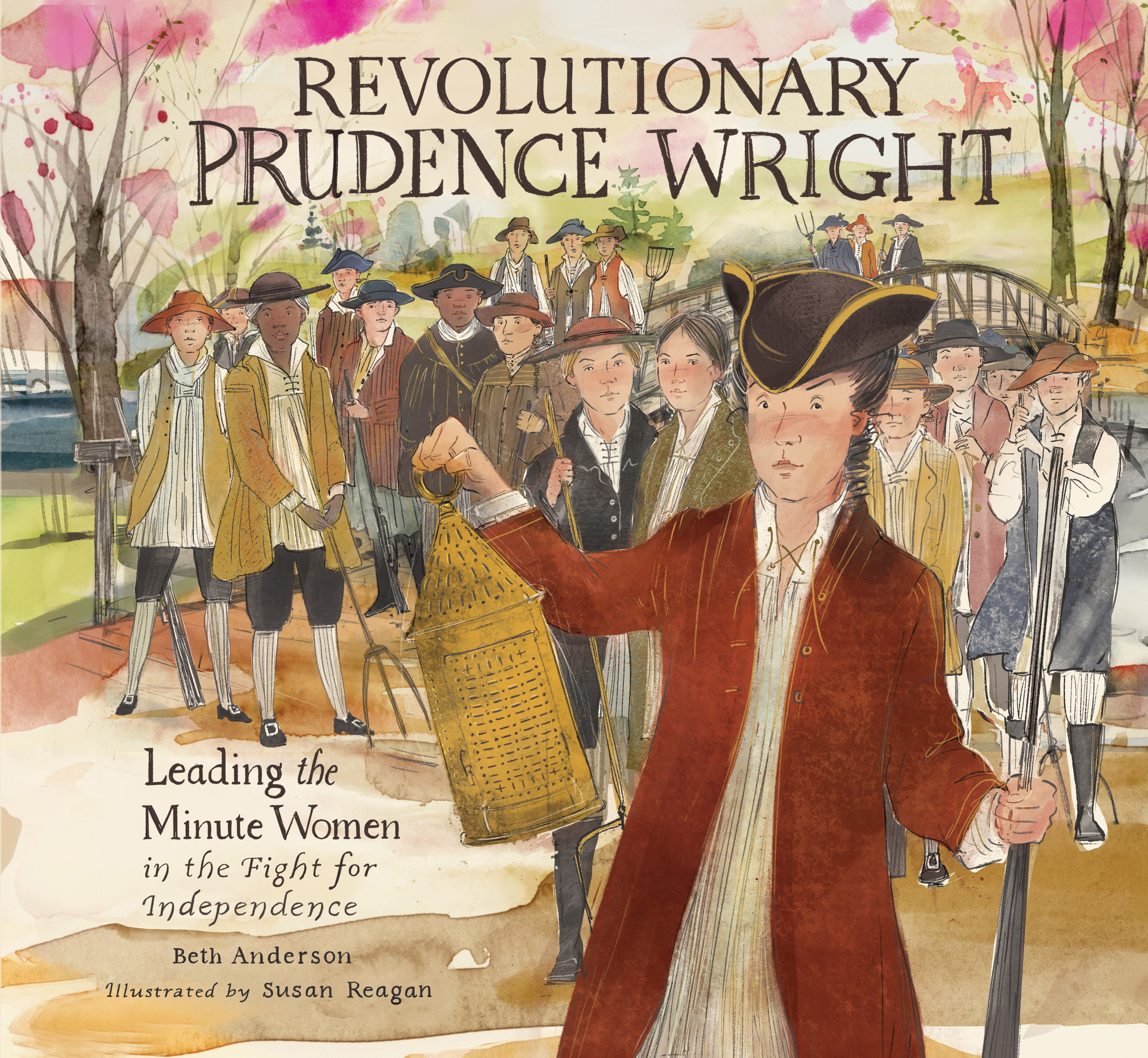
Revolutionary Prudence Wright: Leading the Minute Women in the Fight for Independence
by Beth Anderson, illustrated by Susan Reagan
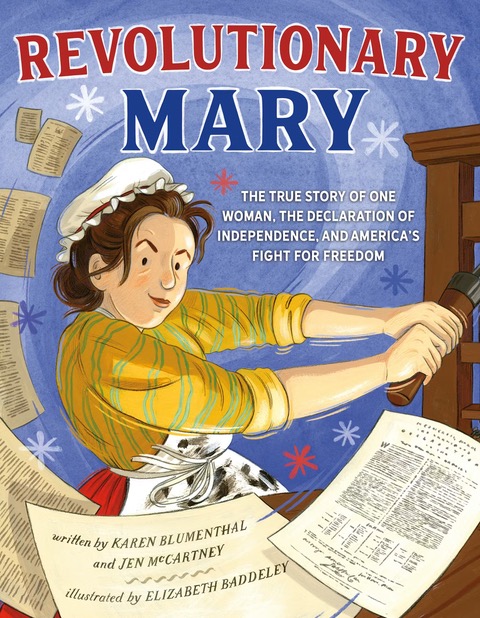
Revolutionary Mary
By Karen Blumenthal & Jen McCartney, illustrated by Elizabeth Baddeley
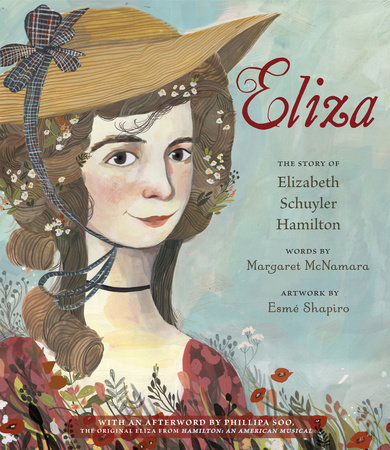
Eliza the story of Eliza Schuler Hamilton,
by Margaret McNamara, Illustrated by Esmé Shapiro
Don’t forget to leave a comment below for a chance to win a copy of LEAVE IT TO ABIGAIL! (US addresses only, please. Winner announced 4/17/26.)
😍 When you enjoy a book, please support authors and illustrators by leaving online reviews.
 Beth Anderson, Children's Writer
I’d love to win LEAVE IT TO ABIGAIL. Congratulations, Barb on your latest achievement! Abigail would be proud.
LikeLike
As with all of Barb’s books, her Abigail one was exceptional. Not growing up in the American school system, I didn’t learn about the historic women, or lack thereof, from classes. Like a certain Jeopardy champion, I am now learning about all of the most interesting people via picture books! 😉
LikeLike