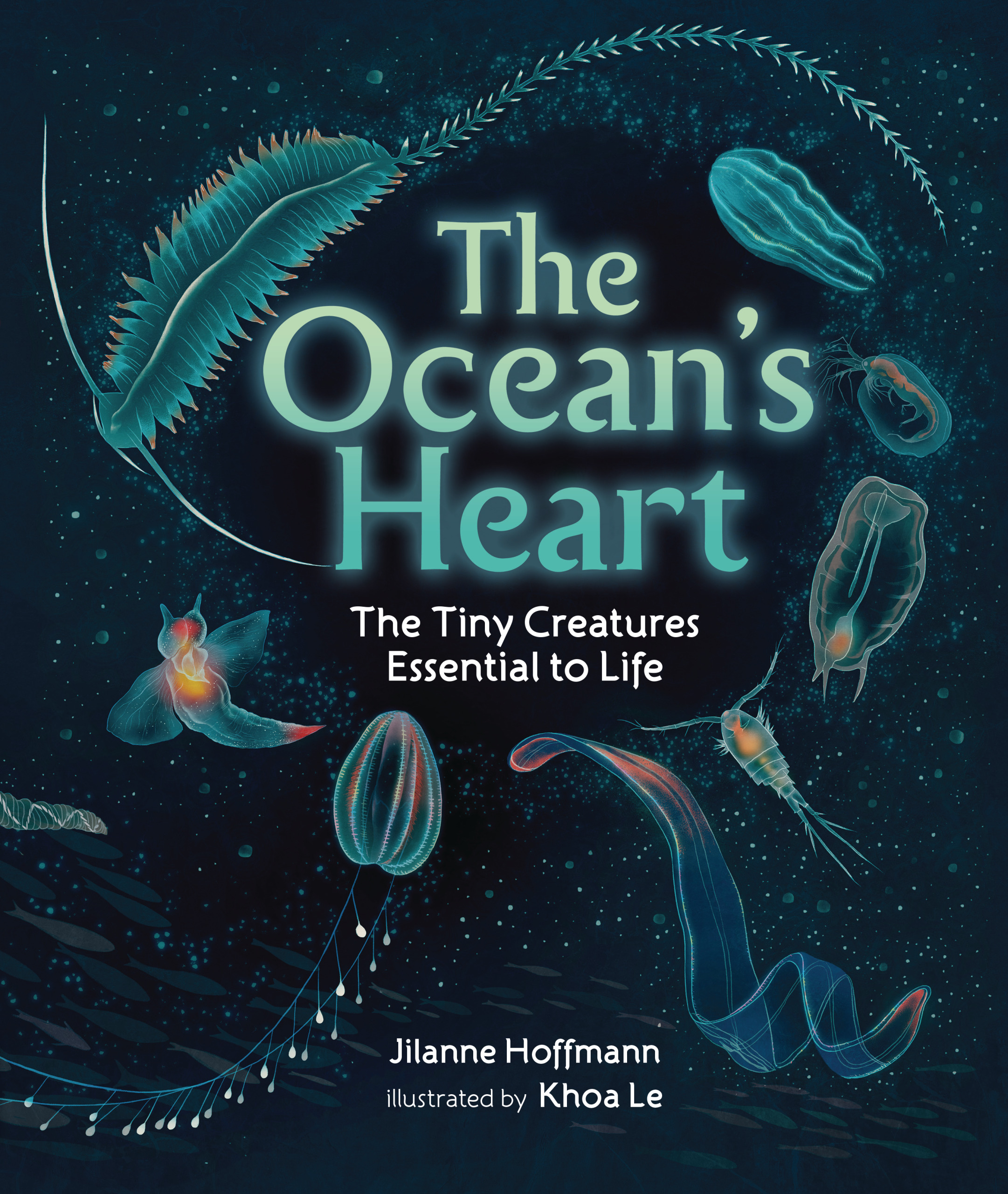
In this post, author Jilanne Hoffmann takes us through the submission process for THE OCEAN’S HEART: THE TINY CREATURES ESSENTIAL TO LIFE and the question of what she was willing to change to get this book published.
GIVEAWAY! For a chance to win a copy of THE OCEAN’S HEART, leave a comment below after the post.
Congratulations to Christy Matthes, the winner of EMILY SAW A DOOR from Mel Rosenberg!
What Are You Willing to Change?
by Jilanne Hoffmann
I’m not sure why, but I tend to inhabit the “thing” I’m writing about and then choose to tell the story from a first POV. Maybe it’s because these “things” I’ve researched become a part of me. I love it. But sometimes (well, maybe often) editors feel differently.
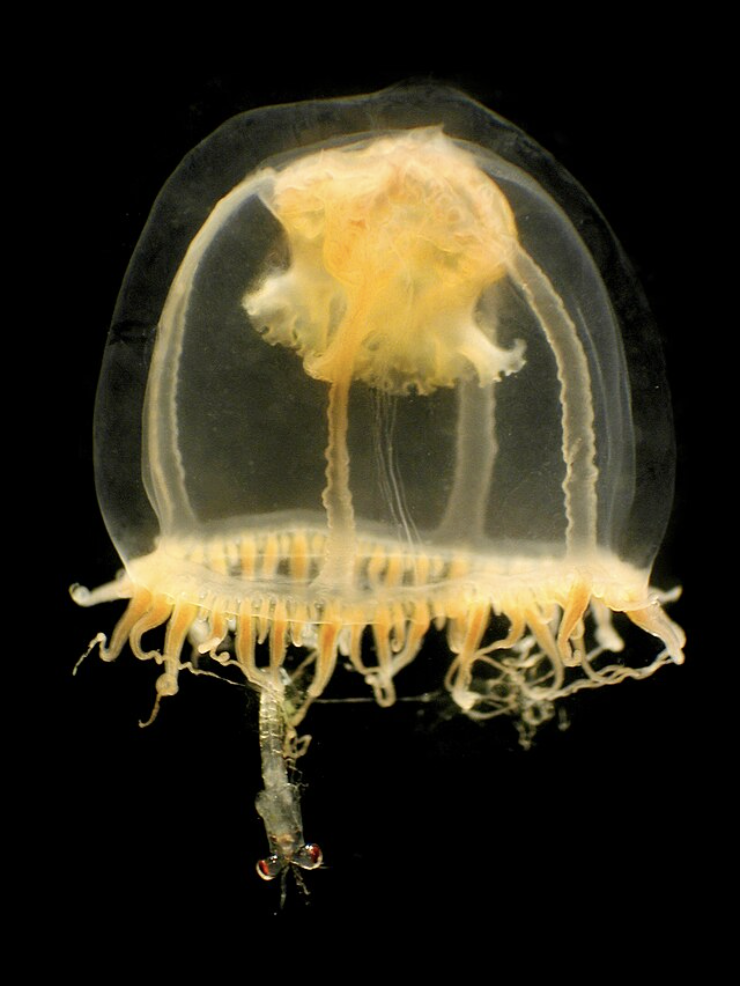
During the drafting and revision phase of THE OCEAN’S HEART, I found myself bouncing between the voice of zooplankton and the voice of the ocean. After much deliberation, I decided the narration worked better from the ocean’s perspective. It seemed right for Mama Ocean to relate the perils faced by these tiny creatures who are her heart.
SUBMISSION ROUND 1
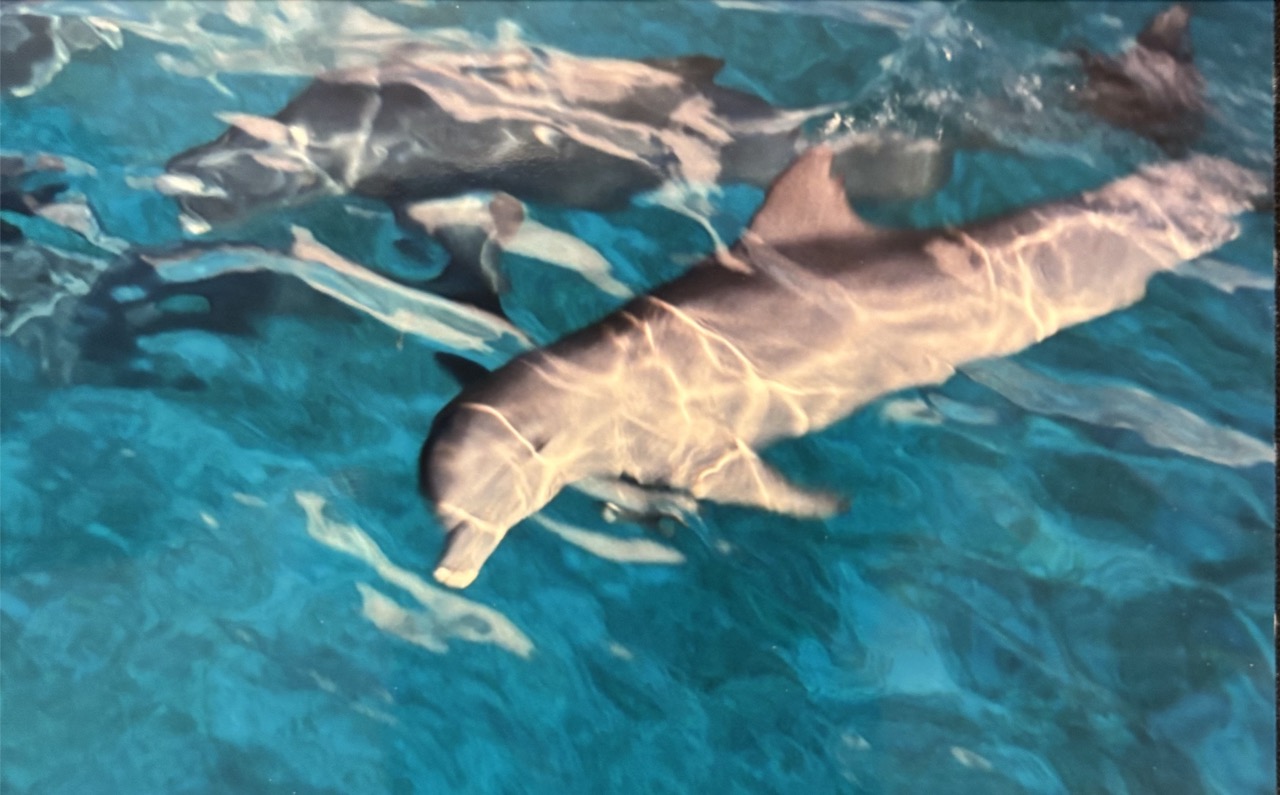
I was pleased that most editors in this round were unperturbed by my POV choice. Instead, the manuscript suffered from a Catch-22. The problem I was trying to rectify by having the story published, making zooplankton worthy of the same love as dolphins and whales, kept it from being picked up.
Editors said that the writing was lovely, but there was too much back matter or that the topic was too niche, and they couldn’t figure out a way for it to break out in the market. In other words, they didn’t see a universal appeal.
Lori Steel, my agent, had already tasked me with cutting the back matter down from 7,500 words to 2,500 before the first round. Ha! I’m such a sucker for backmatter. But I took a scalpel to it again, taking it down to 1,250 words and making what was left feel more kid-friendly. I kept the ocean’s POV.
SUBMISSION ROUND 2
This time, some editors balked at the first POV. Pass! Ugh! Another said that she loved the voice, but didn’t have a vision for how to bring it to market, even though she’d looked through their backlist for a guide. Pass! A couple of others mentioned that they were already doing an ocean-themed book (that I’m now seeing coming out this year). Another said that while it was beautifully written and fascinating, something was holding her back. Pass!
Well. Hm. What to do? I’d won a critique from a prominent nonfiction author I respected immensely, so I sent the manuscript to her. She thought I should eliminate the “cantilevered” structure of the poetic narrative, stop using present participles, and write the story in prose. She also suggested removing some of the language that, to her, felt a little off.
I pondered.
If I wrote it in prose and removed the present participles, it would no longer reflect the ceaseless movement of the ocean and these marathon swimmers. So I didn’t follow that particular piece of advice, but I did tweak some of the language.
SUBMISSION ROUND 3
Fingers crossed, Lori sent out the manuscript again. One of the editors in this round was Carol Hinz. As she and Lori talked about the story, Carol mentioned the challenge of illustrating something that happens in total darkness. She wasn’t sure she had a vision for how it would work and wanted to think about it. But she also added that she’d just acquired a couple of other books that were written from an unusual 1st POV, and thought that pushing another through the acquisition process might be tough. Would I be willing to change it to third POV?
One of my critique partners, Katy Tanis, an author-illustrator, had already lived through many revision rounds of this story, and thought there were plenty of illustration options that could be pursued. So she pulled together an “inspiration board.”
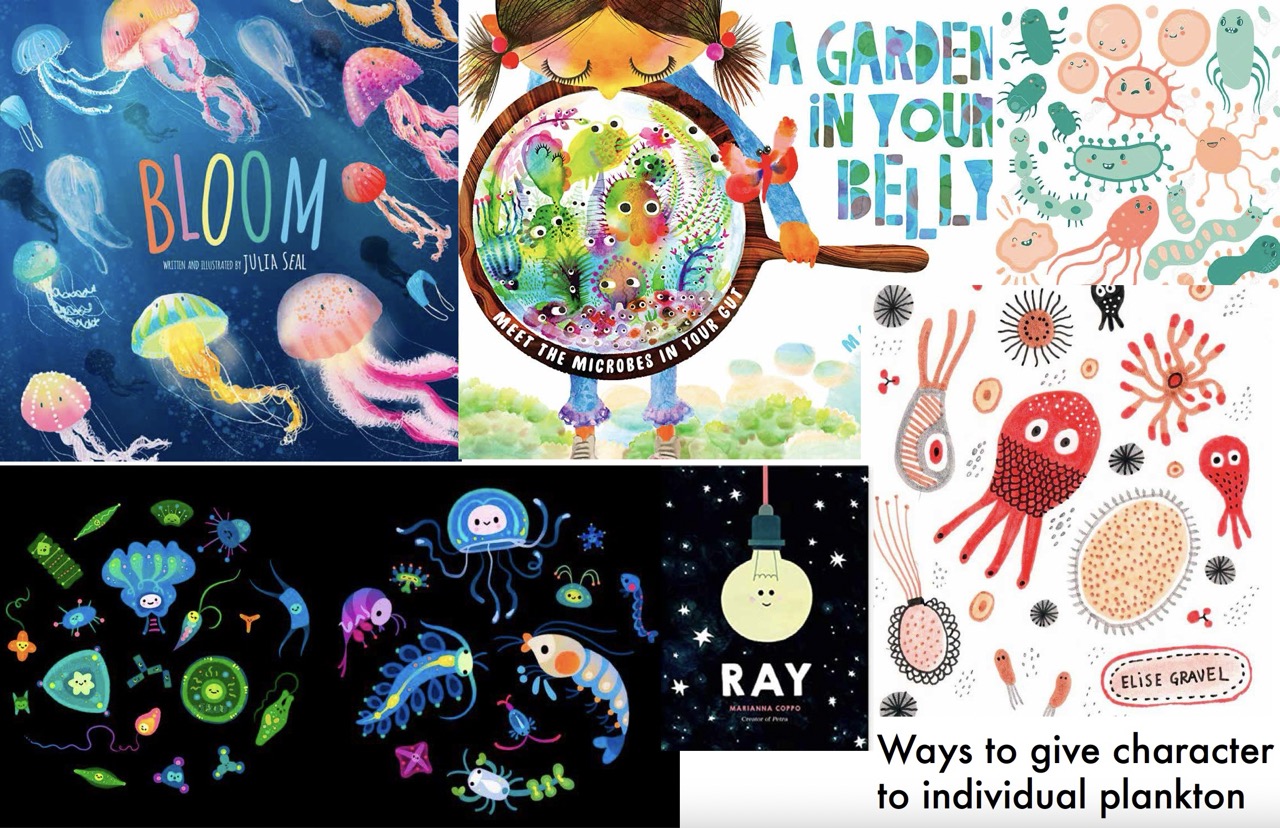
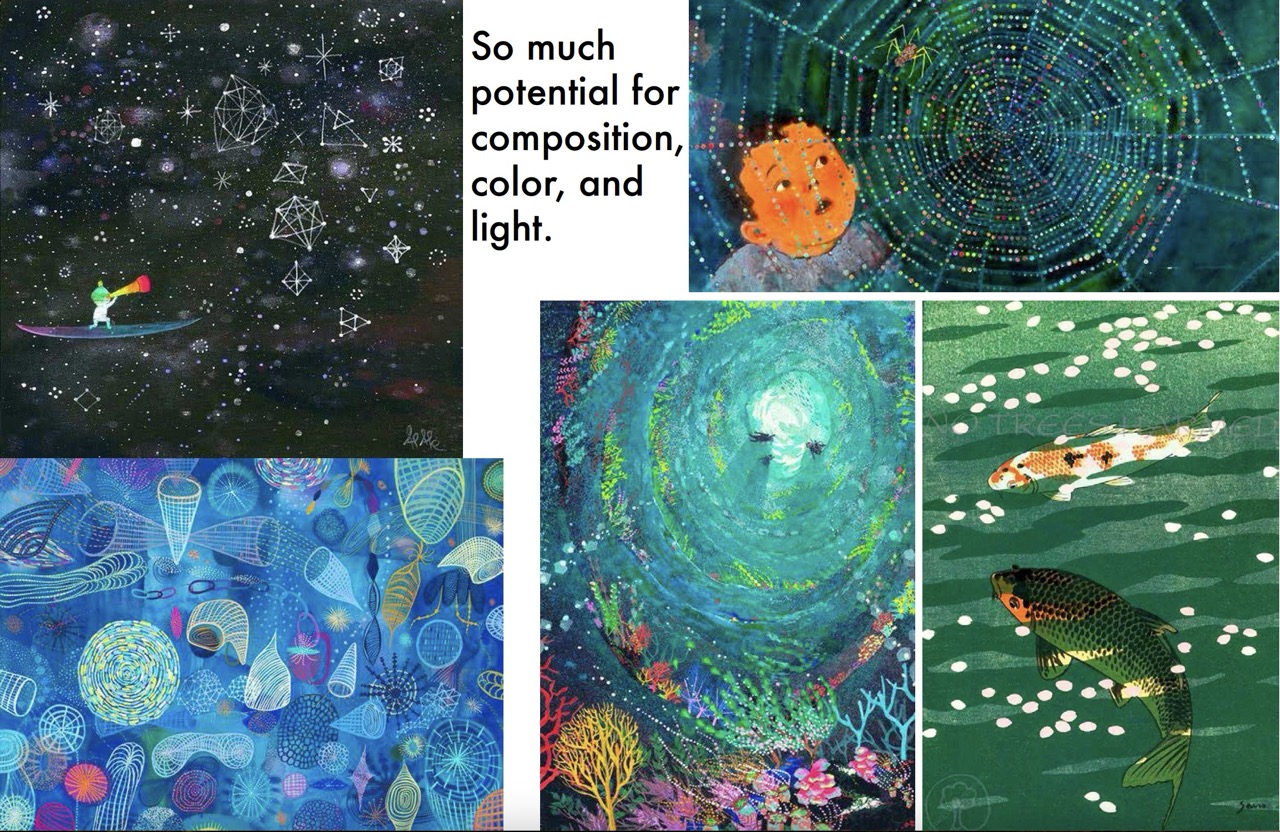
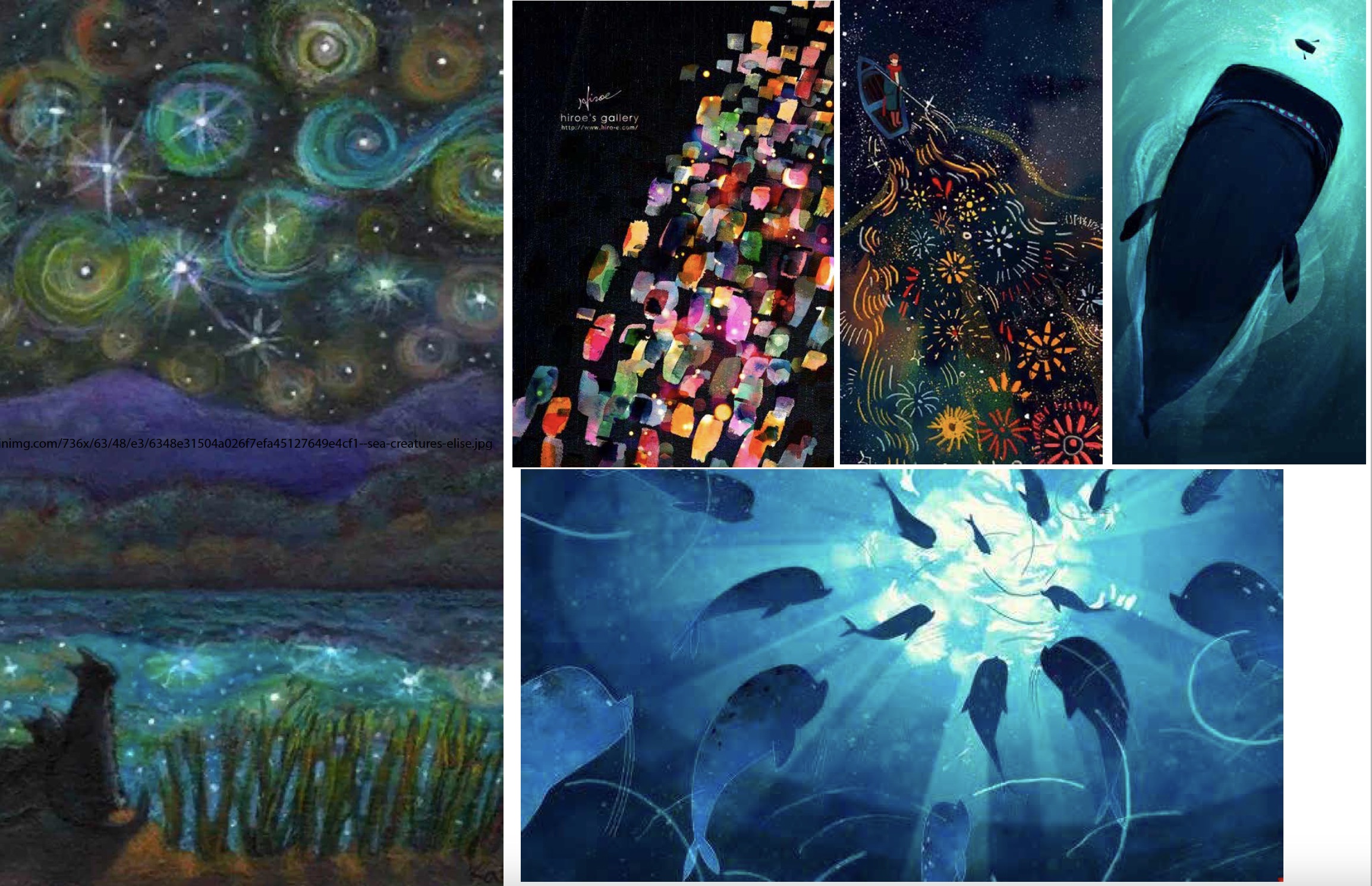
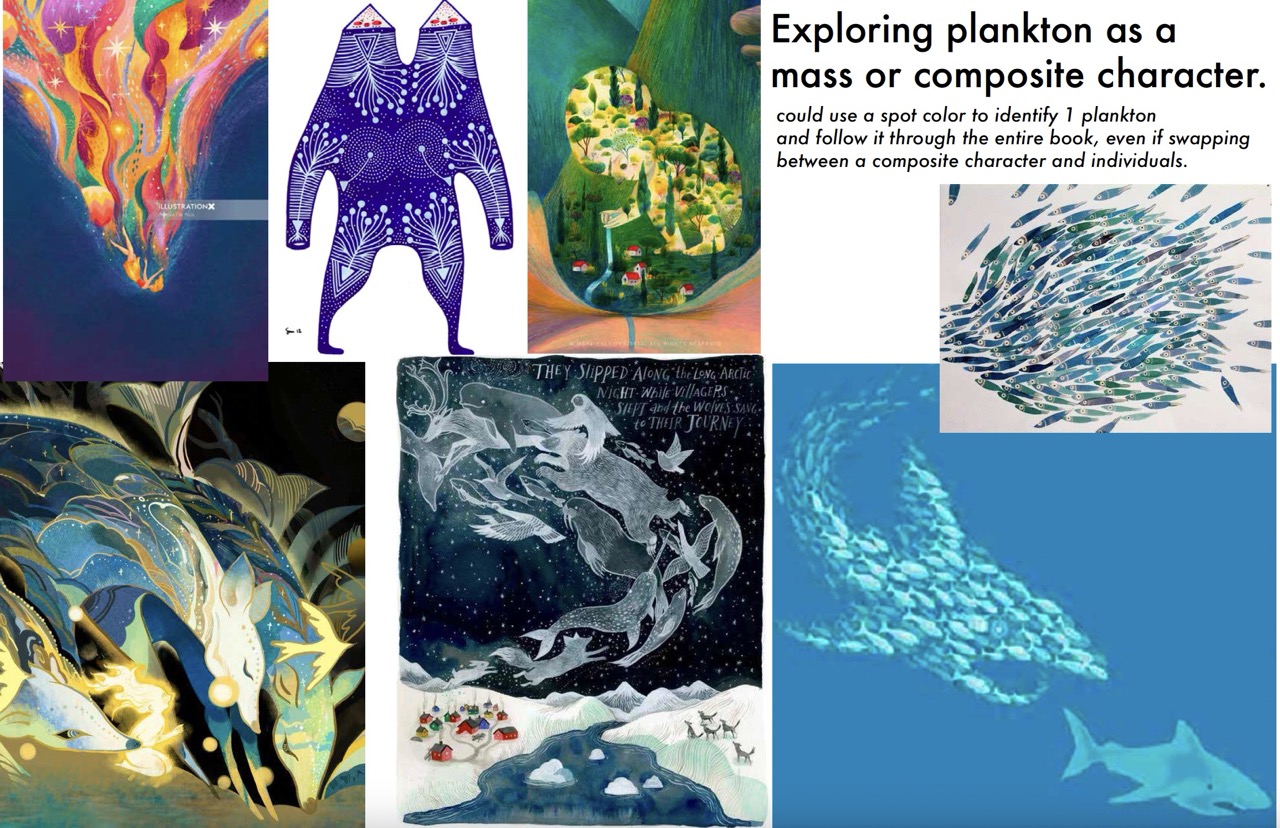
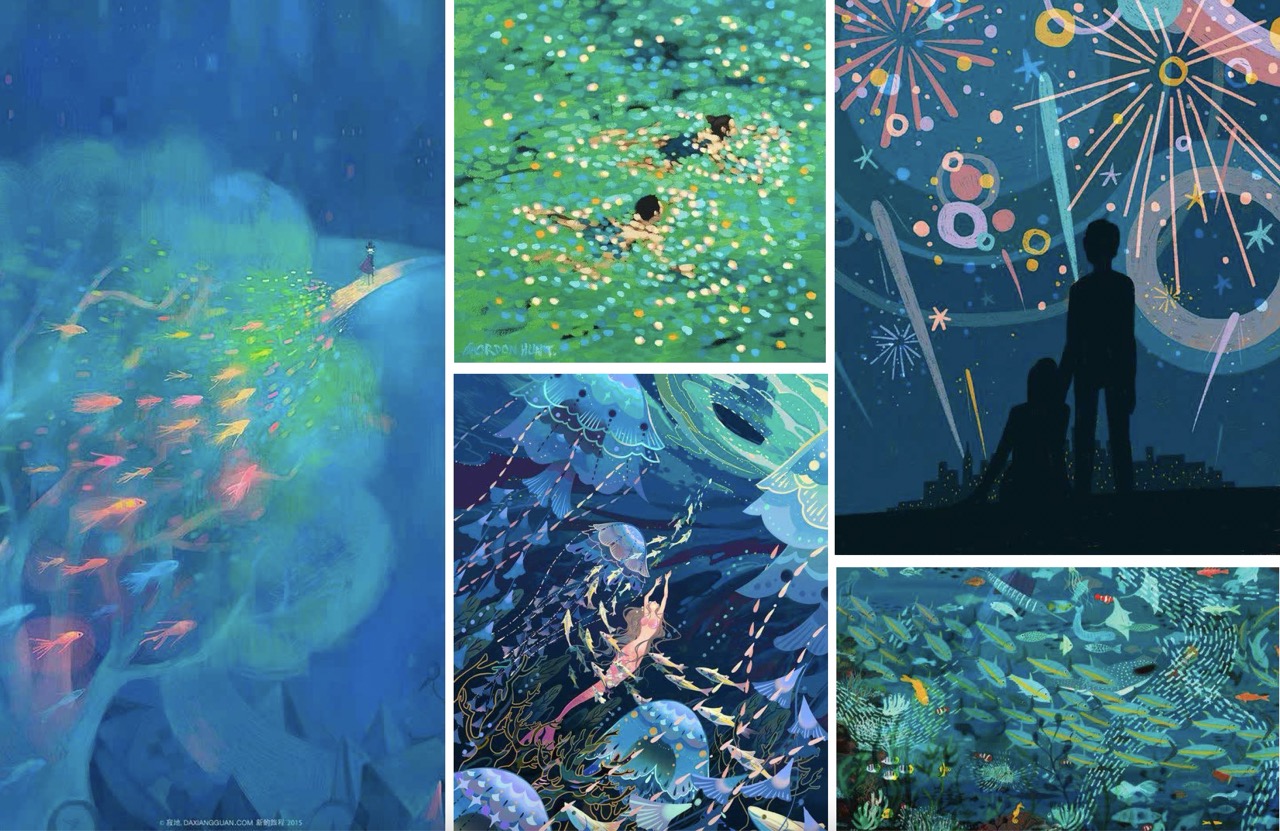
The common format for author-only submissions includes just text, with the addition of art notes only as necessary. That’s how Lori had submitted THE OCEAN’S HEART. But after Carol expressed this reservation, I asked Lori to send Carol a copy of Katy’s inspiration board.
AND I immediately revised the narrative into third POV. It was more important for me to get this story out into the world, than it was for me to hold on to a specific POV. Between my revision and Katy’s inspiration board, Carol decided to take the book to acquisitions….and it passed!
And now I can hold this book, filled with Khoa’s glorious illustrations, in my hands. THE OCEAN’S HEART has received a starred review from Kirkus and Booklist, so the team’s vision is being recognized! Yay!
Folks, stick to what’s important to you, and be flexible about the rest.
It only takes one yes!
For a peek inside this fabulous book, pop over to Teresa Robeson’s blog!
Don’t forget to leave a comment below for a chance to win a copy of this gorgeous book, THE OCEAN’S HEART: THE TINY CREATURES ESSENTIAL TO LIFE! (US addresses only, winner announced 3/27/26)
😍 If you enjoy a book, please support authors and illustrators by leaving online reviews!
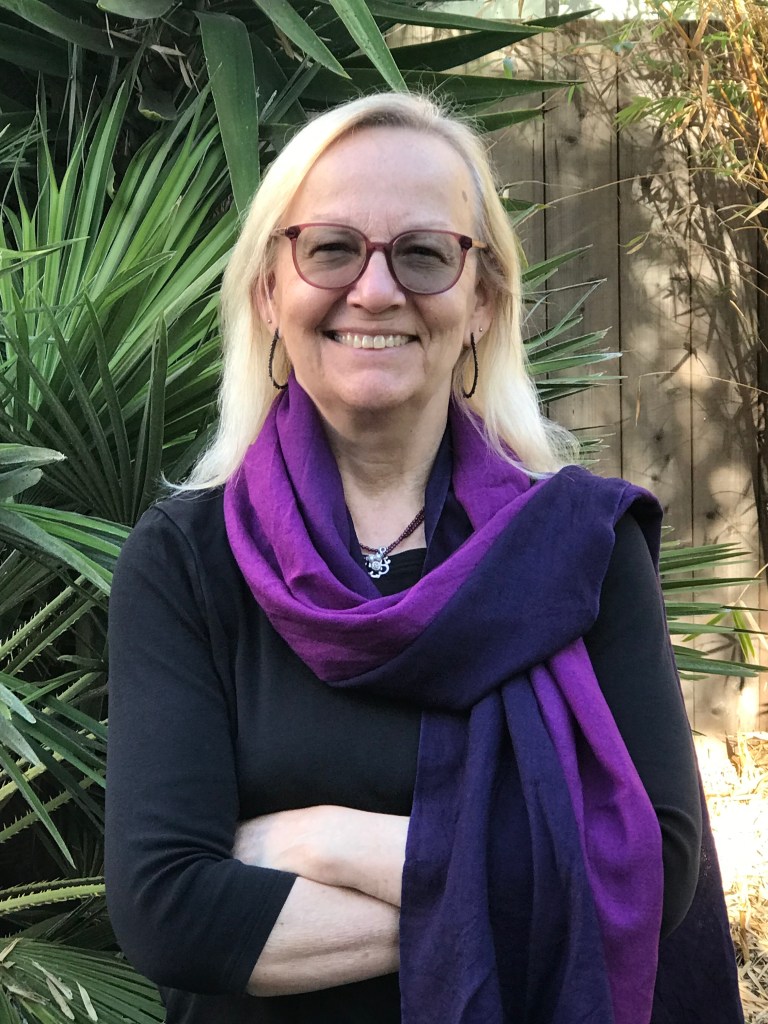
Jilanne Hoffmann’s picture book, The Ocean’s Heart: The Tiny Creatures Essential to Life, was deemed a “shimmering tale of interdependence and survival” in a starred review from Kirkus and just received a starred review from Booklist. Her picture book, A River of Dust: The Life-Giving Link Between North Africa and the Amazon, was a Junior Library Guild Gold selection, a Crystal Kite recipient, and named an ALA Notable, Bank Street Best, and Garden State Children’s Book Award List title. It also received the Louis J. Battan Author Award (K-12) from the American Meteorological Society. HeartLand, her middle grade historical/contemporary novel in verse/prose, is forthcoming from Little Brown in July 2026. Jilanne lives in San Francisco with her family. You can visit her website here.
 Beth Anderson, Children's Writer
ONG! Jilanne-thanks for sharing this backstory. One more source of inspiration! Can’t wait to read this!
LikeLiked by 2 people
Thank you! Thank you! I think it’s important for other authors (and readers) to know that books don’t often take a straight path to publication. When it happens, it feels like a miracle!
LikeLiked by 1 person
Congratulations, Jilanne – also on having an enterprising crit-partner! Looking very much forward to reading your book!
LikeLiked by 2 people
LOL, Katy should be an art director! And thank you! Hope you enjoy the book!
LikeLiked by 2 people
This is such a beautiful book, and the backstory so interesting and inspiring! Congratulations, Jilanne!
LikeLiked by 2 people
Thank you!! Each book takes a different route to publication, I think. Some shorter, some longer. But holding the final book in your hands never gets old!
LikeLiked by 2 people
Fascinating story behind the story, Jilanne! Hooray for getting your yes. I can’t wait to check out the book (including the back matter :). I hope it reaches many readers.
LikeLiked by 2 people
Thank you!! I am such a sucker for back matter. Fingers crossed that it will pique kids’ interest in the smaller critters that inhabit the sea.
LikeLiked by 1 person
Super excited about Jilanne’s new book! I have a post about it today, too, and am going to ping it to your post, Beth. 🙂
LikeLiked by 2 people
I’ll add a ping to yours!
LikeLiked by 1 person
You don’t have to, but thank you! Your post is much more in-depth and useful. 🙂
LikeLiked by 1 person
Thank you, Teresa! I’ll pop over to “your place” for a visit!
LikeLiked by 2 people
Amazing! Thank you for sharing this book’s evolution. Happy you persisted. I look forward to reading The Ocean’s Heart. Congratulations!
LikeLiked by 2 people
Thank you! The journey was sooo worth it! I hope you enjoy the book!
LikeLiked by 1 person
This: “It was more important for me to get this story out into the world, than it was for me to hold on to a specific POV.” Go Team Jilanne!
LikeLiked by 1 person
Thank you!! And yes, you have to pick your battles, as they say.
LikeLiked by 1 person
Wow, Jilanne. The book looks amazing. And the story of how it came to be published is so instructive and beautifully told. I love the parting advice: “Stick to what’s important to you. Be flexible about the rest.” I think it makes sense in other parts of life, too!
LikeLiked by 3 people
Thank you! And yes, being flexible on the things that are not essential to the story (or life) makes life and book publishing go a little more smoothly. 😁
LikeLiked by 1 person
Thank you Beth Anderson for sharing these awesome posts! Please keep them coming:)!
LikeLiked by 2 people
I keep reminding myself, “Revision is my friend.” Thank you for the behind the scenes look at the journey of another engaging look at the natural world. Congratulations!
LikeLiked by 2 people
Thank you! And yes! To me, revision is the fun part. Staring at a blank page is daunting.
LikeLiked by 1 person
Thank you for sharing about your revisions for this beautiful book. I admire your persistence and belief in the importance of this story. Completely changing the POV character and voice from first to third takes amazing writing talent. Congratulations!
LikeLiked by 2 people
Thank you, Danielle! I often think that the difference between those who get a story published and those who don’t is stubbornness, LOL. But actually, it’s also luck, and finding an editor who sees eye to eye with your work. So there are often a lot of moving parts to finding a home for a story.
LikeLiked by 1 person
Great post! Congratulations, Jilanne!
LikeLiked by 2 people
Thank you, Cathy! A winding road, yes?
LikeLiked by 1 person
Thanks for sharing this side of your journey with this beauty-full book of yours, Jilanne! And Khoa has rocked the illustrations! Congratulations to you both 🙂
LikeLiked by 2 people
Thank you, Donna! Our glorious planet is beauty-filled, isn’t it? And I love sharing it with kids!
LikeLiked by 1 person
Fascinating story! And the book looks amazing!
LikeLiked by 2 people
Thank you! Khoa’s art is phenomenal!
LikeLiked by 1 person
Thank you for sharing your story! I’m fascinated by your process because I’ve written a few stories using unusual POVs. I love that you used the inspiration board to influence the acquisition! Congrats on the book!
LikeLiked by 2 people
Thank you!! It feels very natural for me to write from the POV of inanimate objects, places, etc. And it’s fun, too, isn’t it? Like no longer being yourself. That inspiration board was really helped, I think.
LikeLiked by 1 person
Congratulations! This looks like a beautiful book! I love that you were so flexible about changing the POV. Looking forward to reading this one.
LikeLiked by 2 people
Thank you, Karen! I really do think it’s important to decide what you can do and what would be a deal-breaker. Hope you enjoy the book!
LikeLiked by 1 person
Oh, Jilanne! I loved seeing the inspiration board. How fun. And so beautiful. (and, OK, you know I love the book and have a copy. – Your turn to send a signed bookplate. ha, ha…xxoo)
LikeLiked by 1 person