Ah, the HOOK! How can you grab the readers’ attention? Snag their interest? And pull them in to read your work? Hooks are key, but sometimes hard to come up with. Take a read through Ann McCallum’s post to learn four specific ways to create hooks. And then leave a comment to be in the drawing for a…
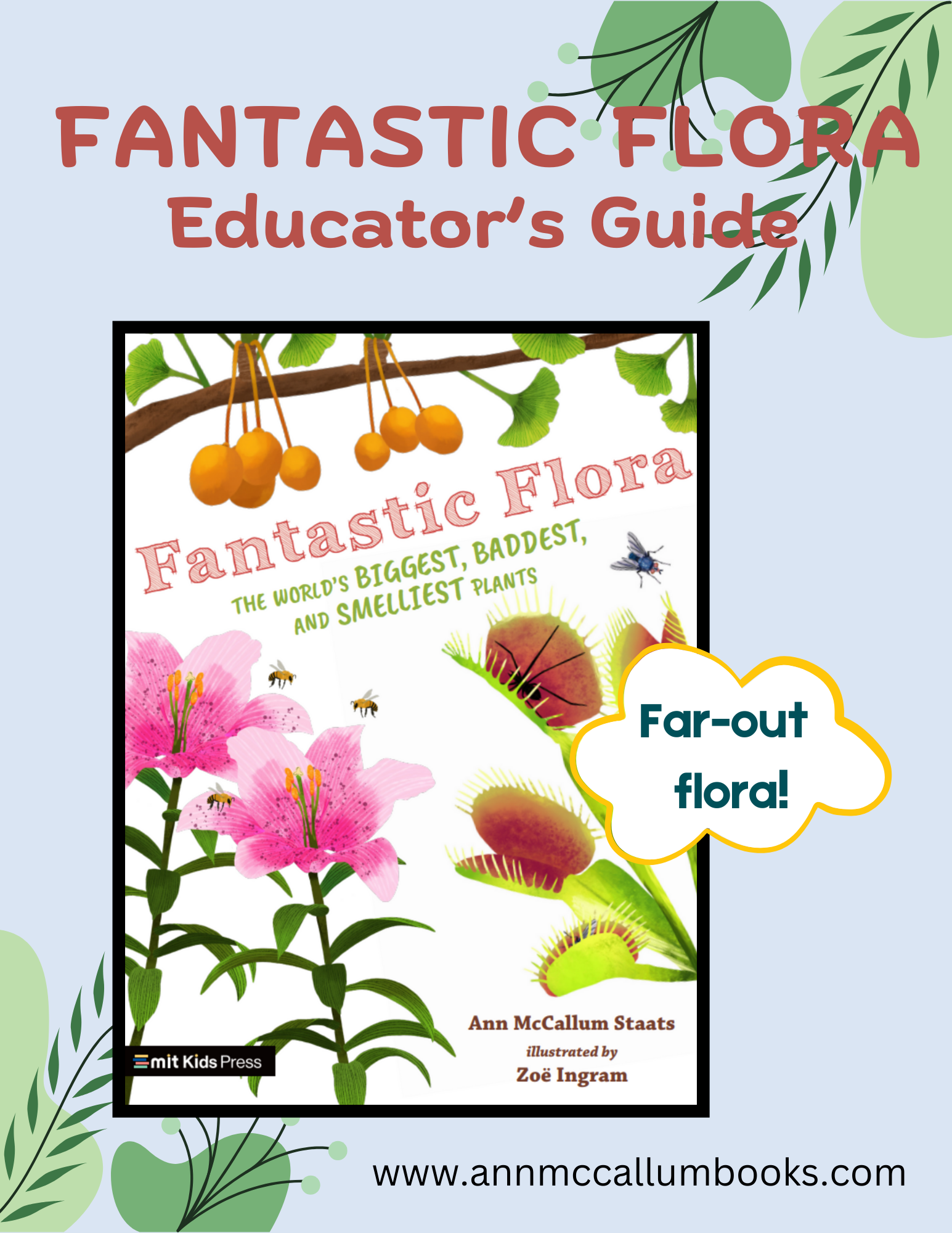
GIVEAWAY! A comment below gets you a chance to win a copy of FANTASTIC FLORA: THE WORLD’S BIGGEST, BADDEST, AND SMELLIEST PLANTS!
Beyond Once Upon a Time: Crafting an Enticing Opening in Nonfiction
By Ann McCallum Staats

When I was a teacher, we were often handed a curriculum and told to ‘make it meaningful.’ Never mind that the topic was often dry and complex. The trick was to turn a snooze-fest into something appealing. Along with other nonfiction authors, I’ve taken this challenge to my writing. Today there are loads of fascinating kidlit books about trees, rocks, wind, people in history, and other subjects that could be boring—and are anything but.
Key to engagement is the initial kick-off, a hooky opening that makes or breaks momentum and determines whether or not a reader is going to continue. In nonfiction, this lead-in provides a compelling gateway to the rest of the text.
When I first began to write about a topic that’s easy to take for granted—plants—I knew it would be a challenge to intrigue readers. After all, what’s the big deal about a blade of grass poking through the sidewalk, ivy that climbs up a wall, or one of many dandelion puffballs that crop up at certain times of year? Let me tell you, too, that before I set out on this particular writing journey, I was not a plant connoisseur. That quickly changed as I ‘dug’ into research. Seeds that explode? Wow. A leaf that reeks of rotting meat? Cool! Berries so toxic that munching down on just a few of them can be fatal? Yikes.
Okay, so now I had to convey my excitement from the get-go. First, though, let’s take a look at what doesn’t work (P.S., this is my own interpretation, and of course there are exceptions to every rule). A summary of what’s to come. A list-type collection of facts. An explanation about why the topic is important. Also, the lead-in—and all of the text, actually—should not be overly message-driven.
So how specifically does a writer create that oh-so-critical opener?
Strategy number one is the use of opposites, setting up a situation and then creating intrigue by pivoting 180 degrees. Here’s an example from Fantastic Flora: The World’s Biggest, Baddest, and Smelliest Plants. “It’s a hot, sunny day and the water is sparkling. At least, it would sparkle if the sun could reach it …” The draw here is the ‘why not’ factor. Why isn’t the water sparkling like one would expect? Here’s another one. “Crackle. Hiss. Flames sizzle as they consume branches …” Uh-oh, the trees are in trouble, right? But then, “No, just the opposite. For the giant sequoia, a moderate fire is a good thing.” Oh, really? Tell us more!
Next up is the problem-solution approach, a what-can-be-done dilemma. For instance: “Lost and alone, a weary traveler turns in a circle to see if anything looks familiar. It doesn’t. Will she wander for hours, walking first one way and then the other …?” This segment introduces traveler’s palm, a plant that often orients its leaves east and west and has been used by people to determine direction. The problem-solution tactic subtly poses a question to the reader: what would you do?
Then there is comparison. In my chapter on the ginkgo, I pit a T-rex against the ancient ginkgo tree. Which one wins? Hint: what can you see today, T-rexes or ginkgo trees?

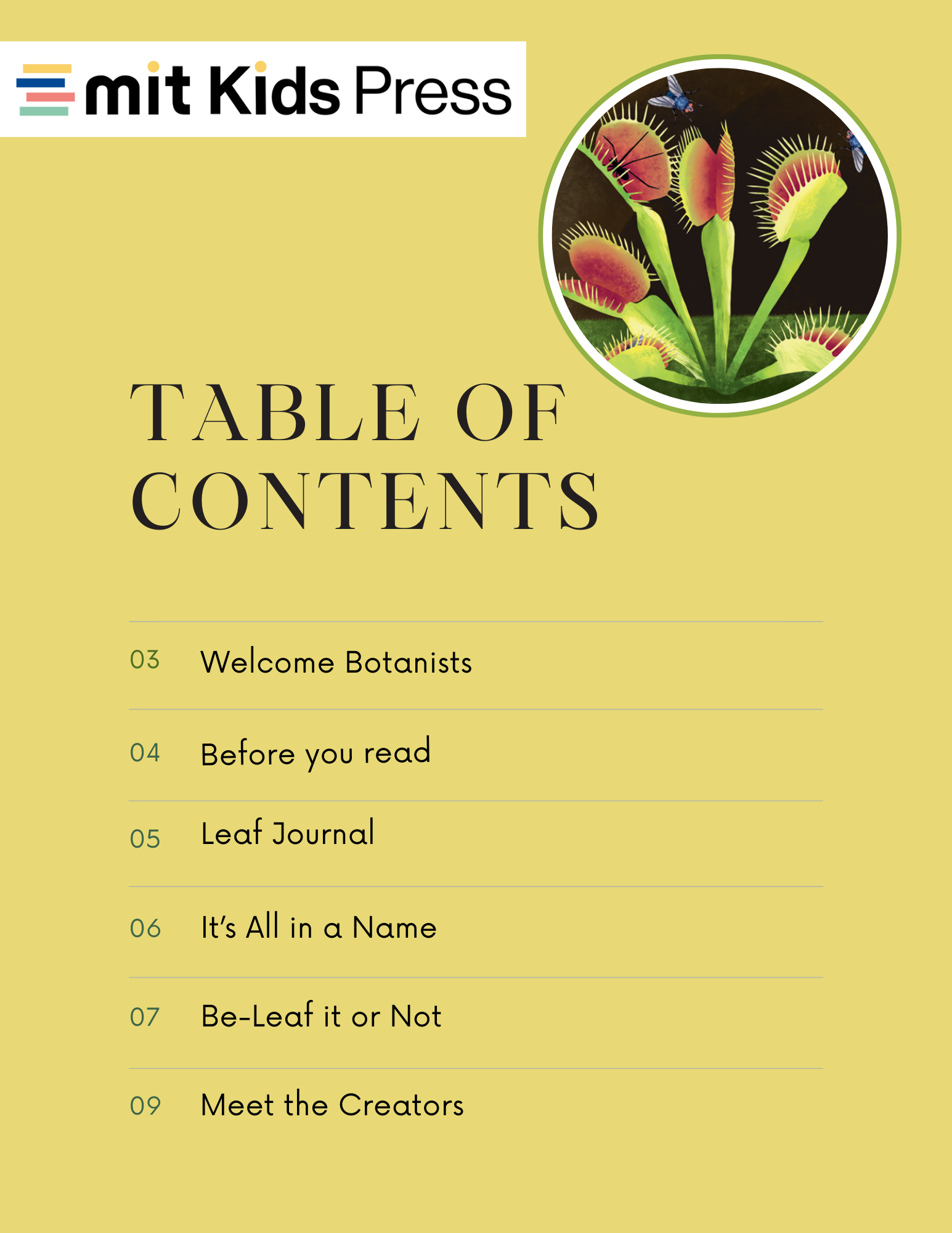
One more strategy is the story method, tried-and-true action that evokes curiosity and interest. “Closer. Closer… A plump spider is minding its own business as it climbs over a Venus flytrap plant. But it’s dinnertime, and if this plant had a stomach, it would be growling. That’s it, nearly there …” This time, the text is sharing an in-the-moment account of when the Venus flytrap is about to capture its prey.
These four strategies aren’t the only methods for developing a compelling opening, obviously. However, these have worked for me when writing nonfiction. They evoke an emotional reaction such as surprise, concern, or excitement, and the reader is hooked into continuing. As it is with first impressions, an effective beginning is vital for further reading engagement.
Bring on the enticing opening and keep reading!
Don’t forget to leave a comment below for a chance to win FANTASTIC FLORA! (US addresses only, please. Winner announced May 16, 2025.)
And if you enjoy a book, please support authors and illustrators by leaving reviews online!
 Beth Anderson, Children's Writer
Hello. It says comments are closed when I try to click on the blog post. I’d love to read this book. I just shared some pictures with my students about kayaking in a big and showed them some carnivorous plants and they were pretty fascinated. I’d love to share this book with them.
Destiny Love Lawyer, Windsor School 6th grade ELA and Social Studies
LikeLiked by 1 person
I’m struggling with an opening now. Thanks for sharing this.
LikeLiked by 1 person
Openings are key! And so are titles (and subtitles) – this book hooks you with both. Looking forward to reading!
LikeLiked by 1 person
I look forward to reading this book! My family is heavily into plants (hubby for climate change research and Kid1 is a Ph.D. candidate in evolutionary botany) so we grow way too many and 60% of our conversations tend to revolve around plants. LOL! And I’m personally interested since one of my other books that I’m doing for MIT Kids is a MG NF so I’m reading everything they put out in the MG space to inform how I want to revise my ms. Congratulations, Ann!
LikeLiked by 1 person
Openings can be hard, but your advice makes coming up with a good one more doable. Thanks!
LikeLiked by 1 person
Openings really do matter!
I’d love to win a copy since I’ve been looking forward to this (and am still waiting for my library to come through with a copy)!
LikeLiked by 1 person
Plants rule the world! This looks like a wonderful book. Congratulations!
LikeLiked by 1 person
thanks for sharing! I’m a botanist so plants are always fantastical to me, but I’m always looking for ways to hook kids into being interested.
LikeLiked by 1 person
Thank you. Now to edit my already written pb biography!
LikeLiked by 1 person
What a fascinating book! As a retired teacher, I completely understand. I am trying to write picture books now to fill in the blanks I noticed as a teacher.
I checked our public library and it is on order so I requested it along with the 2 other books of Ann’s the library had.
I am in Canada so not eligible for the draw but wanted to post anyway!
LikeLiked by 1 person
Openers are sometimes the hardest part to write. I enjoyed reading the examples in this post today and can’t wait to read this fun book. Nonfiction for children is so much more exciting compared to when I was in school. Thank you for the chance to win a copy!
LikeLiked by 1 person
Thanks for the tips. I can’t wait to read it and then send it on to kids on the reservation!
LikeLiked by 1 person
This book sounds fantastic! And I’m interested to see more from MIT Kids. Congrats, Ann!
LikeLiked by 1 person
What kid wouldn’t gravitate to a marvelous book with such a catchy title that includes promises like biggest, baddest, smelliest plants??? I’m intrigued. Thanks also for offering imaginative ways to start a nonfiction book. My favorite of the four is the use of opposites. Just hearing that the moderate fire can be of use to the large tree sets up a strong page-turning moment.
LikeLiked by 1 person
Love these tips for drawing readers in – thank you!
LikeLike