In this post, author Donna McKinney addresses the challenge of finding the essential tension needed to pull readers through a nonfiction story and keep them turning pages.
GIVEAWAY! Donna is giving away a copy of TINY TERN TAKES FLIGHT to one person who comments below!
Congratulations to Lillie Pardo , winner of a copy of YOUR SUSTAINABLE WORLD: A Kid’s Guide to Everyday Choices That Help the Planet!
Building Tension in Nonfiction Picture Books
by Donna McKinney 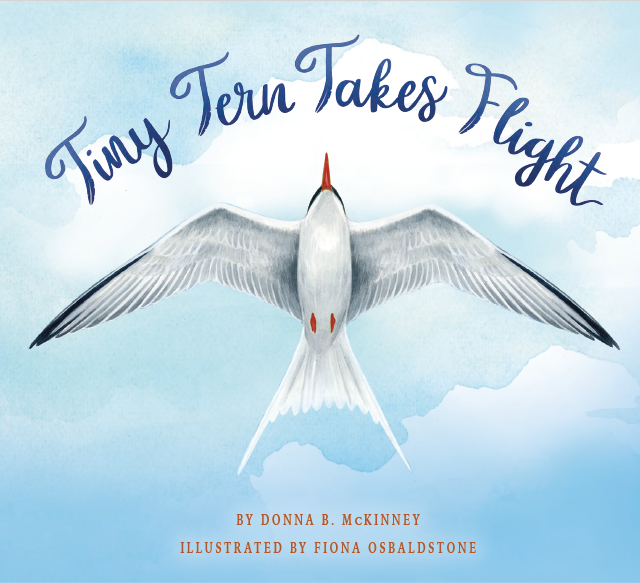
Fiction writers often speak of adding tension to their story. Tension often shows up where characters pursue something they don’t have. Obstacles stand in their way as they work to reach that one thing they want but don’t yet possess. Tension helps keep the reader engaged and ready to turn the page. In fiction, these challenges that build tension can be whatever the writer imagines.
But how does a nonfiction writer, who is constrained by the factual information of the topic, “build tension”? How does the writer raise the stakes? Tension can be found in nonfiction, but perhaps the writer needs to work a little harder to find it. Digging deeper to find the tension is worth the work because tension draws readers in and keeps them reading.
My nonfiction picture book Tiny Tern Takes Flight tells the story of the Arctic tern that makes the incredible migration journey from the North Pole to the South Pole and back again every single year. Scientists have tracked their flight and say it’s the longest recorded round-trip of any migrating animal.
Writing a story about animal migration gives a writer a ready-made narrative structure. It’s a journey, so there’s a natural beginning, a middle, and an end. The challenge comes in finding the places in that journey narrative to add the tension that helps draw readers into the story. In daily living, I’m usually looking for ways to minimize conflict and tension. Stress-free days are good for me. But in our stories, that tension and conflict helps the reader want to turn the page and find out “what’s next!”
The Arctic tern’s amazing journey lends itself to some natural tension. And my editor at the publisher Science, Naturally!, helped me find even more tension. I had included the tern’s predators – fox, polar bear, gulls – in my original story draft. The tiny tern survives through its ability to evade or fight off the natural predators in its environment. Caitlin Burnham, my editor, suggested we heighten the tension even more by adding some conflict and a setback. So we added a storm! For a journey that covers thousands of miles over land and oceans, storms would be a natural part of a tern’s life. So I wrote a storm that blows the tiny tern off course, into the story. Here are the words I added to the text:
But what’s that dark rumbling ahead?
Gathering clouds in the distance—
a storm approaches!
Gusting winds push against Tiny Tern’s small body.
Will Tiny Tern be lost in the swirl of wind and rain?
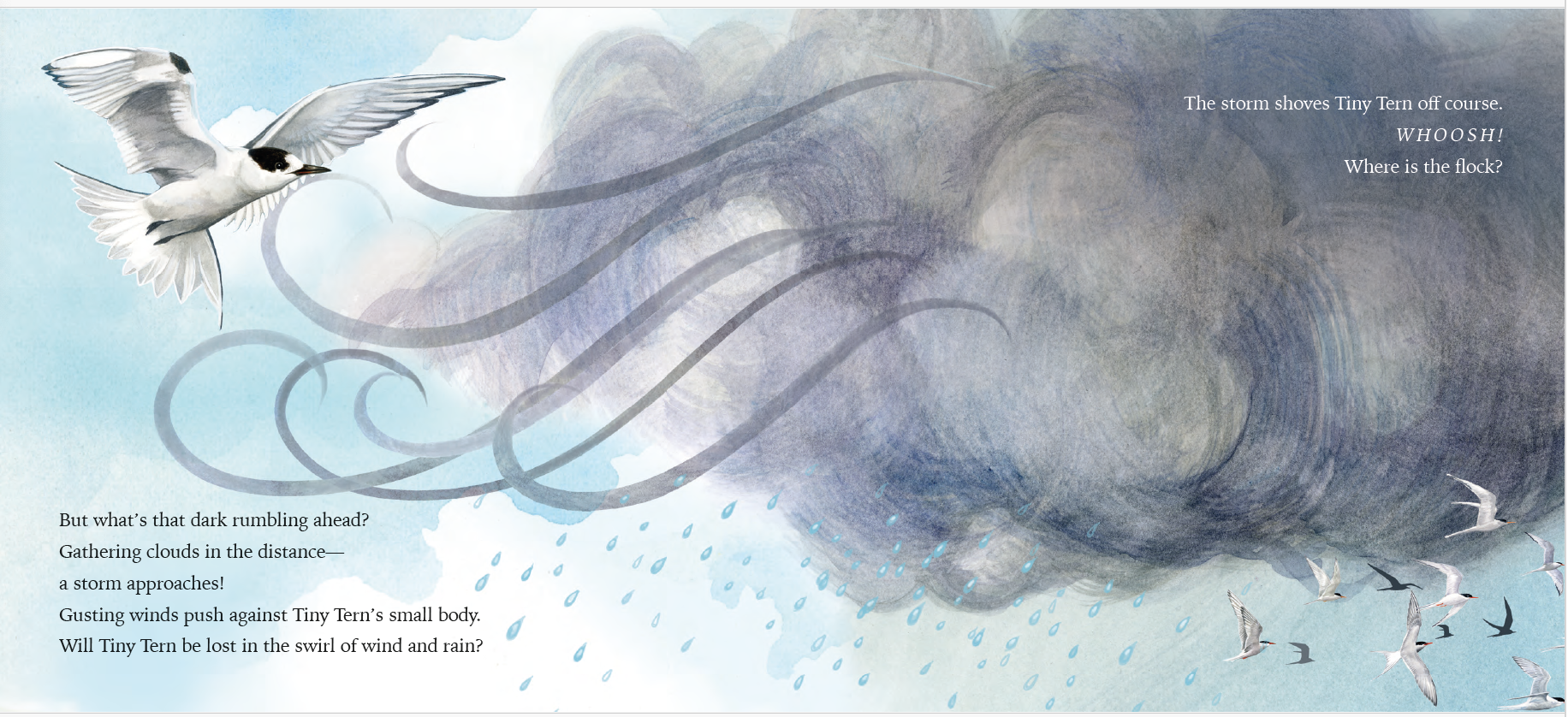
The illustrator Fiona Osbaldstone did a brilliant job of depicting the storm through her art. Swirling, ominous storm clouds threaten Tiny Tern’s journey. Her storm spreads are some of my favorite art in the book.
The storm shoves Tiny Tern off course.
WHOOSH!
Where is the flock?
Tiny Tern keeps flying, soaring toward sunshine.
Pressing through the storm.
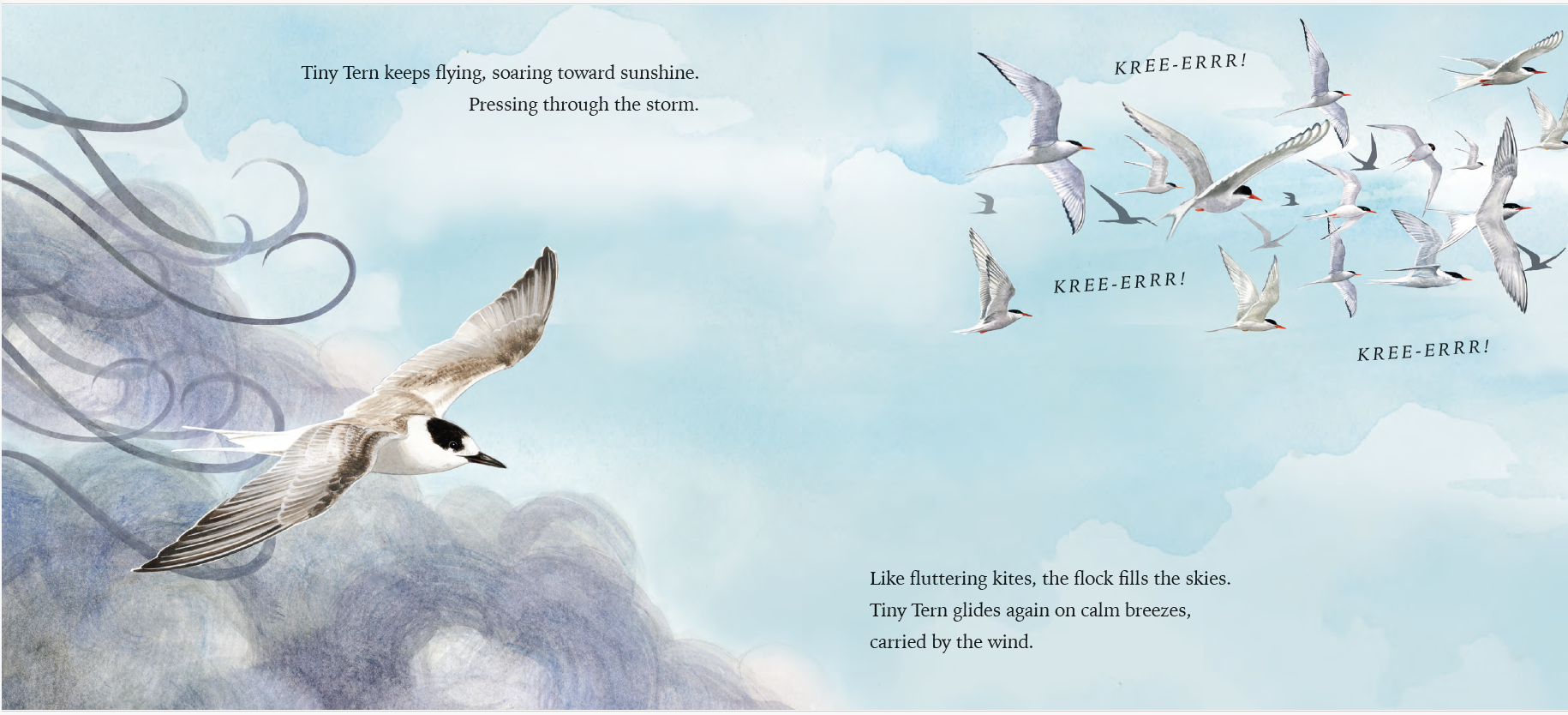
Don’t worry, Tiny Tern emerges from the storm unharmed. He finds his flock and continues his long journey toward the safety of summer sunlight. Hopefully readers will find the storm spread exciting too. They’ll want to turn the page, asking themselves, “what’s next?”
Don’t forget to leave a comment below to be entered in the GIVEAWAY for TINY TERN TAKES FLIGHT! (US addresses only, please. Winner announced 11/1/24)
😃 When you enjoy a book, please support authors and illustrators by posting reviews online.
 Beth Anderson, Children's Writer
What a great way to add tension to your story that will give children not only a learning experience, but have them on the edge of their seats! Great Job 🙂
LikeLike
Thank you for sharing a specific example of ramping up the tension in nonfiction. I can’t wait to read tiny tern’s entire journey!
LikeLiked by 1 person
Tension–in any story makes you want to turn the page. Nonfiction included. Looking forward to reading your new book!
LikeLiked by 1 person
Thanks for sharing the story behind TINY TERN TAKES FLIGHT, Donna, and how you made it more gripping and engaging! It looks and sounds lovely. I’m excited to check it out.
LikeLiked by 1 person
Thanks for sharing your story and the great advice! Congrats!
LikeLiked by 1 person
This book is an excellent example of keeping readers engaged in nonfiction. I wish nonfiction books were like this one when I was growing up. Thank you for the interview and sharing a peek into your exciting book.
LikeLiked by 1 person
as if predators aren’t enough! These little birds have so many challenges! Can’t wait to see Tiny Tern.
LikeLiked by 1 person
Oh, this book looks and sounds wonderful. This is a great topic for a post and a wonderful example of how more tension can be added to nonfiction stories. Thank you for including the conversation with your editor and the spotlight on the illustrator, too!
LikeLiked by 1 person
I love what you said about cultivating a way of thinking that is different from our life approach of not seeking out or creating conflict. Thank you Donna and Beth!
LikeLiked by 1 person
It’s a challenge to keep readers reading while wondering what’s going to happen next, especially for nonfiction writers. You’ve given a bird’s eye view of the many dangers Tiny Tern faces on his long journey–I can’t wait to discover more!
LikeLiked by 1 person
I find creating tension challenging, and these examples help clarify the concept. Thank you!
LikeLiked by 1 person