Today’s post features another fantastic nonfiction book for kids from the STEAM TEAM. Read on to learn how author Patricia Newman created the heart of GIANT RAYS OF HOPE using text and photos. And don’t miss the book trailer linked at the end of the post—it gave me goosebumps!
Congratulations to Marcia Strykowski, winner of a copy of THIS OLD MADRONE TREE from Barbara Herkert!
How text and photos work together to dive to the heart of a book
by Patricia Newman 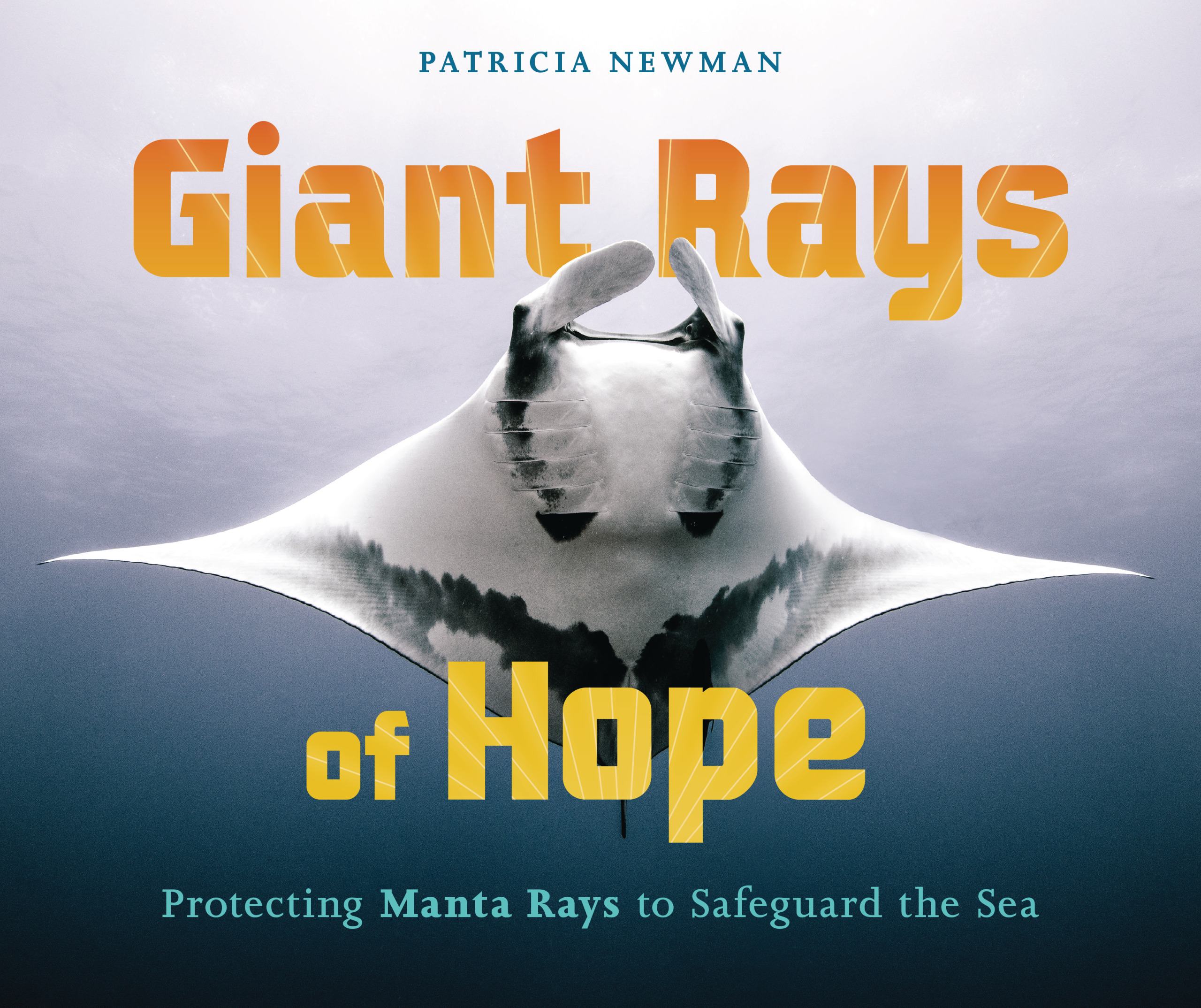
My newest book, Giant Rays of Hope: Protecting Manta Rays to Safeguard the Sea, is about Kerstin Forsberg and her conservation organization, Planeta Océano. Kerstin’s ocean initiative in Peru has received several awards because of its unique approach: rather than descending on a community as an activist, she engages community members and empowers them to be the stars of their own conservation story. Kerstin uses science, education, and sustainability to show coastal communities in Peru how saving giant manta rays is in their best interests. Her results are startling! Fishers, students, teachers, and business leaders march behind her to help protect our ocean. Kerstin’s feel-good story is a huge boost for conservation efforts around the world!
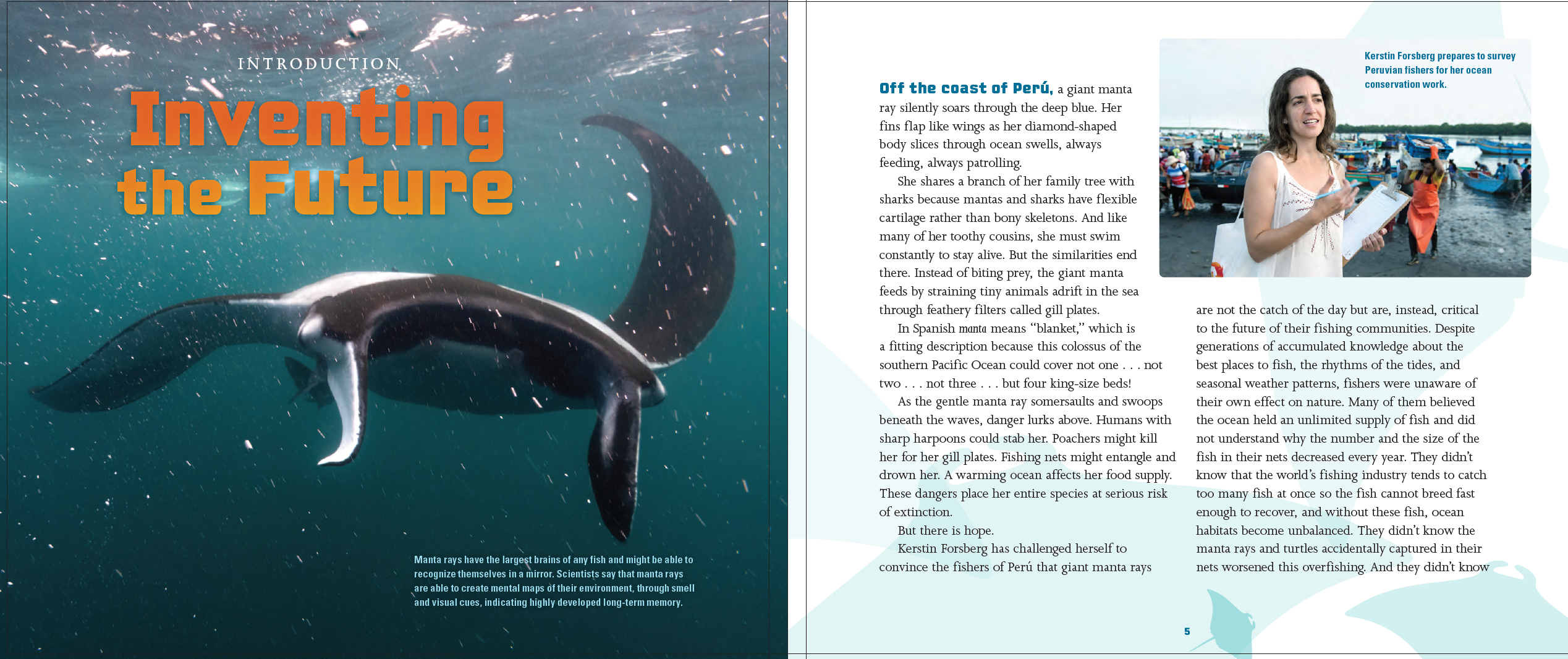
I admire Kerstin because she never claims to have all the answers. “’The experts are in the field,’ she says of the fishers and teachers she’s worked with. ‘I can learn so much more from them than I can teach them’” (p. 41, Giant Rays of Hope). The respect she has for the people she works with is reflected in the effusive praise of the more than thirty fishers, teachers, students, staff members, and community members I interviewed. That’s heart, and I knew I needed to include that admiration in my book.
For example, on page 31 of Giant Rays of Hope, fisher Edgardo Cruz and his son Erik Cruz accidentally catch a giant manta ray in the dead of night (bycatch). Because of Kerstin, this story becomes a turning point in their relationship with manta rays and the ocean. “’Now I am one of the protectors,’ Edgardo says. ‘It is one of the most important things in my life’” (p. 44). But to understand this change, readers need to experience the fear Edgardo and Erik felt as a huge marine creature which could potentially capsize their small boat became caught in their fishing net. Their words ratchet up the suspense for the reader until the page-turn (p. 32) where a picture of Edgardo and Erik’s dead manta hanging from a crane forces the reader to sit back and consider the tragedy of bycatch.
That’s the power of a great image!
I prefer to bring most of the images to my book projects. When scouting a new idea, one of my stock questions concerns the availability of photos. Normally, I collect most of the photos during the interview and information gathering stage. Sometimes I have to do a bit of sleuthing to find the owner of an image I’d like to use, such as the poached manta ray gill plates photo on page 23 of Giant Rays of Hope. Because Kerstin is the recipient of the Rolex Award for Enterprise and has worked with CNN, Rolex and CNN have both filmed and photographed her at work and generously made many of their photos and video clips available to me and Millbrook Press. Additionally, several giant manta rays from underwater photographers Joost van Uffelen and Corey Rae Nevels swim about the pages of the book.
After I write the initial drafts of the book, I study the hundreds of photos I’ve gathered, searching for the best images that will draw out the emotion in the text and stir feelings within my readers. When the editorial team and I reach the layout stage of the book-making process, the photos and text are dropped into a PDF file. Seeing how text and images work together is one of my favorite parts of the publishing process! The designer crops the photos or enlarges them to suit the story. Sometimes the photo choices fall flat, so we replace them with more powerful images.
I also took great joy in including many of the photos that the kids, teens, and teachers sent me during our Zoom interviews. Their pride, enthusiasm, smiles, and busy hands buoyed me with hope throughout the entire book-making process.
One of the final images in the book (p. 44), in which readers see a manta swimming underwater and an ecotour boat sailing on top of the water, encapsulates the wonderful conservation work Kerstin’s team is doing to change attitudes and habits in coastal Peru. It leaves me with a sense of peace.
Don’t miss the fabulous book trailer HERE.
 Sibert Honor author Patricia Newman uses social and environmental injustice to empower her readers to seek connections to the real world and to use their imaginations to act on behalf of their communities. Patricia’s nonfiction titles have received multiple starred reviews and ALA Notable Awards, two Orbis Pictus Recommended Awards (NCTE), two Green Earth Book Awards, and several Eureka! Awards (CRA). All her nonfiction titles are Junior Library Guild Selections, and most have been included in the Bank Street College’s Best Books of the Year lists. To learn more, visit her website at patriciamnewman.com and connect with her on Twitter (@PatriciaNewman), Instagram (@patricianewmanbooks), Pinterest (@newmanbooks), Facebook (@PatriciaNewmanBooks), or BlueSky (@patricianewman.bsky.social)..
😃 When you enjoy a book, please support authors and illustrators by posting reviews online.
 Beth Anderson, Children's Writer
Looks like another important and terrific book from Patricia! I plan to gift this to my cousin’s son. 🙂
LikeLiked by 1 person
I fell in love with giant mantas while scuba diving years ago off Molokini. I can’t wait to read this beautiful book!
LikeLiked by 1 person
a wonderful model for bringing about real change. Congratulations on your new book Patricia!
LikeLiked by 1 person
Fascinating!
LikeLiked by 1 person